


 PLATFORM UPDATE:

Sustainable co-production of carbon quantum dots and activated carbon from natural rubber latex for the inhibition of pathogenic microorganisms and removal of pharmaceutical residues

Abstract
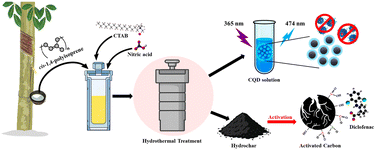
This study demonstrates a sustainable and integrated method for the co-production of carbon quantum dots (CQDs) and activated carbon (AC) using natural rubber (NR) latex, which is a renewable and widely available biomass. CQDs were synthesized via a hydrothermal method using cetyltrimethylammonium bromide and nitric acid as nitrogen dopants. The as-formed product comprised uniform amorphous nanoparticles (3.5–11.0 nm) that exhibited intense blue photoluminescence and abundant surface amino and oxygen-containing groups. The CQDs exhibited excellent antimicrobial and antiviral activities, achieving >99.9% inactivation of Staphylococcus aureus, Micrococcus luteus, Escherichia coli, Candida albicans, Aspergillus niger, and influenza A virus (H3N2) within 5 min of exposure at a concentration of 15 µg mL−1. Moreover, they demonstrated negligible cytotoxicity toward HaCaT keratinocytes. Furthermore, the hydrochar obtained as a by-product of hydrothermal synthesis was subsequently converted into AC via physical and chemical activation, yielding a large-surface-area adsorbent (up to 1167 m2 g−1) featuring a diclofenac uptake capacity of 126.82 mg g−1 at 25 °C. The adsorption process followed pseudo-second-order kinetics and a Langmuir-type monolayer adsorption mechanism. Adsorption mainly proceeded via π–π interactions, hydrogen bonding, and electrostatic attraction between diclofenac molecules and heteroatom-rich surface sites. This dual-function valorization of NR latex simultaneously addresses microbial and pharmaceutical pollution, advancing circular bioeconomy principles and offering sustainable solutions for water treatment and healthcare applications.
 Please wait while we load your content...


