


 PLATFORM UPDATE:


Dual inhibition of acetylcholinesterase and β-secretase by metabolites from Echinocactus grusonii Hildm.: in silico and in vitro investigations
 *a
Ahmed
Othman,
*a
Ahmed M.
Sayed,
b
Mostafa M.
Hegazy,
a
Abd El-Salam I.
Mohammed
a
and
Atef A.
Elhela
a
*a
Ahmed
Othman,
*a
Ahmed M.
Sayed,
b
Mostafa M.
Hegazy,
a
Abd El-Salam I.
Mohammed
a
and
Atef A.
Elhela
a
Abstract
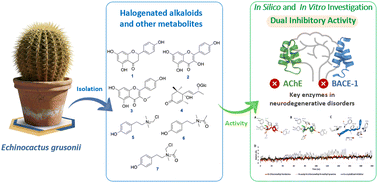
Targeting acetylcholinesterase (AChE) and β-secretase (BACE-1) enzymes is a promising multifaceted approach for treating neurological disorders. In our study, the chemical investigation of Echinocactus grusonii Hildm. (Cactaceae) led to the isolation and identification of seven compounds, including three flavonoids, naringenin 1, kaempferol 2, and isokaempferide 3, one megastigmane glycoside, vomifoliol-9-O-β-D-glucopyranoside 4, and three alkaloids, N-chloromethyl hordenine 5, N-acetyl hordenine 6, and N-acetyl-N-chloromethyl-N-methyl tyramine 7. Compounds 5 and 7 were identified as previously undescribed halogenated alkaloids. Biological evaluation revealed that all compounds exhibited promising acetylcholinesterase inhibitory activity (IC50 = 0.076–2.255 µg mL−1), as well as significant inhibition of β-secretase with IC50 values ranging from 0.066 to 7.189 µg mL−1. Docking, molecular dynamics, and binding energy calculations suggested that compounds 4 and 5 are promising AChE inhibitors, while compounds 3, 4, and 7 are leading candidates against β-secretase. Collectively, this study underscores the potential of Echinocactus grusonii as a rich source of bioactive lead compounds for developing novel therapeutics for pharmaceutical applications.
 Please wait while we load your content...


