


 PLATFORM UPDATE:


Synergistic effects of H2O2 on the performance of nano-zero-valent manganese biochar (nZVMn/PBC) for the treatment of chlorpyrifos from aqueous solution

Abstract
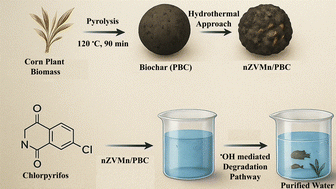
This study explores the efficient degradation of the highly toxic organophosphorus pesticide chlorpyrifos (CPY) from aqueous solution using a novel nano-zero-valent manganese-decorated plant biochar composite (nZVMn/PBC). The composite was synthesized via a chemical reduction method and thoroughly characterized using FTIR, XRD, SEM, TEM, EDS, XPS, and BET analyses. Characterization results revealed that nZVMn/PBC possessed a highly porous and crystalline structure enriched with abundant functional groups, favorable for catalytic degradation. Under optimized conditions ([CPY]0 = 9 mg L−1, [nZVMn/PBC]0 = 25 mg L−1, reaction time = 90 min), the composite achieved 84% degradation of CPY. Remarkably, the introduction of H2O2 further enhanced the degradation efficiency to 99% under identical conditions ([H2O2] = 20 mg L−1). The degradation was accelerated under basic pH and with increasing doses of H2O2 and nZVMn/PBC; however, excessive H2O2 concentrations reduced efficiency at higher pollutant levels. Mechanistic investigations revealed that hydroxyl radicals (˙OH) were the dominant reactive species responsible for CPY decomposition. The nZVMn/PBC composite exhibited excellent stability and environmental compatibility. Analysis of the degradation intermediates confirmed the conversion of CPY into non-toxic products. Overall, this study demonstrates that the nZVMn/PBC–H2O2 system is a highly promising, sustainable, and efficient strategy for the degradation and detoxification of organophosphorus pesticides in contaminated water.
 Please wait while we load your content...


