


 PLATFORM UPDATE:


Unveiling the adsorptive potential of Populus ciliata leaf powder for methylene blue removal from environmental samples
 b
b
Abstract
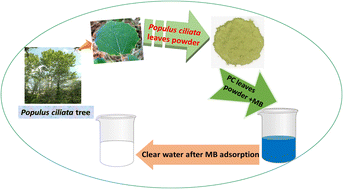
To cope with environmental hazards caused by synthetic dyes, herein, we report an inexpensive biosorbent based on Populus ciliata leaf powder for the adsorption of methylene blue (MB) from aqueous solutions. Using FTIR, BET, EDX, and SEM, chemical, structural, and morphological characteristics of the biosorbent were examined. The batch adsorption experiments were performed to investigate the influence of contact time, pH, adsorbent dose, nature of water samples, and dye concentration for MB adsorption. At optimum conditions, maximum adsorption of 87.7% and adsorption capacity value of 21.21 mg g−1 was achieved at pH 7 for MB concentration of 10 mg L−1. Langmuir and Freundlich isotherm models were applied to the equilibrium adsorption data, and the data were perfectly fitted to Langmuir isotherm model. Pseudo-first-order and pseudo-second-order (PSO) kinetic models were evaluated and it was found that the PSO was best fitted to the experimental data. MB was successfully adsorbed from environmental samples using the suggested biosorbent. This research can provide a viable approach to mitigating the health risks associated with dye pollution, thereby contributing to the reduction of environmental contamination.
 Please wait while we load your content...


