


 PLATFORM UPDATE:


Degradation of oxytetracycline in wastewater by catalytic ozonation with eggshell-derived calcium peroxide

Abstract
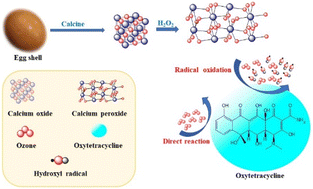
Calcium peroxide (CaO2) was successfully synthesized from calcium-rich eggshell waste through a multi-step process. First, the eggshell waste was naturally dried, ground, and calcined at varying temperatures (700, 800, or 900 °C) for 2 hours, resulting in the formation of calcium oxide (CaO). Subsequently, CaO2 was synthesized via a precipitation method, in which CaO was mixed with hydrogen peroxide (H2O2) at varying concentrations (25%, 30%, or 35%). The formation of CaO2 was initially confirmed by its characteristic yellowish appearance. The properties of the eggshell waste, CaO, and CaO2 were characterized using X-ray diffractometry (XRD), Fourier-transform infrared spectroscopy (FTIR), and scanning electron microscopy (SEM). The XRD results indicated that higher calcination temperatures enhanced the crystallinity of CaO, while increasing the H2O2 concentration led to a reduction in the crystalline structure of CaO2. The performance of CaO2 as a catalyst in catalytic ozonation was evaluated for the degradation of oxytetracycline (OTC) in synthetic wastewater. Under the designated conditions (pH 7, 3 g per L CaO2, and 60 min reaction time), OTC removal efficiency reached 100%, whereas sole ozonation achieved only 85.7%. The pseudo-first-order reaction rate constant (kobs) for composite B (30% H2O2 with 1 : 1 mole ratio between CaO and H2O2) was 0.1152 min−1, which was significantly higher than that of sole ozonation (kobs = 0.0365 min−1), demonstrating the catalytic efficiency of CaO2.
 Please wait while we load your content...


