


 PLATFORM UPDATE:

Agricultural beneficial microbes accelerate soil degradation of poly(butylene adipate-co-terephthalate) (PBAT) films

Abstract
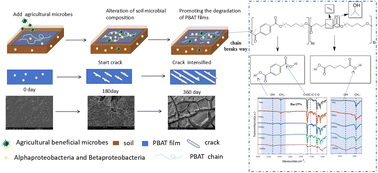
Three common agricultural beneficial microbes, Trichoderma harzianum, Bacillus cereus, and Pseudomonas fluorescens, were utilized as effective agents in enhancing the degradation of poly(butylene adipate-co-terephthalate) (PBAT) within a soil environment. All of microbes accelerated the degradation of PBAT. Under specific conditions(Tri15), the degradation rate of PBAT films at 360 days can achieve over 70%. Scanning electron microscopy (SEM) images show that the surface of PBAT films cracks after 360 days of exposure to these three specific microbes because of the degradation of the PBAT. Gel permeation chromatography (GPC) analysis reveals that in the presence of these microbes the PBAT undergoes progressive molar-mass reduction. The 16S rRNA sequencing analysis revealed a significant shift in the microbial community structure following the introduction of the beneficial microbial inoculants. Specifically, the relative abundances of Alpha-proteobacteria and Beta-proteobacteria were markedly enriched in the treatment groups. Concurrently, FTIR analysis indicated a decrease in the relative intensities of the ester C–O–C (at ∼1260 cm−1) and carbonyl C![[double bond, length as m-dash]](https://www.rsc.org/images/entities/char_e001.gif) O (at ∼1710 cm−1) absorption bands. These spectroscopic changes are associated with the cleavage of the polymer backbone. The co-occurrence of this specific bacterial enrichment with the observed chemical changes suggests a potential link between the introduced microbial consortium and the enhanced degradation process.
O (at ∼1710 cm−1) absorption bands. These spectroscopic changes are associated with the cleavage of the polymer backbone. The co-occurrence of this specific bacterial enrichment with the observed chemical changes suggests a potential link between the introduced microbial consortium and the enhanced degradation process.
 Please wait while we load your content...


