


 PLATFORM UPDATE:


Preclinical validation of magnetic hyperthermia therapy for locally advanced oral cancer treatment
 a
Shilpee
Jain
*b
a
Shilpee
Jain
*b
Abstract
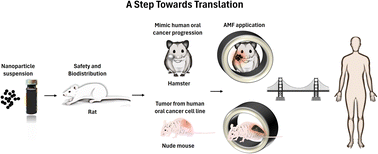
Locally advanced tumors of the buccal cavity harbor abundant hypoxic and cancer stem cell populations, rendering them intrinsically resistant to conventional radiotherapy and chemotherapy. Current aggressive treatment regimens, though effective in part, often result in collateral tissue injury, functional impairment, and significant morbidity. Magnetic hyperthermia (MHT)—a minimally invasive technique that employs magnetic nanoparticles (MNPs) to generate localized heat under an alternating magnetic field (AMF)—represents a promising alternative, as its therapeutic efficacy is independent of tumor cell type or microenvironmental conditions. Despite extensive preclinical progress, clinical translation has been hindered by safety and feasibility challenges, particularly the reliance on non-translatable, high-frequency AMF systems. To address these hurdles, this study evaluated magnetic hyperthermia for oral squamous cell carcinoma (OSCC) using preclinical models and a scaled-up AMF generator designed within human safety thresholds, unlike prior studies that used non-translatable high-frequency fields. FDA-approved amino silane-coated Fe3O4 nanoparticles were synthesized via co-precipitation and confirmed to be pure and superparamagnetic (Ms ∼ 58 emu g−1) through XRD, FT-IR, and VSM studies. Three animal models were employed for preclinical validation: (i) a rat model for biodistribution and excretion studies as per ISO guidelines, (ii) a hamster model of OSCC induced by tobacco-related carcinogens, closely mimicking human oral cancer pathology, and (iii) a patient-derived xenograft (PDX) model to assess efficacy in large tumors. In rats, nanoparticles showed no systemic toxicity, were excreted via feces, and serum iron normalized within 72 hours. Hyperthermia treatment (2–5 cycles, ∼45 °C) suppressed large tumor growth (>100 mm3) and completely eradicated smaller tumors (<100 mm3). A dose-dependent reduction in p53 staining confirmed the therapeutic efficacy and improved prognosis, underscoring the translational potential of magnetic hyperthermia in OSCC and other solid tumors.
 Please wait while we load your content...


