


 PLATFORM UPDATE:


Design and synthesis of bioactive Ru(ii) complexes: antibacterial activity, biocompatibility and biomolecular binding
 *a
Paula
Brandao,
d
*a
Paula
Brandao,
d
Abstract
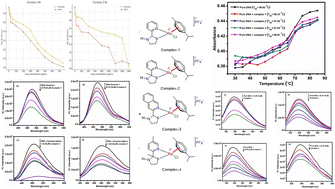
Ruthenium(II) complexes with N- and S-donor ligands have emerged as promising alternatives to conventional antibiotics due to their stability, biocompatibility, and ability to interact with biological macromolecules. In this work, a series of four Ru(II)–thiazolidine complexes, [Ru(II)(L1–L4)(p-cymene)Cl]PF6, were synthesized and structurally characterized using spectroscopic techniques and X-ray crystallography. Their interactions with DNA and proteins showed partial groove binding with calf thymus DNA and a static quenching mechanism with bovine serum albumin (BSA). Biological investigations revealed that two of the complexes exhibited strong antioxidant activity and significant antibacterial effects against methicillin-resistant Staphylococcus aureus (MRSA) and Klebsiella pneumonia (KP). Moreover, hemolysis assays confirmed their favourable biocompatibility. These results highlight Ru(II)–thiazolidine frameworks as promising candidates for antimicrobial drug development. This study not only underscores their therapeutic potential but also advances the role of ruthenium-based coordination chemistry in addressing the persistent challenge of antibiotic resistance.
 Please wait while we load your content...


