


 PLATFORM UPDATE:


Thermo-sensitive C3N4 for efficient photocatalytic degradation of methyl orange
 *a
*a
Abstract
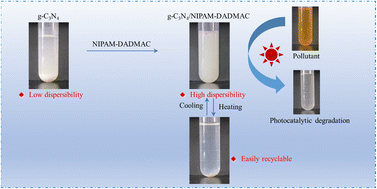
The advancement of industrialization has led to severe environmental challenges stemming from inadequate pollutant management. Photocatalytic technology has emerged as a research focus due to its eco-friendly nature and high degradation efficiency. However, the widespread application of photocatalysts is hindered by limitations in recoverability and reusability. Therefore, designing high-performance photocatalysts with facile recoverability has become a critical research direction. Thermo-responsive materials, which precipitate upon heating and disperse upon cooling, offer a promising solution for enhancing recovery efficiency. In this study, a composite photocatalyst with thermo-responsive properties was successfully synthesized by combining graphite carbon nitride (g-C3N4) with the thermo-responsive copolymer NIPAM-DADMAC (poly(N-isopropylacrylamide)-co-diallyl dimethylammonium chloride). Key parameters including the optimal mass ratio of g-C3N4 to DADMAC-NIPAM, and the optimal recovery conditions were systematically determined by measuring the material's lower critical solution temperature (LCST). Experimental results demonstrated that under visible light irradiation, the composite photocatalyst achieved a remarkable 98.15% degradation rate of methyl orange (MO) within 120 min. Moreover, the composite exhibited exceptional stability and reusability, retaining over 77.92% of its degradation efficiency even after eight consecutive cycles. Additionally, its inherent thermo-responsive nature enabled highly efficient recovery of the catalyst. This research provides valuable insights and a novel strategy for the development of high-performance photocatalysts with enhanced recyclability, holding significant potential for practical applications in environmental remediation.
 Please wait while we load your content...


