


 PLATFORM UPDATE:


Effects of different carbon-to-nitrogen (C/N) ratios and dissolved oxygen (DO) concentrations on denitrification performance and structure of microbial community in a moving bed biofilm reactor (MBBR)
 *a
*a
Abstract
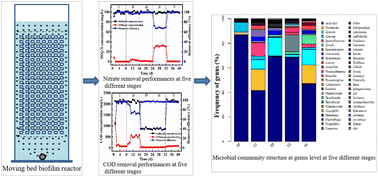
This study elucidated the synergistic regulatory mechanism of carbon-to-nitrogen ratio (C/N) and dissolved oxygen (DO) concentration on the nitrogen removal performance in a moving bed biofilm reactor (MBBR). It was innovatively discovered that the matching relationship between C/N and DO is a key factor determining system performance: when a low C/N (=5) was matched with low DO (0.6 mg L−1), or a high C/N (=12) was matched with high DO (3 mg L−1), excellent nitrogen removal was achieved, with COD and nitrate removal efficiencies as high as 97.1%/99.0% and 96.3%/100%, respectively. The nitrogen balance and enzyme activity experiments demonstrated that the removal of nitrate partially relies on the assimilation of microorganisms, converting it into biomass nitrogen required for microbial growth, while the other part is converted into N2 through denitrification. The study confirmed the recognition that the microbial community's demand for C/N is positively correlated with DO concentration. High-throughput sequencing revealed that when the C/N–DO matching was imbalanced (e.g., C/N = 5, DO = 3 mg L−1), significant shifts in the dominant phyla occurred: the relative abundance of Proteobacteria dropped sharply from over 72% to 47.35%, while that of Bacteroidetes increased to 50.95%, directly leading to a decrease in nitrate removal efficiency to 68.6%. This study confirms that precise regulation of C/N–DO combinations can directionally shape the microbial community structure, providing an innovative theoretical basis for achieving precise regulation of MBBR process.
 Please wait while we load your content...


