


 PLATFORM UPDATE:

Microwave vacuum drying of Concord grape (Vitis labrusca) pomace: drying kinetics and quality attributes for enhanced valorization

Abstract
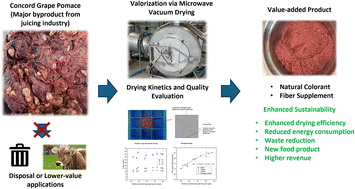
Concord grape (Vitis labrusca) pomace is a major processing waste and a valuable byproduct from the grape food industry that needs to be valorized. Microwave vacuum drying (MVD) was studied as a novel efficient technology to dry Concord grape pomace. Pomace cubes were dried under 8 kPa vacuum at 540, 1080, 2160 W microwave powers. Hot air drying (HAD) at 60 °C was used for comparison. The drying time, drying rates, effective moisture diffusivity, color metrics, and phenolic contents were experimentally determined. Drying kinetics during MVD were studied using the Page model and a mechanistic model coupling heat and moisture transfer characteristics. MVD reduced pomace moisture from 79% to 5% wet basis in 20–50 min, with 10-times higher average drying rates than HAD. The effective moisture diffusivity during MVD ranged from 1.1 × 10⁻⁷ to 3.4 × 10⁻⁷ m2 s−1, which increased with the increase in power density (W g−1) and decrease in sample moisture. The mechanistic and empirical models fitted the validation data well (Radj2 = 0.970 to 0.998). The pomace color was preserved without significant influences (p > 0.05) by drying time nor microwave power. The total polyphenolic content increased with the decrease in sample moisture, but not significantly influenced by the microwave power. Findings from this study suggest that MVD is a promising drying method for the grape industry to valorize grape pomace with improved quality and sustainability.
- This article is part of the themed collection: Emerging Investigators 2025
 Please wait while we load your content...


