


 PLATFORM UPDATE:


Melatonin-functionalized zinc oxide nanoparticles enhance salt stress tolerance in Vigna mungo L. by regulating antioxidants and ion homeostasis

Abstract
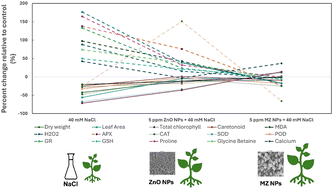
Salinity is a major abiotic stress that significantly restricts plant development and production by inducing osmotic stress, disturbing ion homeostasis, and promoting oxidative injury. This research explored the impact of salt stress on Vigna mungo L. (black gram) and the ability of seed priming with zinc oxide NPs (ZnO NPs) and melatonin-functionalized ZnO NPs (MZ NPs) in conferring salinity stress mitigation. This is, to the best of our knowledge, the first work in examining MZ NPs' impact on plants under salinity stress. The salt stress significantly reduced growth indices, chlorophyll, carotenoids, and potassium contents and increased oxidative stress, osmoprotectants, sodium ion, and calcium ion levels. Among the tested treatments, MZ NPs provided the most significant enhancement in growth indices, followed by ZnO NPs and melatonin (MT) application in individual form. Seed priming with ZnO NPs and MZ NPs fortified plants against salt stress by stabilizing photosynthetic pigments, decreasing ion concentration, enhancing uptake of potassium, increasing activities of antioxidant enzymes, regulating ion transport, and suppressing sodium toxicity. Interestingly, MZ NPs possessed greater ability in restoring photosynthetic pigments, diminishing oxidative stress, optimizing activities of antioxidant enzymes, and downplaying sodium concentration. In addition, they completely recovered the contents of potassium and reduced excessive accumulation of osmoprotectants, revealing that they were coping well with stress in a balanced fashion. The findings demonstrate the complementary advantage in combining ZnO NPs with melatonin, presenting a promising strategy in enhancing salt stress tolerance in plants and encouraging the cultivation of crops in a sustainable way.
 Please wait while we load your content...


