


 PLATFORM UPDATE:


Interfacial charge transfer in black carbon–mineral dust hybrids boosts atmospheric photooxidation
 *ab
Taicheng
An
ab
*ab
Taicheng
An
ab
Abstract
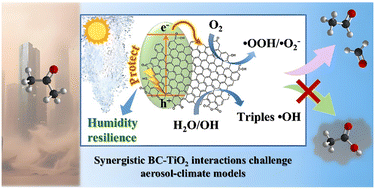
Synergistic interactions in multicomponent aerosols remain poorly quantified in atmospheric models. Here, we reveal how nanoscale interfaces in black carbon (BC)–mineral dust (e.g., TiO2) hybrid aerosols drive humidity-resilient photochemistry that amplifies VOC oxidation. Through integrated flow reactor kinetics and spectroscopy, we demonstrate that the π-conjugated structure of BC enhances interfacial charge separation, tripling ·OH generation versus pristine TiO2. Crucially, the hydrophobic nano-domains of BC shield active sites from water passivation, sustaining 53% catalytic activity at 50% RH, which is 2.5 times higher than that of TiO2 alone. These hybrids redirect oxidation pathways toward volatile aldehydes (>85% yield) while suppressing acidic byproducts, thereby altering secondary organic aerosol precursor dynamics. Our work quantifies the nanoscale synergies in charge transfer, humidity resilience, and product selectivity, challenging models that treat aerosols as isolated components. These insights advance predictive accuracy for air quality and climate feedbacks in dust-impacted regions by highlighting interface-engineered photochemistry.
 Please wait while we load your content...


