


 PLATFORM UPDATE:

Iron oxide nanoparticles as effective nano-fertilizers for alleviating arsenic toxicity in barley: physiological and molecular mechanisms†
 *ab
*ab
Abstract
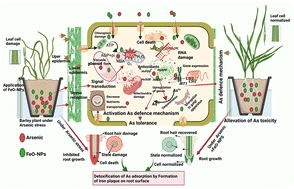
Arsenic (As) contamination in soils poses a significant threat to sustainable agriculture and food safety. The application of metal nanoparticle (MNP) technology in alleviating heavy metal toxicity is an emerging and promising field. However, little has been known about the effect of FeO-NPs in alleviating As toxicity and accumulation in plants. In this study we examined the roles of FeO-NPs in promoting barley growth and alleviating As toxicity. Exposure of plants to As stress (100 μM As) severely reduced growth and photosynthesis and also caused disorder of other physiological traits, including enhanced oxidative stress and nutrient imbalance. Addition of FeO-NPs (20 and 100 mg L−1) into nutrient solution containing As significantly alleviated the As toxicity of two barley genotypes, mainly reflected by better plant growth, higher photosynthetic rate, and lower AOS (active oxygen species) content. As toxicity and genotypic difference between BCS-158 (As tolerant) and BCS-016 (As sensitive) are closely related to As uptake and accumulation in plant tissues, with BCS-158 having lower As concentrations in both roots and shoots than BCS-016. Addition of FeO-NPs dramatically reduced As uptake and accumulation in the plants exposed to As treatment, thus resulting in alleviation of As toxicity. The reduction of As uptake and accumulation in the plants subjected to FeO-NPs is attributed to up-regulating the expression of iron transporter genes (HvIRT1 and HvIRT2) and suppressing the expression of arsenic transporter genes (HvLsi1 and HvLsi2). The current results show the potential of FeO-NP application in As-contaminated soils for improving crop production and food safety, but more research should be done to evaluate its ecological risk and determine the optimal doses before they are efficiently applied in crop production.
 Please wait while we load your content...


