


 PLATFORM UPDATE:


Morphology and porosity engineering enhance the photocatalytic activity of mesoporous CeTi2O6
 *a
and
S. Shahab
Naghavi
*a
*a
and
S. Shahab
Naghavi
*a
Abstract
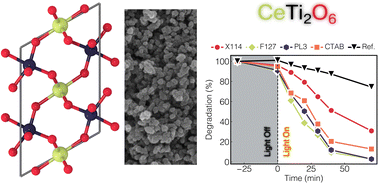
Unlocking the potential of photocatalysis for widespread applications requires highly efficient visible-light-driven photocatalysts. Here, we show that mesoporous cerium titanate (CeTi2O6), with the brannerite structure, is a potent visible-light photocatalyst that combines the strengths of cerium and titanium oxides (CeO2 and TiO2). Mesoporous CeTi2O6 was synthesized via a sol–gel method using diverse surfactant templates (F127, PL3, CTAB, and X114) to systematically tune its morphology and porosity for enhanced visible-light photocatalytic activity. Rigorous characterization techniques, including SEM, XRD, XPS, BET, DRS, and detailed first-principles density functional theory (DFT) calculations, reveal a cogent correlation between pore volume, catalytic efficiency, and calculated electronic work function. This enhancement is attributed to the refined mesoporous network and optimized electronic structure. Among the templates, F127-directed CeTi2O6 establishes 90.6% methylene blue degradation within 40 minutes of illumination under visible light. The exceptional performance of the F127 template originates from the interconnected pore network, high pore volume, and lower electronic work function. Our results highlight the critical role of morphology and electronic structure engineering in CeTi2O6, positioning it as a cost-effective, eco-friendly, and efficient photocatalyst for sustainable environmental applications.
 Please wait while we load your content...


