


 PLATFORM UPDATE:


Nanosize α-Bi2O3 decorated Bi2MoO6via an alkali etching process for enhanced photocatalytic performance†
Abstract
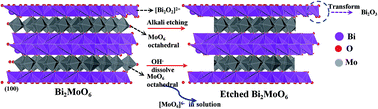
Bi2MoO6/Bi2O3 heterojunction photocatalysts were synthesized through a facile alkali etching method and their photocatalytic activity was evaluated by photodegradation of Rhodamine B (RhB) under visible-light irradiation. The photocatalysts were characterized by X-ray diffraction (XRD), scanning electron microscopy (SEM)/transmission electron microscopy (TEM), X-ray photoelectron spectroscopy (XPS) and UV-visible diffuse reflectance spectroscopy. XRD, TEM and XPS results confirm that the Bi2MoO6/Bi2O3 heterojunctions were formed after the alkali etching process. The photocatalytic activity can be easily controlled by adjusting the etching time and the highest visible-light-responsive photocatalytic performance was observed on Bi2MoO6/Bi2O3 composite that was etched in 0.1 M NaOH for 45 min. Moreover, the mechanistic study suggested that the photoinduced holes played a major role for the RhB degradation and the photocurrent tests confirmed that the effective electron–hole separation on the interface of the p–n junction promotes the photocatalytic process.
 Please wait while we load your content...


