


 PLATFORM UPDATE:

Perovskite photovoltaics featuring solution-processable TiO2 as an interfacial electron-transporting layer display to improve performance and stability†
Abstract
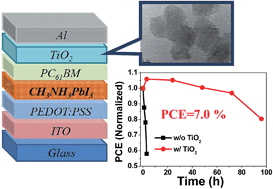
In this study we used solution-processable crystalline TiO2 nanoparticles as an interfacial modified layer between the active layer and aluminum cathode to fabricate CH3NH3PbI3/PCBM-based planar heterojunction perovskite photovoltaic (PPV) devices. We optimized the performance of the PPV device prepared without TiO2 by varying the preheating temperature of the indium tin oxide (ITO)/poly(3,4-ethylenedioxythiophene) (PEDOT) substrate, obtaining a power conversion efficiency (PCE) of 6.3% under simulated AM 1.5 G irradiation (100 mW cm−2). After incorporating the TiO2 layer, we obtained a much higher PCE of 7.0%. The TiO2-containing PPV device exhibited extremely high stability (retaining ∼96% of its PCE after 1000 h) under long-term storage in a dark N2-filled glove box; the unencapsulated device retained approximately 80% of its original efficiency (T80) after 1 week under ambient conditions (ISOS-D-1; defined as 23 °C/50% RH). In contrast, the normal device was sensitive to ambient conditions with a value of T80 at only 3 h. We attributed the improved device performance (PCE, stability) to the enhanced electron transporting, hole blocking, and barrier properties arising from the presence of the TiO2 layer.
 Please wait while we load your content...


