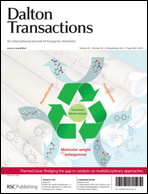
Solid polyenzymatic biocatalysts have been designed by combining two immobilized enzymes, the first one allowing the in situ generation of H2O2 from air and the second one performing an oxidation reaction. The in situ H2O2 generation system is based on the reaction of glucose with air using a glucose oxidase (GOx). The optimization of the encapsulation of GOx into phospholipids-templated silica capsules (NPS) was performed. A bienzymatic system made of GOx and horseradish peroxidase (HRP) was studied. Optimal conditions for the activity of the GOx/HRP bienzymatic system have been determined for both homogeneous and heterogeneous conditions. The encapsulation in NPS materials increases the stability of both enzymes. The performance of the encapsulated bienzymatic GOx/HRP system in the model reaction of 4-aminoantipyridine with phenol is similar when the enzymes are immobilized separately in two NPS or coencapsulated in the same NPS. An excess of peroxidase compared to GOx ([HRP]/[GOx] = 5–10) is necessary to obtain the optimal activity. To show the potentiality of bienzymatic systems in real applications, HRP has been replaced by hemoglobin, which is known for its ability to oxidize polycyclic aromatic hydrocarbons (PAH) pollutants through a pseudoperoxidase pathway. A larger excess of Hb compared to GOx ([Hb]/[GOx] = 1000) was necessary to obtain the maximum PAH removal, as Hb is not a real peroxidase as HRP but a hemoprotein with some pseudoperoxidase activity. In opposite to real enzymes, the immobilization of Hb by adsorption in mesoporous silica is preferable as its encapsulation. Therefore, the bienzymatic system made of GOx encapsulated in NPS and Hb adsorbed in mesoporous silica has been used for the removal of 11 PAH from water. This heterogeneous bienzymatic system allows 64% of PAH removal from water using simple air as oxidant.

You have access to this article
 Please wait while we load your content...
Something went wrong. Try again?
Please wait while we load your content...
Something went wrong. Try again?


 PLATFORM UPDATE: