


 PLATFORM UPDATE:


Ethylene glycol: properties, synthesis, and applications
Abstract
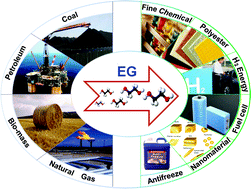
Ethylene glycol (EG) is an important organic compound and chemical intermediate used in a large number of industrial processes (e.g. energy, plastics, automobiles, and chemicals). Indeed, owing to its unique properties and versatile commercial applications, a variety of chemical systems (e.g., catalytic and non-catalytic) have been explored for the synthesis of EG, particularly via reaction processes derived from fossil fuels (e.g., petroleum, natural gas, and coal) and biomass-based resources. This critical review describes a broad spectrum of properties of EG and significant advances in the prevalent synthesis and applications of EG, with emphases on the catalytic reactivity and reaction mechanisms of the main synthetic methodologies and applied strategies. We also provide an overview regarding the challenges and opportunities for future research associated with EG.
 Please wait while we load your content...


