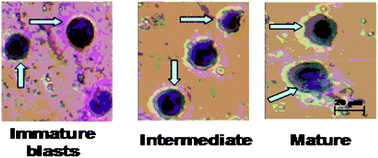
Monascus-fermented products offer valuable therapeutic benefits and have been extensively used in East Asia. However, the polysaccharide obtained from Monascus-fermented products has never been investigated. This study evaluated the effects of dioscorea polysaccharide (DPS) and red mold dioscorea polysaccharide (RMDPS) on differentiation of leukemic THP-1 cells. DPS and RMDPS inhibited THP-1 cells proliferation in dose- and time-dependent manners. The differentiation induction (macrophage-like cells) was observed when THP-1 cells were treated with DPS and RMDPS for 5 days. Superoxide anion production, phagocytic capacity, and cytokine secretion confirmed activity for differentiating THP-1 cells. Results indicated that RMDPS elevated reactive oxygen species production and immune activity, including phagocytosis, interleukin-1β (IL-1β), tumor necrosis factor-α (TNF-α), and interferon-γ (IFN-γ) productions in THP-1 cells, which was greater than that seen with DPS. These results may be attributed to Monascus-fermentation altering the carbohydrate components and polysaccharide structure. RMDPS may serve as a novel material and functional ingredient to exert anticancer capacity.
You have access to this article
 Please wait while we load your content...
Something went wrong. Try again?
Please wait while we load your content...
Something went wrong. Try again?


 SCHEDULED MAINTENANCE