This website uses cookies to give you the best user experience. If you continue
without changing your settings we'll assume you are happy to receive all RSC cookies.
You can change your cookie settings by navigating to our Privacy and Cookies page and following the instructions. These instructions
are also obtainable from the privacy link at the bottom of any RSC page.
Center for Human Nutrition, David Geffen School of Medicine, University of California Los Angeles, 900 Veteran Avenue, Warren Hall 14-166, Los Angeles, USA
E-mail: shenning@mednet.ucla.edu.
; Fax: +310-206-5264
; Tel: +310-825-9345
Food Funct., 2012,3, 635-642
DOI:
10.1039/C2FO10254D
Received
16 Nov 2011,
Accepted
29 Feb 2012
First published online
22 Mar 2012
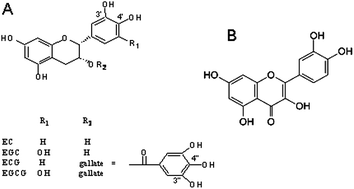
The extensive methylation of green tea polyphenols (GTPs) in vivo may limit their chemopreventive potential. We investigated whether quercetin, a natural inhibitor of catechol-O-methyltransferase (COMT) and multidrug resistance proteins (MRPs), will differentially increase the intracellular concentration and decrease the methylation of GTPs in different cancer cell lines. Intrinsic COMT activity was lowest in lung cancer A549 cells, intermediate in kidney 786-O cells and highest in liver HepG2 cells. Quercetin increased the cellular absorption of epigallocatechin gallate (EGCG) four-fold in A549 cells with a decreased methylation rate from 63 to 19%, 2-fold in 786-O cells with a decreased methylation from 97% to 56%, while no significant effect was observed in HepG2 cells. The combination significantly decreased the activity and protein expression of COMT and decreased the protein expression of MRP1 compared to individual treatments. The combination exhibited the strongest increase in antiproliferation in A549 cells, an intermediate effect in 786-O cells and lowest effect in HepG2 cells. The effect of quercetin on bioavailability and metabolism of GTPs was confirmed in vivo. Severe combined immunodeficiency (SCID) mice were administered brewed green tea (GT) and a diet supplemented with 0.4% quercetin alone or in combination for 2 weeks. We observed a 2- to 3-fold increase of total and non-methylated EGCG in lung and kidney and an increasing trend in liver. In summary, combining quercetin with GT provides a promising approach to enhance the chemoprevention of GT. Responses of different cancers to the combination may vary by tissue depending on the intrinsic COMT and MRP activity.
Fetching data from CrossRef. This may take some time to load.