


 SCHEDULED MAINTENANCE


A review on exergy comparison of hydrogen production methods from renewable energy sources
Abstract
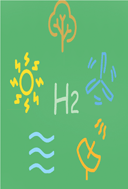
Hydrogen is an important energy carrier which could play a very significant role in the reduction of emissions of greenhouse gases. The route by which hydrogen is produced is the determining factor for its environmental performance. Hydrogen can be produced through methane reforming or through the electrolysis of water with the use of electricity or it can be produced directly by gasification from biomass. Renewable energy sources (RES) could be the feedstock for the two methods previously mentioned. The objective of this work is the comparison of hydrogen (H2) production processes using various renewable energy sources. This comparison is based on the exergy efficiency of each process. The renewable energy sources that have been used are: wind power, solar energy, hydroelectric power, and biomass. The solar energy systems that are used are photovoltaic and thermal. The biomass systems are divided into two categories: (a) electricity production through biomass combustion, (b) biomass gasification for the direct production of hydrogen. When in any of the processes electricity is produced, this electricity is used for the electrolysis process of water to produce hydrogen (and oxygen). Because hydrogen is transported in a liquid form, the liquefaction process is also taken into consideration in this work. The liquefaction process is very energy intensive and as a consequence it requires a lot of exergy. It has been found that the hydrogen production process with the highest exergy efficiency is the electrolysis using electricity from hydro power. This efficiency is 5.6%. The process with the lowest exergy efficiency is the one with electrolysis driven by electricity from solar energy photovoltaics. The efficiency of this process is 1.0%.
 Please wait while we load your content...


