


 PLATFORM UPDATE:


Atmospheric self-evolution and hydrogen storage of Mg80Ni20Hx induced by wet ball milling

Abstract
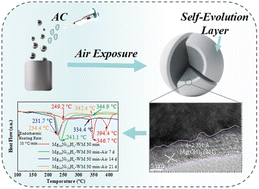
Hydrogen energy is a pillar of the future green energy system and is critical to achieve carbon neutrality, energy security, and sustainable development. Magnesium-based hydrogen storage materials, with environmental air stability and self-evolution characteristics, could optimize dehydrogenation performance with longer air exposure, which is considered to be one of the critical challenges for their large-scale utilization. In this work, the effect of mechanical wet ball milling treatment on the air stability of magnesium-rich nickel hydrides (Mg80Ni20Hx) was investigated by modulating the wet ball milling time. The sample after wet ball milling for 30 min (Mg80Ni20Hx-WM-30 min) exhibited excellent self-evolution specificities and environmental air stability. After air exposure for 14 days, a significant decrease in dehydrogenation temperature of 115 °C occurred, while the air exposed sample could retain 87.32% of the hydrogen storage capacity. It is worth noting that wet ball milling can dramatically reduce the time required for self-evolution while improving the air stability. The smooth surface of the particles produced by wet ball milling can prevent the interior of the particles from reacting with water and oxygen in the air. This work may guide the design and development of reversible metal hydrides with self-evolving effects and air stability.
- This article is part of the themed collection: Sustainable Energy & Fuels Recent HOT Articles
 Please wait while we load your content...


