DOI:
10.1039/D5TC00115C
(Paper)
J. Mater. Chem. C, 2025,
13, 10178-10193
Impact of oxygen vacancy reduction on the dielectric, energy storage, and electrocaloric properties of annealed BCZT ceramic
Received
10th January 2025
, Accepted 8th April 2025
First published on 22nd April 2025
1. Introduction
In recent years, the pursuit of energy storage, electrocaloric and piezoelectric characteristics of lead-free materials has garnered significant attention, driven by growing demand for sustainable and eco-friendly alternatives in advanced electronic applications. Within this context, lead-free ferroelectric ceramics have emerged as a focal point of research due to their potential to replace traditional lead-based materials, which pose environmental hazards. The scientific community has identified four promising lead-free candidates: barium titanate (BaTiO3, commonly referred to as BT), potassium–sodium niobate ((K,Na)NbO3, (KNN)), bismuth sodium titanate ((Bi0.5Na0.5)TiO3, (BNT)) and bismuth potassium titanate ((Bi0.5K0.5)TiO3, (BKT)). Among them, alkali-based materials (KNN, BNT, and BKT) showcase favorable electrical properties. However, they also present significant challenges, notably regarding their low sintering temperature range, resulting in poor densification and stoichiometric instability. The volatile nature of alkali elements, particularly potassium and sodium, complicates the fabrication process and negatively impacts the electromechanical properties of the resulting ceramics.1 Barium titanate (BT) has played a pivotal role in the evolution of ferroelectric ceramics. As the first ceramic material to demonstrate ferroelectricity and small-signal piezoelectricity, BT has set a benchmark for subsequent materials. Notably, BT-based materials are recognized for their environmentally friendly nature, chemical stability, and capability of being sintered at elevated temperatures to achieve higher densities.1 These characteristics contribute to enhanced dielectric, ferroelectric, and piezoelectric properties, paving the way for their application in advanced electronic devices. Still, the exceptional properties in lead-based ceramics (for example, lead zirconate, PZT) have fueled the ongoing search for alternative materials that can either match or surpass PZT ceramic's performance. Many ceramics fall short, exhibiting inferior piezoelectricity, lower dielectric constants, and higher dielectric losses compared to PZT. A significant breakthrough occurred in 2009 with the advent of phase boundary engineering in BT-based ceramics. This innovation involved chemical modification through the co-substitution of Ca2+ and Zr4+ ions, leading to an impressive piezoelectric constant of ∼620 pC N−1 in the optimally designed Ba(Ti0.8Zr0.2)O3–(Ba0.7Ca0.3)TiO3 composition.2 The ramifications of these advancements have been profound, leading to considerable progress in phase boundary construction, enhancement of piezoelectricity, and a deeper understanding of the underlying mechanisms in BT-based ceramics. The role of lattice defects (oxygen vacancies) in BT-based ceramics is an emerging area of interest due to their significant impact on the ceramic's structural and electrical properties.3–5 For example, Alkathy et al. demonstrated that introducing Mg2+ ions into the BT lattice induces defects and grain boundary effects, significantly increasing the ferroelectric and energy storage properties.6 In a reducing atmosphere (low oxygen availability, e.g., in air, nitrogen, or vacuum environments) when the ceramics are sintered, oxygen atoms tend to leave the BT crystal lattice according to the following reaction as per the Kroger Vink notation:7| | 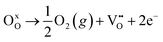 | (1) |
where, OxO represents the oxygen atom at its normal lattice site,  is the gaseous oxygen formed after oxygen leaves the lattice, and
  symbolizes the oxygen vacancy, represented as a site in the lattice where oxygen is missing. It has a positive effective charge (˙˙) relative to the lattice because two free electrons (2e−) are generated when an oxygen atom departs. Besides the high temperature sintering, substituting an ion with one that has a lower charge results in an imbalance in the overall charge of the lattice. In order to uphold overall charge neutrality within the crystal structure, the lattice addresses this imbalance through the formation of oxygen vacancies.8 A reduced concentration of oxygen vacancies results in a more stable crystal structure, thereby minimizing losses during polarization.9 Oxygen defects in ceramics can be minimized through sintering in an oxygen-rich atmosphere,4 employing advanced techniques like spark plasma sintering (SPS),10,11 isoelectronic or donor ion doping,12,13 and post-sintering annealing.14–16 These approaches ensure a stoichiometric ratio and reduce defect-induced degradation of electrical properties. For example, Liu et al. explored BCZT ceramics doped with 0.1 mol% Y3+ and 0.1 mol% Nb3+ ions in various sintering atmospheres, such as oxygen, air, argon, and vacuum conditions, to figure out the impact of the concentration of oxygen vacancies. Their findings revealed that sintering in oxygen-rich conditions significantly affects oxygen compensation by elevating the formation energy of oxygen vacancies. Atmospheric oxygen incorporates into the crystal lattice, lowering the occurrence of oxygen vacancies, resulting in an increased lattice oxygen concentration and a decline in oxygen vacancy prevalence.4 Supriya highlighted that SPS significantly benefits perovskite materials by promoting crystal growth and densification at lower temperatures, reducing oxygen vacancies, and improving electrical properties.11 Zheng et al. demonstrated that integrating donor ions into ceramics restricts the concentration of oxygen vacancies. The reduction in vacancies decreases domain pinning and increases domain wall mobility, thereby improving the electrical properties of the ceramics. As an illustration, XPS analysis showed that doping BCZT with 0.10 mol% Ce3+ ions reduced the ratio of oxygen vacancies to lattice oxygen from 1.54 to 1.04.13 Building on this foundation, this study explores the Ba0.98Ca0.02Zr0.07Ti0.93O3 composition, utilizing the synergistic effect of co-substitution with post-sintering annealing. Through this approach, we investigated the structural, microstructural, dielectric, energy storage, and electrocaloric properties of eco-friendly annealed BCZT ceramics.
2. Experimental details
Ba0.98Ca0.02Zr0.07Ti0.93O3 (BCZT) ceramic was prepared through the high-temperature solid-state reaction technique. Initially, stoichiometric amounts of high-purity precursors were selected including BaCO3 (Sigma-Aldrich, 99.9%), CaCO3 (Sigma-Aldrich, 99.9%), ZrO2 (Sigma-Aldrich, 99.9%), and TiO2 (Sigma-Aldrich, 99.9%). These materials were mixed thoroughly by grinding with a mortar & pestle for 3 hours. The mixture underwent processing for eight hours in an ethanol solution utilizing a low-energy ball mill with zirconia balls. After drying, the resulting lump was pulverized and calcined at 1200 °C for 6 hours. The calcined BCZT powders were ground again and shaped into disk-shaped pellets, measuring 1 mm thickness and 10 mm in diameter, with the addition of 2 wt % polyvinyl alcohol (PVA) as a binder. The pellets were heated up to 600 °C at a rate of 1 °C per min for 2 h in order to eliminate the PVA binder. The binder-free pellets were subjected to sintering for a duration of 2 h at 1400 °C in air atmosphere. Sintered pellets were annealed at 800 °C for 5 h in an oxygen rich atmosphere. Finally, silver paste was applied to opposite faces of the post-sintered annealed and polished pellet (1 mm thick and 10 mm in diameter) to form electrodes (78.5 mm2 per side) for electrical measurements. The procedure of the synthesis of the annealed BCZT ceramic is illustrated in Fig. 1.
 |
| | Fig. 1 Systematic procedure for the synthesis of the annealed BCZT ceramic. | |
A PANalytical Empyrean X-ray diffractometer (XRD) equipped with Cu Kα (λ = 1.5405 Å) radiation was used to analyze the phase purity of the annealed sample within a 2θ range of 20° to 80°. The X-ray diffraction (XRD) pattern was subjected to Rietveld refinement using FULLPROF software.17 Raman spectra were obtained at room temperature within a 100 to 850 cm−1 wavenumber range utilizing a Raman spectrometer (Alpha 300). A scanning electron microscope (SEM, JSM 6610LV) with energy-dispersive X-ray spectroscopy (EDX) was used for the surface morphology and the elemental analysis of the annealed ceramic's surface coated with gold. The chemical state and concentration of oxygen vacancies in the annealed ceramic were evaluated through X-ray photoelectron spectroscopy, utilizing a Thermoscientific XPS system provided with a monochromatic Al Kα X-ray source. The dielectric constant and tangent loss were measured at different frequencies (100 Hz–10 kHz) and temperatures, spanning from 25 °C to 220 °C, using a programmable furnace fitted with an Alpha-A high-performance modular measurement instrument manufactured by Novocontrol Technologies Germany. The converse piezoelectric coefficient, calculated from the strain versus electric field curve, was measured at ambient temperature using an Autocal 230 °C Piezoelectric (Converse D33) Thermal Test Chamber linked to a Radiant Multiferroic tester. Polarization–electric field (P–E) hysteresis loops were assessed at varying temperatures utilizing a P–E loop tracer supplied by Marine India.
3. Results and discussion
3.1 XRD analysis
The observed XRD pattern of the annealed BCZT ceramic is shown in Fig. 2(a). The observed peaks are consistent with the established diffraction patterns of BaTiO3 as specified in the Joint Committee on Powder Diffraction Standards (JCPDS) files #79-2264 and #81-2200. The pattern corresponds to the tetragonal (T) and orthorhombic (O) phases of BaTiO3, respectively.
 |
| | Fig. 2 (a) The XRD pattern, its insets show the Gaussian fitting at the 2θ range 44.5°–46° and 64.5°–66.5° of the annealed BCZT ceramic. (b) A comparison of the XRD pattern of sintered and annealed BCZT samples, (c) the Rietveld refinement pattern, (d) a 3-D pie chart of wt% phase composition, the inset shows the crystal structure of the annealed sample, and (e), (f) an electron density graph of sintered and annealed BCZT ceramics, respectively. | |
Furthermore, the Gaussian fitting of the peaks at 2θ = 45° and 65.5°, as shown in the insets of Fig. 2(a), provides additional evidence for the simultaneous presence of tetragonal (T) and orthorhombic (O) phases in the annealed BCZT ceramic. Fig. 2(b) compares the XRD patterns of BCZT ceramics measured at room temperature, illustrating the differences between the post-annealed sample (annealed) and that from a previous study on the same BCZT composition that was not annealed (sintered).2 The comparison reveals that post-annealing causes the XRD peaks to shift to lower angles. This shift is particularly evident for the primary peak ≈31°, which is highlighted in the inset of Fig. 2(b).
3.2 Rietveld refinement
The Rietveld refinement analysis was carried out against the XRD pattern of the annealed BCZT ceramic. The results, as depicted in Fig. 2(c), confirm the coexistence of tetragonal (T, P4mm) and orthorhombic (O, Amm2) phases and their corresponding percentage is shown as a 3-D pie chart in Fig. 2(d). The corresponding lattice parameters (a, b, c), along with the unit cell volume (V) and atomic coordinates (x, y, z) are given in Table 1. The annealed sample demonstrates larger lattice parameters (a, b, c) compared to the sintered sample2 for both existing phases. Annealing in an oxygen environment increases the formation energy of oxygen vacancies, allowing atmospheric oxygen to get into the lattice and enhance crystal plane spacing.18 The unit cell volumes are measured as 64.9646 Å3 and 65.0018 Å3 for the tetragonal phase and 129.3435 Å3 and 129.8290 Å3 for the orthorhombic phase,2 corresponding to the sintered2 and annealed samples, respectively. Additionally, as shown in Table 1, the annealed BCZT ceramic displays an excellent tetragonality ratio (c/a) of approximately 1.0089, compared to 1.0070 for the sintered sample.2 This suggests the potential for improved dielectric, ferroelectric and piezoelectric properties of annealed BCZT ceramics. The bulk density, determined using Archimedes’ principle, is 5.93 g cm−3, translating to an impressive relative density of 98.50% of the annealed sample. The VESTA software19 generated crystal structure of the annealed BCZT compound, utilizing the parameters listed in Table 1, is illustrated in the inset of Fig. 2(d).
Table 1 The lattice parameters (a, b c), along with the unit cell volume (V) and atomic coordinates (x, y, z) of tetragonal and orthorhombic phases present in the annealed BCZT ceramics
| Phases |
Lattice parameters |
Atoms |
Wyckoff position |
Coordinates |
|
x
|
y
|
z
|
| Tetragonal |
a = 4.0089 Å |
Ba/Ca |
1a |
0.0 |
0 |
0 |
|
b = 4.0089 Å |
Ti/Zr |
1b |
0.5 |
0.5 |
0.4599 |
|
c = 4.0446 Å |
O1 |
1b |
0.5 |
0.5 |
−0.0453 |
|
c/a = 1.0089 Å |
O2 |
2c |
0.5 |
0 |
0.5713 |
|
V = 65.0018 Å3 |
|
|
|
|
|
| Orthorhombic |
a = 4.0117 Å |
Ba/Ca |
2a |
0 |
0 |
0 |
|
b = 5.6834 Å |
Ti/Zr |
2b |
0.5 |
0 |
0.4911 |
|
c = 5.6939 Å |
O1 |
2a |
0 |
0 |
0.5015 |
|
V = 129.8290 Å3 |
O2 |
4e |
0.5 |
0.2212 |
0.2406 |
In ceramics, electron density refers to the spatial distribution of electrons around atoms, which influence the ceramics’ electrical properties.20 The electron density within the ceramic unit cell was mapped using the Fourier subprogram in FULLPROF software. Fig. 2(e) and (f) illustrates the electron density distribution graph of the sintered and annealed BCZT ceramic, respectively, revealing that the annealed BCZT ceramic exhibits a high electron density. In these figures, the x/a and y/a axes represent fractional crystallographic coordinates, where x and y are spatial positions normalized by the lattice parameter ‘a’. This normalization ensures that the electron density distribution is presented in a scale-independent manner, making it easier to compare across different structures. The color gradient in the plot corresponds to the numerical electron density values, as indicated by the color scale. Higher peaks represent regions of greater electron localization, indicating charge accumulation around highly polarizable Ti/Zr sites due to their asymmetric Wyckoff positions. This localization strengthens ion–electric field interactions, facilitating effective dipole alignment.21 Oxygen vacancies play a crucial role in modifying electron density by acting as electron-trapping sites, creating localized energy states that capture free electrons and hinder their mobility. Upon annealing in an oxygen rich environment, oxygen ions from the surrounding atmosphere diffuse into the ceramic lattice, filling these vacancies and restoring the charge balance. This process not only eliminates the localized disruptions caused by oxygen defects but also releases electrons previously trapped at these sites, increasing overall electron density. The enhanced electron density improves piezoelectric properties by intensifying ion–electric field interactions, promoting greater ion displacement, and increasing polarization, thereby enhancing the annealed BCZT ceramic's overall dielectric and piezoelectric performance.22
3.3 Raman spectroscopy
Raman spectroscopy enables a more profound understanding of the chemical bonding and structural attributes of the BCZT ceramic. This technique can also identify non-crystalline secondary phases that may not be detectable through conventional XRD measurements.23Fig. 3(a) compares the Raman spectra for the sintered and annealed BCZT sample. From this figure, it is evident that a Raman-active, asymmetric breathing mode (A1g) is observed at 795.15 cm−1, as highlighted in the inset of Fig. 3(a). This mode is prominent in the sintered sample but significantly less pronounced in the annealed sample. The presence of the A1g mode is associated with the formation of oxygen vacancies at both Ba2+ and Ti4+ sites. Even when subtle, this mode serves as a reliable indicator of oxygen vacancies in ceramic.24 The deconvoluted Raman spectrum of the annealed BCZT compound is illustrated in Fig. 3(b). Further, analyzing the Raman spectrum is complicated by compositional disorder resulting from substitution at the Ba2+ or Ti4+ sites within the parent (BT) structure. For example, the substitution of the Zr4+ ion at the Ti4+ site, which possesses different ionic radii and mass, leads to two distinct environments within the BT lattice. These encompass surroundings of TiO6 and ZrO6 octahedra. The nonpolar ZrO6 octahedra weakens the dipolar interactions between the polar TiO6 octahedra, which modifies the overall vibrational and electrical properties of the BCZT ceramic.25 Pristine BT possesses a structure composed of two distinct sublattices: one comprising covalently interconnected TiO6 octahedra that share oxygen atoms and the other consisting of Ba2+ cations, where the predominant interactions are of a coulombic nature.26 The Raman spectrum in the lower wavenumber region (100–250 cm−1) is predominantly linked to the lattice and the cationic structure. In contrast, the wavenumber range from 250–900 cm−1 pertains to the stretching and bending modes of the covalently bonded octahedra.2 At room temperature, the vibrational modes in the ferroelectric tetragonal phase decompose into two parts, which are symbolized by the A1 + E irreducible representations of P4mm symmetry. These modes further split into longitudinal optical (LO) and transverse optical (TO) components, propelled by long-range electrostatic forces resulting from the intrinsic ionic structure of the ceramic.27 In the present study, annealed BCZT ceramic exhibits a range of modes, including [A1(TO)], [A1(LO)], [E(TO + LO)], [B1 + E(TO + LO)], [E(TO) + A(LO)], [A1(TO), E(TO)], and [A1(LO), E(LO)]. The results align well with the reported data.2,24,28 The bands observed in the 140–330 cm−1 range correspond to O–Ti–O bending and A–O vibration modes, with A denoting Ba2+ and Ca2+ cations. In contrast, the bands found in the 330–650 cm−1 range are connected to the torsional modes of Ti–O bonds.24 The E(LO) and A1(LO) bands signify Ti–O stretching vibrations and act as a unique indicator of tetragonal distortion27. The annealed BCZT sample exhibits a coexistence of tetragonal and orthorhombic (T + O) phases, indicated by the presence of the E(TO + LO) mode. Additionally, the existence of an orthorhombic structure is corroborated by the presence of the E(TO) + A(LO) mode in the BCZT sample.29 The Raman spectrum conclusively affirms the coexistence of both tetragonal and orthorhombic phases in the annealed BCZT ceramic, as well as a decrease of oxygen vacancies in the annealed sample. Thus, the Raman analysis corroborates the XRD result of the annealed BCZT compound.
 |
| | Fig. 3 (a) Graphs of the Raman spectra of sintered and annealed samples and the inset shows an enlarged view of the A1g mode. (b) The deconvoluted extended Raman spectrum of annealed BCZT ceramic. | |
Comprehensive crystallographic and Raman analyses of the sintered and annealed BCZT samples confirm that annealing in an oxygen-rich environment effectively reduces oxygen vacancies in the annealed BCZT sample. Furthermore, previous research has established that oxygen vacancies have a negative effect on the studied electrical properties.3–5 Based on this understanding, the morphology and electrical properties have been investigated exclusively for the annealed BCZT sample to ensure accurate and meaningful insights.
3.4 Morphology and compositional analysis
Fig. 4(a) presents the scanning electron microscopic (SEM) image of the annealed BCZT ceramic, showcasing a well-developed, highly dense, and compact microstructure featuring inhomogeneous grains, devoid of pores. The accompanying histogram in Fig. 4(b) depicts the grain size distribution, demonstrating that most grains fall within the 3–4 μm range for the annealed BCZT ceramic. Energy dispersive X-ray spectroscopy (EDX) analysis was conducted to evaluate the chemical uniformity and elemental composition of the annealed BCZT ceramic. The result is shown in Fig. 4(c). The identification of only Ba, Ca, Ti, Zr, and O elements in the spectrum indicates the chemical purity of the annealed BCZT composition. The inset of Fig. 4(c) presents the theoretical and experimental atomic percentages of the elements present in the annealed BCZT ceramic. The experimental atomic values closely align with the theoretical atomic percentages, indicating a strong association with expected values. EDS elemental mappings of annealed BCZT ceramic are shown in Fig. 4(d)–(i). The mapping images reveal the uniform dispersion of key elements, ensuring the ceramic's homogeneity. Calcium and zirconium mappings appear relatively sparse, which is expected due to their lower concentration in annealed BCZT ceramic. The oxygen mapping confirms proper oxidation, maintaining a stoichiometric balance. The overlaying image confirms the homogeneous elemental distribution without significant phase segregation.
 |
| | Fig. 4 (a) SEM image, (b) histogram for the size of the grains, (c) EDS pattern, and (d)–(i) elemental mappings of Ba, Ca, Zr, Ti, and O and an overlay of the annealed BCZT sample, respectively. | |
To further analyze the chemical state and oxygen vacancy concentration in the annealed BCZT ceramics, X-ray photoelectron spectroscopy (XPS) was employed. This approach is well-established for its capability to elucidate the chemical states of elements and quantify oxygen vacancies. The formation of an oxygen vacancy peak in the XPS spectrum is primarily due to the change in local electronic environment caused by missing oxygen anions in the lattice.30 When an oxygen vacancy forms, the surrounding metal cations (such as Ti4+ or Zr4+) become unscreened, meaning their effective positive charge increases due to the absence of nearby negatively charged oxygen ions. This charge imbalance alters the electronic structure, leading to a redistribution of electron density in the vicinity of the vacancy. As a result, the remaining oxygen atoms experience a stronger nuclear attraction, which makes their core O 1s electrons more tightly bound and they thus require a higher binding energy for their photoemission. Additionally, oxygen vacancies introduce localized defect states within the bandgap, which can trap electrons and further modify the overall charge distribution. In the XPS spectrum, the main O 1s peak (typically observed around 529–530 eV) corresponds to fully coordinated lattice oxygen, whereas the additional peak at a higher binding energy (around 531–532 eV) is attributed to the presence of oxygen vacancies.30 The survey spectrum depicted in Fig. 5(a) reveals peaks corresponding to Ba, Ca, Zr, Ti, and O, in addition to a C 1s peak for calibration, as identified using the NIST XPS database.31 High-resolution individual XPS spectra of individual elements is shown in Fig. 5(b)–(f). In the Ti 2p spectrum (Fig. 5(e)), peaks at 458.20 eV and 463.90 eV correspond to Ti4+ core levels, while a sub-peak at 456.72 eV signifies the existence of Ti3+.25 This indicates that the formation of Ti3+ compensates for oxygen vacancies, as the shift from Ti4+ to Ti3+ adjusts local charge shortage resulting from oxygen loss. The O 1s spectrum (Fig. 5(f)) exhibits three different peaks corresponding to lattice oxygen at 529.63 eV, oxygen vacancies at 531.27 eV, and chemisorbed oxygen at 532.63 eV.3 Post-sintered annealing in an oxygen-rich atmosphere decreases Ti3+ concentration (3.30%) and oxygen vacancies (8.80%) compared to the other reported data.3,25 These XPS results are consistent with the Raman spectroscopy analysis, where the absence or significant reduction of the A1g band indicates a notably lower concentration of oxygen vacancies in the annealed sample. This reduction eliminates defect-related electronic states, resulting in a notable improvement in the ceramic's electrical properties as mentioned in the following sub-sections.
 |
| | Fig. 5 (a) XPS survey scan, (b)–(f) High resolution XPS scan of elements Ba, Ca, Zr, Ti, and O, respectively, of annealed BCZT ceramic. | |
3.5 Dielectric study
The temperature-dependent dielectric constant (ε) and loss tangent (tan![[thin space (1/6-em)]](https://www.rsc.org/images/entities/char_2009.gif) δ) of annealed BCZT ceramic at different frequencies are shown in Fig. 6(a). To ascertain the phase transition, the graph of differential dielectric constant with temperature at 1 kHz is illustrated in the inset of Fig. 6(a), which demonstrates two well-defined peaks. The peak occurring at ∼55 °C signifies the orthorhombic to tetragonal phase transition (TO–T), whereas the peak appearing at ∼93 °C indicates the tetragonal to cubic phase transition, also known as the Curie temperature (TC). The outcome shows that the annealed BCZT ceramic goes through two well-defined phase transitions. The dielectric loss tangent (tanδ) primarily quantifies energy dissipation due to domain wall motion, defect dipoles, and extrinsic relaxations.32 In ferroelectric ceramics like BCZT, domain boundaries play a crucial role in the dielectric response by facilitating or hindering polarization switching. Under an alternating electric field, domain wall motion contributes significantly to dielectric losses, particularly at lower frequencies where domain wall displacements are more pronounced.32 Additionally, defects such as oxygen vacancies can interact with domain walls, pinning their motion and further influencing dielectric loss behavior. The tanδ value attains its peak near the high-temperature dielectric maximum. At 1 kHz, the peak dielectric constant (εm) and tanδ near Tc are ∼14685 and ∼0.04, respectively. Even at room temperature, the dielectric constant and tanδ values are impressive among existing literature,33–35 at ∼3069 and ∼0.023, respectively. Such a high dielectric constant indicates exceptional polarization capability, making the ceramic highly suitable for energy storage and capacitor applications. The elevated dielectric constant can be attributed to the minimal presence of oxygen defects. This lack of oxygen vacancies allows for the efficient release of internal stresses within the grains, thereby enhancing the ceramic's dielectric response.36 Oxygen vacancies disrupt the uniformity of the lattice, creating localized distortions and internal stress that hinder the reorientation of dipoles and movement of domain walls. The stress reduces the ceramic's polarizability and dielectric constant while increasing dissipation energy. When oxygen vacancies are minimized, the lattice becomes more uniform and stable, allowing for efficient stress relaxation. This uniform structure facilitates the smooth alignment of dipoles under an electric field and enhances domain wall mobility, which are key contributors to a higher dielectric constant and lower dielectric loss. At temperatures exceeding 140 °C, the variation in tanδ is ascribed to the larger effect of grain boundaries relative to grains, consistent with Maxwell–Wagner interfacial polarization, as outlined in Koop's phenomenological theory.22 In a polycrystalline material, grains are usually more conducting, while grain boundaries are more resistive. As temperature increases, the grain boundaries become more dominant because their resistivity allows them to accumulate more charge carriers. This difference in conductivity between the grains and grain boundaries causes charge carriers to pile up at the interfaces (at grain boundaries), leading to increased polarization. This interfacial polarization is referred to as the Maxwell–Wagner effect. Koop's phenomenological theory further describes this behavior by considering the ceramic as a series of capacitors (grains) and resistors (grain boundaries) in parallel. At higher temperatures, charge carrier mobility at grain boundaries becomes enhanced, increasing interfacial polarization due to the Maxwell–Wagner mechanism, which leads to a polarization lag and higher energy dissipation (higher tanδ values), especially at lower frequencies, where there is more time for the interfacial polarization to develop.37
δ) of annealed BCZT ceramic at different frequencies are shown in Fig. 6(a). To ascertain the phase transition, the graph of differential dielectric constant with temperature at 1 kHz is illustrated in the inset of Fig. 6(a), which demonstrates two well-defined peaks. The peak occurring at ∼55 °C signifies the orthorhombic to tetragonal phase transition (TO–T), whereas the peak appearing at ∼93 °C indicates the tetragonal to cubic phase transition, also known as the Curie temperature (TC). The outcome shows that the annealed BCZT ceramic goes through two well-defined phase transitions. The dielectric loss tangent (tanδ) primarily quantifies energy dissipation due to domain wall motion, defect dipoles, and extrinsic relaxations.32 In ferroelectric ceramics like BCZT, domain boundaries play a crucial role in the dielectric response by facilitating or hindering polarization switching. Under an alternating electric field, domain wall motion contributes significantly to dielectric losses, particularly at lower frequencies where domain wall displacements are more pronounced.32 Additionally, defects such as oxygen vacancies can interact with domain walls, pinning their motion and further influencing dielectric loss behavior. The tanδ value attains its peak near the high-temperature dielectric maximum. At 1 kHz, the peak dielectric constant (εm) and tanδ near Tc are ∼14685 and ∼0.04, respectively. Even at room temperature, the dielectric constant and tanδ values are impressive among existing literature,33–35 at ∼3069 and ∼0.023, respectively. Such a high dielectric constant indicates exceptional polarization capability, making the ceramic highly suitable for energy storage and capacitor applications. The elevated dielectric constant can be attributed to the minimal presence of oxygen defects. This lack of oxygen vacancies allows for the efficient release of internal stresses within the grains, thereby enhancing the ceramic's dielectric response.36 Oxygen vacancies disrupt the uniformity of the lattice, creating localized distortions and internal stress that hinder the reorientation of dipoles and movement of domain walls. The stress reduces the ceramic's polarizability and dielectric constant while increasing dissipation energy. When oxygen vacancies are minimized, the lattice becomes more uniform and stable, allowing for efficient stress relaxation. This uniform structure facilitates the smooth alignment of dipoles under an electric field and enhances domain wall mobility, which are key contributors to a higher dielectric constant and lower dielectric loss. At temperatures exceeding 140 °C, the variation in tanδ is ascribed to the larger effect of grain boundaries relative to grains, consistent with Maxwell–Wagner interfacial polarization, as outlined in Koop's phenomenological theory.22 In a polycrystalline material, grains are usually more conducting, while grain boundaries are more resistive. As temperature increases, the grain boundaries become more dominant because their resistivity allows them to accumulate more charge carriers. This difference in conductivity between the grains and grain boundaries causes charge carriers to pile up at the interfaces (at grain boundaries), leading to increased polarization. This interfacial polarization is referred to as the Maxwell–Wagner effect. Koop's phenomenological theory further describes this behavior by considering the ceramic as a series of capacitors (grains) and resistors (grain boundaries) in parallel. At higher temperatures, charge carrier mobility at grain boundaries becomes enhanced, increasing interfacial polarization due to the Maxwell–Wagner mechanism, which leads to a polarization lag and higher energy dissipation (higher tanδ values), especially at lower frequencies, where there is more time for the interfacial polarization to develop.37
 |
| | Fig. 6 (a) The temperature-dependent dielectric constant and tanδ, the inset shows a derivative of the dielectric constant at 0.1 kHz. (b) A plot of  versus log(T − Tc) at 1 kHz frequency for annealed BCZT ceramic. versus log(T − Tc) at 1 kHz frequency for annealed BCZT ceramic. | |
The broadening of the dielectric permittivity peak with temperature suggests a diffuse phase transition (DPT) rather than a classic relaxor response38 in the annealed BCZT ceramic. A probe into the extent of the diffused phase transition between the ferroelectric and paraelectric states is examined to confirm the existence of a DPT. The modified Curie–Weiss law presented by Uchino and Nomura was used for this purpose.39
| | 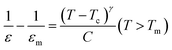 | (2) |
where,
T signifies the temperature,
C stands for the Curie–Weiss constant, and the diffusivity parameter (
γ), whose value is equal to 1, corresponds to a conventional ferroelectric–paraelectric phase transition, whereas its value equal to 2 signifies a fully disordered ferroelectric system.
40 This behavior arises from cationic substitution.
Fig. 6(b) illustrates the correlation between the
 versus
 log(
T −
Tm) at a frequency of 1 kHz. The measured value of
γ is 1.56 for the annealed BCZT ceramic indicates a broadened phase transition with moderate disorder.
3.6 Current density versus the electric field (J–E) loop and energy storage properties
The current density (J) was determined from the polarization versus time derivative curve (not shown here) at a frequency of 10 Hz using the following eqn (1):| |  | (3) |
where, P represents the polarization and t denotes the time. Fig. 7(a) illustrates the current density versus electric field (J–E) loop. The shape of the J–E loop provides valuable insights into the ferroelectric characteristics of the studied ceramic. Notably, the current density curve has two symmetrical peaks at E+ and E− electric fields. These peaks show how the domains switch when an external electric field is applied.1 These peaks appear in close proximity to the coercive field, indicating domain-switching activity.41Fig. 7(a) displays a sharp peak behavior at an electric field of 20 kV cm−1. It is a characteristic feature of the coercive field. This peak corresponds to the maximum displacement current, which arises when the polarization reverses during ferroelectric switching. The high stability of the domains within the ceramic is responsible for the observed shift of peaks away from zero electric field across all applied fields.42 Oxygen vacancies act as charge pinning centers that hinder domain motion, leading to increased leakage current and instability in polarization switching.13 The observed shift in peak positions in the J–E curve may be attributed to the enhanced domain stability due to the reduction in oxygen vacancies after annealing, reflecting the ceramic's enhanced ferroelectric performance.43 This feature is critical for the reliability and longevity of ferroelectric memory devices.
 |
| | Fig. 7 (a) Plot of current density versus electric field (J–E) loop, (b) the temperature dependent P–E loop at a frequency of 10 Hz, (c) depiction of the temperature-dependent change in Wtot, Wrec and η (%), and (d) the linear relationship between xi and yi for the annealed BCZT ceramic. | |
Fig. 7(b) presents the temperature-dependent P–E hysteresis loops of the annealed BCZT ceramic, measured at a frequency of 10 Hz under an applied electric field of 20 kV cm−1. The ceramic shows typical ferroelectric hysteresis loops. At 40 °C (close to room temperature), the maximum polarization (Pmax), remnant polarization (Pr), and coercive electric field (Ec) are approximately 45.00 μC cm−2, 15.34 μC cm−2, and 1.85 kV cm−1, respectively. As the temperature rises, Pmax, Pr, and Ec gradually decrease, and the P–E hysteresis loop becomes slimmer and linear. The narrowing of the ferroelectric hysteresis loop with increasing temperature signifies a decline in the ferroelectric properties, which is primarily due to the thermally activated domain wall motion mechanism.44 At lower temperatures, this energy barrier for domain reorientation is relatively high, requiring a stronger electric field to facilitate domain wall motion and polarization switching, resulting in a broader hysteresis loop with higher remanent polarization and coercive field. However, as the temperature increases, thermal energy enhances domain wall mobility by weakening dipole–dipole interactions and reducing the pinning effect caused by defects or gain boundaries. Consequently, domains reorient more easily, requiring less external energy, leading to a decrease in Pr and Ec. Furthermore, as a ceramic approaches its phase transition temperature, spontaneous polarization diminishes, causing a transition toward paraelectric-like behavior with a nearly linear response. The P–E hysteresis loops of the annealed BCZT ceramic were recorded over a temperature range of 40 °C to 120 °C to evaluate the energy storage properties. The energy storage density of a dielectric material is generally assessed through its P–E hysteresis loops using the following equation:45,46
| |  | (4) |
| |  | (5) |
| |  | (6) |
where
Wtot,
Wrec and
Wloss represent the total, recoverable and loss energy density, respectively;
η (%) is used to represent efficiency of energy storage density.
Fig. 7(c) depicts the temperature-dependent change in
Wtot,
Wrec and
η (%) for the annealed BCZT ceramic. Interestingly, it exhibits a peak in
Wrec close to the Curie temperature, which aligns with the finding from the dielectric study. The observed values of
Wtot,
Wrec and
η (%) under a low applied electric field of 20 kV cm
−1 and at a temperature of 40 °C are 236.31 mJ cm
−3, 150.70 mJ cm
−3, and 63.77%, respectively. As the temperature increases from 40 °C to 100 °C,
Wrec and
η (%) increase continuously, reaching 196.8 mJ cm
−3 and 91.09% at
Tc. This behavior may be attributed to a reduction in the
Ec and
Pr values with increasing temperature. The narrower hysteresis loop exhibits an increase in the energy storage efficiency and a decrease in the energy loss density.
Fig. 8 compares the data of the present compound with the reported data on various lead-free barium titanate-based ceramics.
22,47–52 At 40 °C, the annealed BCZT ceramic has proportionate
Wrec and
Wtot values under a low applied electric field. Achieving outstanding energy storage densities and efficiency in ferroelectric ceramics principally relies on the optimization of maximum polarization, dielectric constant, electrical breakdown strength, and dielectric loss.
53
 |
| | Fig. 8 A comparison of the energy storage density parameters of the annealed BCZT ceramic in relation to the reported sintered-only BT-based ceramics. | |
To examine the breakdown electric field (Eb) of the annealed BCZT ceramic, the Weibull distribution is often applied, which is given as follows:54
| |  | (7) |
In these equations, i denotes the serial number of each ceramic, n indicates the total number of compounds, and Ei represents the breakdown electric field of the ceramic arranged in ascending order. The relationship between xi and yi is generally linear, with the slope representing the Weibull modulus m. An increased m value signifies enhanced reliability.54Fig. 6(d) illustrates a linear relationship between xi and yi for BCZT ceramic, with m equal to 16.04, which is greater than 10, confirming the validity of the Eb for annealed BCZT ceramic.22
3.7 Pyroelectric properties
The pyroelectric coefficient serves as a crucial parameter for assessing a ceramic's capability to generate an electric charge when subjected to temperature fluctuations. This is useful for a range of applications, including energy storage devices, thermal diagnostics, precision temperature measurements, and sensors.55 The pyroelectric coefficient of the annealed BCZT compound was calculated from the slope of the spontaneous polarization versus temperature graph,56 as illustrated in Fig. 9(a).
 |
| | Fig. 9 Graph of (a) spontaneous polarization versus temperature and (b) strain percentage versus electric field. | |
The result indicates that the pyroelectric coefficient reaches its peak value within the temperature range of 75–100 °C, attaining a noteworthy value of −3098.0 μC m−2 C−1 in comparison to the existing literature on sintered-only BCZT ceramics.22,49 This can be ascribed to the reduction in residual stress, resulting from a decrease in oxygen vacancy defects, which consequently enhances polarization stability under thermal fluctuations. The enhanced pyroelectric response near Tc, can also be attributed to the reduction in oxygen vacancies.57 With annealing, the minimized oxygen vacancies lead to improved domain wall mobility, allowing for a more pronounced polarization change with temperature. This contributes to the sharper variation in the pyroelectric coefficient near Tc, further reinforcing the observed enhancement in the pyroelectric response. This also suggests a stronger electrocaloric effect in this temperature interval. The electrocaloric effect, which involves reversible temperature changes in response to an applied electric field, is crucial for advanced thermal management and energy conversion applications.
3.8 Piezoelectric properties
Fig. 9(b) reveals the strain as a function of the electric field for the annealed BCZT compound, measured at an applied frequency of 10 Hz. These loops reveal butterfly-shaped patterns commonly linked to ferroelectric compounds. The negative strain observed in the butterfly loop is as a consequence of the relationship between polarization (P) and electric field (E) when transitioning through the coercive field region (−Ec < E < 0). As the field reverses, the strain response follows the converse piezoelectric effect, leading to a contraction in strain due to the opposing alignment of P and E.58 The analysis of the positive quadrant of the strain curve was performed for determining the converse piezoelectric coefficient through the following relationship:59| |  | (8) |
where Smax is the strain at the maximum electric field (Emax). The butterfly-shaped hysteresis strain loops primarily arises from the converse piezoelectric effect.60 The strain response follows the absolute value of the electric field due to the quadratic dependence of strain on polarization. While domain switching contributes to the strain, the overall loop shape is governed by the piezoelectric response, where strain increases with field magnitude and decreases as the field is reduced. The negative strain observed results from the phase relationship between polarization and the electric field. The asymmetric shape of the strain loop concerning the polarity of the applied electric field can be ascribed to the initial preferential alignment of a ceramic's polarization. The  value of 1450 pm V−1 under an applied maximum electric field of 20 kV cm−1 can be explained by several factors, such as an improved c/a ratio, higher density, and reduced oxygen vacancies. An elevated c/a ratio (∼1.009) of annealed BCZT sample with respect to the sintered sample indicates a greater tetragonal distortion, which boosts the ceramic's polarizability in an electric field, leading to a strong piezoelectric response.22 The phase coexistence also plays a crucial role in optimizing piezoelectric properties by enhancing polarization rotation, improving domain wall mobility, and stabilizing dielectric performance. The presence of both tetragonal and orthorhombic phases facilitates easier polarization rotation under an external electric field, leading to a higher piezoelectric coefficient. Furthermore, there is a high density (5.93 g cm−1) of the annealed BCZT ceramic minimizes defects, including voids, thereby enhancing mechanical coupling and facilitating smoother domain switching, which in turn contributes to the elevated
  value.61 A smaller amount of oxygen vacancies is essential for preserving the symmetry and integrity of the crystal lattice. Oxygen vacancies induce local distortions that impede domain switching; however, their limited presence facilitates more unrestricted domain switching, thereby improving piezoelectric performance.4
3.9 Electrocaloric effect
There are direct and indirect ways to measure the electrocaloric characteristics of ferroelectric ceramics. Direct approaches entail measuring temperature variations in response to applied electric fields through various methods, including thermocouples, scanning thermal microscopy and differential scanning calorimetry.62 However, these methods present greater implementation challenges, particularly under adiabatic conditions. The indirect approach requires calculating the pyroelectric coefficient  and the derivation the temperature change resulting from the electrocaloric effect through Maxwell's relations.63 The indirect method for assessing the electrocaloric effect has gained greater acceptance owing to its straightforward implementation. The assessment of the efficiency of the electrocaloric effect typically involves the utilization of the adiabatic electrocaloric temperature change (ΔT) and entropy change (ΔS). The evaluation of the EC properties of annealed BCZT ceramic was performed using the following equations:64
| |  | (9) |
| | 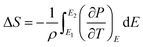 | (10) |
where, ρ represents the density of the sample, while Cp stands for the specific heat capacity, which is taken to be 400 J kg−1,22,65E1 and E2 denote the initial electric field and the final electric field, respectively. Fig. 10(a) and (b) showing the temperature dependent variation of ΔT and ΔS under different applied electric fields, revealed that both ΔT and ΔS increase as the electric field strength rises. The peak values for these parameters occur near Tc and shift to higher temperatures with increasing field strength. The stronger field stabilizes the ferroelectric phase, delaying the phase transition and causing the peak values to shift to higher temperatures. This shift occurs because more thermal energy is required to overcome the field-induced stabilization of the ferroelectric state, leading to a higher temperature for the maximum electrocaloric effect. In the BCZT ceramic, post-sintering annealing minimizes oxygen vacancies and enhances density. Lower oxygen vacancies stabilize the lattice and improve the ferroelectric phase, while a higher density enhances thermal and electrical properties. For annealed BCZT ceramics, the maximum temperature change ΔTmax ≈1.24 K and the maximum entropy change ΔSmax ≈ 1.36J kg−1 K−1 were observed around Tc. Furthermore, the maximum electrocaloric responsivity (ξmax), calculated as the ratio of ΔTmax/ΔEmax reached 0.62 K mm kV−1, highlights the strong electrocaloric response of the BCZT compound. The annealed BCZT ceramic exhibits enhanced pyroelectric and electrocaloric properties near the Curie temperature compared to non-annealed BCZT samples. While the observed ΔTmax values may be modest for practical cooling applications, nevertheless the present study underscores the importance of post-sintering annealing to further enhance the properties of lead-free ceramics for their utilization in practical applications like solid-state cooling technology. In practical applications, it is crucial to take into account the values of these parameters at ambient temperature, as they significantly influence real-world performance. These values are compared in Fig. 11, where they are demonstrated to be notably significant and worthy of interest for the present annealed BCZT ceramic.22,66–73
 |
| | Fig. 10 (a) and (b) Graphs illustrating the thermal evolution of ΔT and ΔS in response to varying applied electric fields in the annealed BCZT ceramic. | |
 |
| | Fig. 11 Comparison of the electrocaloric parameters of annealed BCZT ceramic of this work with other non-annealed BT-based compositions synthesized by the solid state reaction method. | |
4. Conclusions
Oxygen vacancies degrade the electrical properties of electro ceramics and therefore they are detrimental to the performance of these ceramics in practical applications. In this work, we reduced the oxygen vacancies in Ba0.98Ca0.02Zr0.07Ti0.93O3 (BCZT) ceramic through post-sintering annealing in an oxygen environment. The reduction in oxygen vacancies was confirmed through the XRD, Raman and XPS studies. The annealed BCZT ceramic exhibited remarkable properties: a high dielectric constant of ∼14685, a low dielectric loss of 0.04 at Tc ∼ 93 °C, a recoverable energy density of 195.91 mJ cm−3 with 91.20% efficiency, an exceptional piezoelectric coefficient of ∼1450 pm V−1, and a notable electrocaloric temperature change of 1.24 K. These results make annealed Ba0.98Ca0.02Zr0.07Ti0.93O3 a promising multifunctional lead-free ceramic with remarkable dielectric, piezoelectric, pyroelectric, and electrocaloric properties.
Author contributions
Vartika Khandelwal: writing – original draft, visualization, conceptualization, software, methodology, investigation, validation, formal analysis, data curation. Piyush Siroha: visualization, software, methodology, formal analysis, data curation. Soumyaranjan Barik: software, formal analysis, data curation. S. Satapathy: validation, data curation, software, resources, Sonali Pradhan: visualization, software, data curation. Ashok Kumar: validation, formal analysis. Surendra Kumar: validation, resources. Narendra Jakhar: validation, formal analysis. Ramovatar: writing – review & editing, validation, supervision, software, resources, project administration, formal analysis, conceptualization, Neeraj Panwar: writing – review & editing, visualization, validation, software, methodology, formal analysis, conceptualization.
Data availability
Data will be made available on request.
Conflicts of interest
There are no conflicts to declare.
Acknowledgements
The authors appreciate the support of the Central Instrumentation Laboratory, Guru Jambheshwar University, Hisar, Haryana (India), for providing access to XRD and Raman spectroscopy facilities. The author V. Khandelwal would like to thanks Dr Charanjeet Singh, Department of Physics, University of Puerto Rico, San Juan, Puerto Rico, USA for his valuable suggestions to finalize the reviewers’ comments.
References
- B. G. Baraskar, Y. D. Kolekar, B. R. Thombare, A. R. James, R. C. Kambale and C. Ramana, Enhanced Piezoelectric, Ferroelectric, and Electrostrictive Properties of Lead-Free (1 − x)BCZT–(x) BCST Electroceramics with Energy Harvesting Capability, Small, 2023, 19, 2300549 CrossRef CAS PubMed.
- V. Khandelwal, P. Siroha, S. Satapathy, S. Pradhan, S. Kumar, N. Kumar, J. Gangwar, S. K. Majumder, R. Ramovatar and N. Panwar, A comprehensive analysis of the structural, microstructural, optical, and piezocatalytic activity of Ba0.92Ca0.08Zr0.09Ti0.91O3 and Ba0.98Ca0.02Zr0.07Ti0.93O3 lead-free ceramics, J. Alloys Compd., 2024, 983, 173785 CrossRef CAS.
- J. Kaarthik, C. Kaushiga, S. G. Reddy and A. Venkateswarlu, Impact of air and vacuum calcination on the properties of lead-free piezoelectric Ba0.85Ca0.15Zr0.1Ti0.9O3 ceramics for mechanical energy harvesting, Mater. Today Commun., 2024, 39, 108550 CrossRef CAS.
- C. Liu, R. Mao, Q. Wu, J. Li, D. Zheng, Z. Fei and C. Pang, Modification of BCZT piezoelectric ceramics by modulating oxygen vacancies in different sintering atmospheres, AIP Adv., 2023, 13, 065217 CrossRef CAS.
- R. Muhammad, A. Ali, J. Camargo, M. S. Castro and D. Han, Influence of Ti-vacancies on the site occupancy of amphoteric calcium, oxygen vacancies, dielectric, optical, and ferroelectric behavior of Ba0.8Ca0.2Ti1−xO3−δ, J. Alloys Compd., 2024, 1010, 178115 CrossRef.
- M. S. Alkathy, Y. Rajesh, H. Kassim, M. K. Gatasheh, F. L. Zabotto, K. Raju and J. A. Eiras, Enhancing energy storage performance in barium titanate ceramics through mg-doping via creation of defect dipoles engineering, J. Aust. Ceram. Soc., 2024, 60, 1709 CrossRef CAS.
- D. Tai, X. Zhao, T. Zheng and J. Wu, Establishing a relationship between the piezoelectric response and oxygen vacancies in lead-free piezoelectrics, ACS Appl. Mater. Interfaces, 2023, 15, 36564 CrossRef CAS PubMed.
- X. Wang, X. Shi, R. Zhang, Y. Shi, Y. Liang, B. Zhang, H. Li, S. Hu, K. Yu and Y. Hu, Effect of Co doping on microstructure, dielectric, and energy storage properties of BCZT ceramics, J. Mater. Sci.: Mater. Electron., 2022, 33, 20399 CrossRef CAS.
- T. Das, J. D. Nicholas and Y. Qi, Composition, crystallography, and oxygen vacancy ordering impacts on the oxygen ion conductivity of lanthanum strontium ferrite, Phys. Chem. Chem. Phys., 2020, 22, 9723 RSC.
- F. Londoño, W. J. do Nascimento, D. S. F. Viana, J. A. Eiras and D. Garcia, Novel insights into PLMN-13PT ceramics: impact of spark plasma sintering on compositional and dielectric properties, Emergent Mater., 2024, 8, 905 CrossRef.
- S. Supriya, Electric field assisted spark plasma sintering of ABO3 perovskites: Crystal structure, dielectric behavior and future challenges, Open Ceram., 2024, 18, 100608 CrossRef CAS.
- R. R. Sahoo and R. Choudhary, Investigation of structural, dielectric, transport and optical characteristics of Sm/Ce modified bismuth titanate ceramics, J. Mater. Sci.: Mater. Electron., 2024, 35, 1 CrossRef.
- W. Zheng, J. Lin, X. Liu, W. Yang and Y. Li, Enhanced ferroelectric and piezoelectric performance of (Ba0.85Ca0.15)(Zr0.1Ti0.9)O3 lead-free ceramics upon Ce and Sb co-doping, RSC Adv., 2021, 11, 2616 RSC.
- K. Kim, C. Lee, W.-Y. Lee, H. J. Kim, S.-H. Lee, J.-H. Bae, I.-M. Kang and J. Jang, Enhanced switching ratio of sol–gel-processed Y2O3 RRAM device by suppressing oxygen vacancy formation at high annealing temperatures, Semicond. Sci. Technol., 2021, 37, 015007 CrossRef.
- D. Petrova, B. Napoleonov, C. N. H. Minh, V. Marinova, Y.-P. Lan, I. Avramova, S. Petrov, B. Blagoev, V. Videva and V. Strijkova, The Effect of Post Deposition Treatment on Properties of ALD Al-Doped ZnO Films, Nanomaterials, 2023, 13, 800 CrossRef CAS PubMed.
- X. Henning, K. Alhada-Lahbabi, D. Deleruyelle, B. Gautier, L. Schlur, T. Fix, S. Colis, A. Dinia and M. V. Rastei, Oxygen vacancy effects on polarization switching of ferroelectric Bi2FeCrO6 thin films, Phys. Rev. Mater., 2024, 8, 054416 CrossRef CAS.
- H. M. Rietveld, A profile refinement method for nuclear and magnetic structures, Appl. Crystallogr., 1969, 2, 65–71 CrossRef CAS.
- W. Cai, Q. Zhang, C. Zhou, R. Gao, F. Wang, G. Chen, X. Deng, Z. Wang, N. Deng and L. Cheng, Effects of oxygen partial pressure on the electrical properties and phase transitions in (Ba,Ca)(Ti, Zr)O3 ceramics, J. Mater. Sci., 2020, 55, 9972 CrossRef CAS.
-
K. Momma and F. Izumi, An integrated three-dimensional visualization system VESTA using wxWidgets, atelier de diffraction sur poudre, Seventh Canadian Powder Diffraction Workshop, 2006, pp. 106 Search PubMed.
- J. S. Uribe-Chavira, G. Herrera-Pérez, C. R. Santillán-Rodríguez, R. J. Sáenz-Hernández, J. A. Matutes-Aquino and M. C. Grijalva-Castillo, Electron density distribution and microstructural spherical harmonic calculation of BaTiO3 powders and ceramics, J. Solid State Chem., 2023, 322, 123988 CrossRef CAS.
- M. Mesrar, H. Majdoubi and Y. Le, (1−x)(Na0.5Bi0.5) TiO3−xCaTiO3 ceramics: Investigating structural and microstructural features for enhanced dielectric properties, Heliyon, 2024, 10, e26763 CrossRef PubMed.
- V. Khandelwal, P. Siroha, S. Satapathy, B. Bijender, C. Singh, A. Kumar, S. Kumar, S. K. Majumder, R. Ramovatar and N. Panwar, An in-depth comparison of dielectric, ferroelectric, piezoelectric, energy storage, electrocaloric, and piezocatalytic properties of Ba0.92Ca0.08Zr0.09Ti0.91O3 and Ba0.92Ca0.08Sn0.09Ti0.91O3 piezoceramics, Ceram. Int., 2024, 50118 CrossRef CAS.
- S. M. Ansari, B. B. Sinha, D. Phase, D. Sen, P. U. Sastry, Y. D. Kolekar and C. V. Ramana, Particle size, morphology, and chemical composition controlled CoFe2O4 nanoparticles with tunable magnetic properties via oleic acid based solvothermal synthesis for application in electronic devices, ACS Appl. Nano Mater., 2019, 2, 1828 CrossRef CAS.
- G. Herrera-Pérez, O. Solis-Canto, G. Silva-Vidaurri, S. Pérez-García, R. Borja-Urby, F. Paraguay-Delgado, G. Rojas-George, A. Reyes-Rojas and L. Fuentes-Cobas, Multiplet structure for perovskite-type Ba0.9Ca0.1Ti0.9Zr0.1O3 by core–hole spectroscopies, J. Appl. Phys., 2020, 128, 064106 CrossRef.
- I. Coondoo, A. Krylov, D. K. Sharma, S. Krylova, D. Alikin, J. S. Kumar, A. Mirzorakhimov, N. Melnikova, M. J. Soares and A. L. Kholkin, Temperature dependent structural, dielectric, Raman, piezoresponse and photoluminescence investigations in sol–gel derived BCZT ceramics, Mater. Chem. Phys., 2022, 277, 125526 CrossRef CAS.
- F. A. Rabuffetti and R. L. Brutchey, Structural evolution of BaTiO3 nanocrystals synthesized at room temperature, J. Am. Chem. Soc., 2012, 134, 9475 CrossRef CAS PubMed.
- N. Dhifallah, M. A. Hentati and H. Khemakhem, Orthorhombic–tetragonal phase coexistence and enhanced piezoelectric properties at room temperature in Zn and Ta modified (Ba0.95Ca0.05)(Zr0.05Ti0.95)O3 ceramics through the synergistic effect of lattice distortion, RSC Adv., 2024, 14, 27042 RSC.
- I. Ramovatar, S. Coondoo and N. Satapathy, Panwar, Structural, microstructural, ferroelectric and photoluminescent properties of praseodymium modified Ba0.98Ca0.02Zr0.02Ti0.98O3 ceramics, Ceram. Int., 2018, 44, 1690 CrossRef.
- M. B. Abdessalem, S. Aydi, A. Aydi, N. Abdelmoula, Z. Sassi and H. Khemakhem, Polymorphic phase transition and morphotropic phase boundary in Ba1−xCaxTi1−yZryO3 ceramics, Appl. Phys. A: Mater. Sci. Process., 2017, 123, 1 CrossRef.
- J. Wang, D. N. Mueller and E. J. Crumlin, Recommended strategies for quantifying oxygen vacancies with X-ray photoelectron spectroscopy, J. Eur. Ceram. Soc., 2024, 44, 116709 CrossRef CAS.
- A. Naumkin, A. Kraut-Vass, S. Gaarenstroom and C. Powell, NIST X-ray Photoelectron Spectroscopy Database, NIST Standard Reference Database Number 20, Version 4.1, Natl. Inst. Stand. Technol., J. Res., 2012, 20899, 10.18434 Search PubMed.
- M. Otonicar, M. Dragomir and T. Rojac, Dynamics of domain walls in ferroelectrics and relaxors, J. Am. Ceram. Soc., 2022, 105, 6479 CrossRef CAS.
- J. Kaarthik, N. Ram, D. P. Pabba, S. G. Reddy and A. Venkateswarlu, Optimization of structural, dielectric, and electrical properties in lead-free Ba0.85Ca0.15Zr0.1Ti0.9O3 through site engineering for biocompatible energy harvesting, Mater. Today Commun., 2024, 41, 110441 CrossRef CAS.
- S. Nanda, S. Sahoo, T. Badapanda, T. Potluri, A. Arockiarajan, S. Satish, S. Rout and S. N. Tripathy, Understanding of structural, dielectric, ferroelectric, piezoelectric, and conduction performance of Cerium modified (Ba0.85Ca0.15)(Zr0.1Ti0.9)O3 ceramics, Ceram. Int., 2024, 51, 11241 CrossRef.
- H. Temel, T. Avci, M. B. Okatan, S. Alkoy, İ. B. Misirlioglu and E. Menşur, Effect of the Synthesis Method and Particle Size on BCZT Electrocaloric Properties, J. Phys. Chem. Solids, 2024, 199, 112512 CrossRef.
- M. Frey and D. Payne, Grain-size effect on structure and phase transformations for barium titanate, Phys. Rev. B: Condens. Matter Mater. Phys., 1996, 54, 3158 CrossRef CAS PubMed.
- R. Tomar, R. Pandey, N. Singh, M. K. Gupta and P. Gupta, Electrical properties of barium titanate in presence of Sn2+ dopant, SN Appl. Sci., 2020, 2, 1 Search PubMed.
- N. Gouitaa, F. Ahjyaje, T. Lamcharfi, F. Abdi, M. Haddad, M. Sajieddine and M. Ounacer, Investigation of relaxor and diffuse dielectric phase transitions of Ba1−xBixTi0.8Fe0.2O3 materials, Heliyon, 2023, 9, e16264 CrossRef CAS PubMed.
- M. U. Rehman, A. Manan, A. Ullah, Y. Iqbal, M. A. Khan and R. Muhammad, Structural, dielectric and complex impedance analysis of Pb-free BaTiO3–Bi(Mg0.5Ce0.5)O3 ceramics, J. Alloys Compd., 2023, 947, 169575 CrossRef CAS.
- K. Chourti, I. Jalafi, A. Bendahhou, S. El Barkany and M. Abou-Salama, The effects of Sr-substitution in Ba2SmTi2Nb3O15 ceramics: structural study, optical properties, and complex impedance spectroscopy, RSC Adv., 2024, 14, 8567 RSC.
- Y. Deng, J. Wang, C. Zhang, H. Ma, C. Bai, D. Liu, F. Wu and B. Yang, Structural and electric properties of MnO2-doped KNN-LT lead-free piezoelectric ceramics, Crystals, 2020, 10, 705 CrossRef CAS.
- E. V. Ramana, N. V. Prasad, D. M. Tobaldi, J. Zavašnik, M. Singh, M. J. Hortigüela, M. Seabra, G. Prasad and M. Valente, Effect of samarium and vanadium co-doping on structure, ferroelectric and photocatalytic properties of bismuth titanate, RSC Adv., 2017, 7, 9680 RSC.
- S. Shi, H. Hashimoto and T. Sekino, The effects of sintering atmospheres on piezoelectric performances of Co-doped Ba0.88Ca0.12Zr0.12Ti0.88O3 ceramics, Int. J. Appl. Ceram. Technol., 2023, 20, 1774 CrossRef CAS.
- Y. Zhang, Z. Chen, W. Cao and Z. Zhang, Temperature and frequency dependence of the coercive field of 0.71PbMb1/3Nb2/3O3–0.29PbTiO3 relaxor-based ferroelectric
single crystal, Appl. Phys. Lett., 2017, 111, 172902 CrossRef.
- J.-J. Ren, D.-M. Xu, Q.-Q. Ma, D. Li, W.-C. Zhao, Z.-T. Wang, T. Zhou, W.-F. Liu and D. Zhou, Optimized energy storage performance in (Ba0.8Sr0.2) TiO3-based ceramics via Bi(Zn0.5Hf0.5)O3-doping, J. Mater. Chem. C, 2024, 12, 6239 RSC.
- J.-J. Ren, D.-M. Xu, D. Li, W.-C. Zhao, M.-K. Xu, Z.-Q. Shi, T. Zhou, H.-X. Lin and D. Zhou, Significantly enhanced energy storage density in lead-free barium strontium titanate-based ceramics through a cooperative optimization strategy, J. Mater. Chem. C, 2023, 11, 16739 RSC.
- S. Chen, R. Liu, Y. Zheng, Y. Shi, S. Dang, Y. Shi, F. Yang, J. Li, L. He and S. Wu, Enhanced energy storage properties of Ba0.85Ca0.15Zr0.1Ti0.9O3 ceramics doped with BiFeO3, J. Alloys Compd., 2023, 936, 168015 CrossRef CAS.
- Y. Hu, S. Dang, J. Cao, W. Zhang, Y. Zai, P. Xu and X. Wang, Bi(Li1/2Nb1/2)O3 addition inducing improved energy storage performance in lead-free BCZT ceramics, Appl. Phys. A: Mater. Sci. Process., 2023, 129, 602 CrossRef CAS.
- A. Ray, M. Nayak, H. Joardar, S. Sahoo, T. Badapanda, P. Jena, S. Mishra, R. Mittal and S. N. Tripathy, Investigation of dynamic scaling behavior, electrocaloric performance, and pyroelectric energy storage of Ba0.85Ca0.15Ti0.9Zr0.1O3 ceramic, Chem. Phys. Impact, 2024, 8, 100555 CrossRef.
- R. Syal, P. Sharma, S. Singh and S. Kumar, Investigation of energy storage properties in lead-free BZT–40BCT relaxor ceramic, Mater. Today: Proc., 2023 DOI:10.1016/j.matpr.2023.02.057.
- A. Mandal, D. Yadav, S. K. Mittal, U. Jamwal, D. Kaneria, A. Khokhar, M. Jakhar and K. L. Yadav, Investigation of structural, morphological, dielectric, optical, and ferroelectric-energy storage properties of [(1−x)BCT–(x)BZT] electroceramics, J. Alloys Compd., 2024, 995, 174817 CrossRef CAS.
- W. Cai, Q. Zhang, C. Zhou, R. Gao, S. Zhang, Z. Li, R. Xu, G. Chen, X. Deng and Z. Wang, Synergistic effect of grain size and phase boundary on energy storage performance and electric properties of BCZT ceramics, J. Mater. Sci.: Mater. Electron., 2020, 31, 9167 CrossRef CAS.
- K. Zhang, P. Zheng, H. Zhang, Z. Niu, C. Luo, W. Bai, J. Zhang, L. Zheng and Y. Zhang, Excellent energy storage performance of paraelectric Ba0.4Sr0.6TiO3 based ceramics through induction of polar nano-regions, Ceram. Int., 2022, 48, 19864–19873 CrossRef CAS.
- C. Singh and A. Kumar, Improved energy storage density and energy efficiency of Samarium modified PMNT electroceramic, Ceram. Int., 2022, 48, 18278 CrossRef CAS.
- R. Mondal, M. A. M. Hasan, J. M. Baik and Y. Yang, Advanced pyroelectric materials for energy harvesting and sensing applications, Mater. Today, 2023, 66, 273 CrossRef CAS.
- C. Singh, G. Vats and A. Kumar, Improved piezoelectric, ferroelectric, pyroelectric and electrocaloric properties of Sm-substituted PMN-PT, J. Alloys Compd., 2023, 965, 171355 CrossRef CAS.
- A. Hershkovitz, E. Hemaprabha, D. Khorshid, L. Ma, S. Liu, S. Cohen and Y. Ivry, Oxygen-vacancy mediated deterministic domain distribution at the onset of ferroelectricity, Acta Mater., 2025, 286, 120738 CrossRef CAS.
- B. Kar, P. Kumar, S. Panigrahi, D. P. Sahu, M. Mahesh and A. James, Development of mixed phase with improved dielectric and piezoelectric properties in Ca and Sn modified BaTiO3 ceramics, J. Alloys Compd., 2024, 983, 173786 CrossRef CAS.
- G. S. Kathait, N. Panwar and S. Maini, Dielectric, piezoelectric and energy storage properties of large grain Ba1−xSrxTiO3 (BST) ceramic system for 0.17 ≤ x ≤ 0.26, Mater. Sci., Eng. B, 2023, 297, 116786 CrossRef CAS.
- X. Wei, X. Lv, X. Wu and J. Wu, Stress-controlled scaling behavior of BaTiO3-based ferroelectrics, Scr. Mater., 2023, 236, 115682 CrossRef CAS.
- R. Syal, M. Kumar, A. K. Singh, A. De, O. Thakur and S. Kumar, Enhancement in the piezoelectric properties in lead-free BZT–xBCT dense ceramics, J. Mater. Sci.: Mater. Electron., 2020, 31, 21651 CrossRef CAS.
-
P. Varade, A. H. Pandey, N. S. Sowmya, S. Gupta, A. Bhisikar, N. Venkataramani and A. Kulkarni, Direct and Indirect methods of electrocaloric effect determination and energy storage calculation in (Na0.8K0.2)0.5Bi0.5TiO3 ceramic, arXiv, 2023, preprint, arXiv:2307.16232 DOI:10.48550/arXiv.2307.16232.
-
V. V. Shvartsman, Y. Hambal and D. C. Lupascu, Direct and indirect measurements of the electrocaloric effect (ECE) in metal oxides, The Electrocaloric Effect, Elsevier, 2023, p. 303 Search PubMed.
- L. Xie, G. Zhao, W. Dong, F. Dong, J. Dou, R. Yue, P. Tong, J. Yang, W. Song and L.-H. Yin, Enhanced electrocaloric effect by configurational entropy change in (Ba, Sr, Ca, Bi, Li)TiO3 system, Ceram. Int., 2024, 50, 19613 CrossRef CAS.
- S. Sharma, R. Nandan, P. Malhotra, S. Kumar, R. Kumar and N. Negi, Morphotropic phase boundary evolution with synergistic effect of sintering temperature to improve electrocaloric and energy storage performances of lead-free Ba0.95Ca0.05Sn0.09Ti0.91O (BCST) ceramic, J. Energy Storage, 2024, 99, 113295 CrossRef.
- M. Ben Abdessalem, I. Kriaa, Z. Sassi, A. Aydi and N. Abdelmoula, Structure, dielectric and electrocaloric properties of (Ba0.87Ca0.13(Ti0.9Zr0.1)1−x(Zn1/3Nb2/3)xO3) ferroelectric ceramics, J. Mater. Sci.: Mater. Electron., 2024, 35, 1215 CrossRef CAS.
- S. K. Upadhyay, V. R. Reddy, P. Bag, R. Rawat, S. Gupta and A. Gupta, Electro-caloric effect in lead-free Sn doped BaTiO3 ceramics at room temperature and low applied fields, Appl. Phys. Lett., 2014, 105, 112907 CrossRef.
- H. Kacem, Z. Sassi, M. Essid, J. Dhahri, N. Al-Harbi, B. Alotaibi and H. A. Alyousef, Energy storage performance and electrocaloric effect of Zr doped BaTiO3-based lead-free ferroelectric ceramics, Appl. Phys. A: Mater. Sci. Process., 2024, 130, 1 CrossRef.
- H. Kacem, A. Dhahri, M. A. Gdaiem, Z. Sassi, L. Seveyrat, L. Lebrun, V. Perrin and J. Dhahri, Electrocaloric properties of lead-free ferroelectric ceramic near room temperature, Appl. Phys. A: Mater. Sci. Process., 2021, 127, 483 CrossRef CAS.
- G. Liu, W. Yu, Y. Wang, H. Feng, M. Hao, G. Wu, Q. Li, K. Yu, B. Fan and L. Jin, Electrocaloric effect of (Ba1−xSrx)(HfxTi1−x)O3 lead-free ferroelectric ceramics with phase structure regulation, Ceram. Int., 2023, 49, 34387–34396 CrossRef CAS.
- S. Merselmiz, Z. Hanani, S. Ben Moumen, A. Matavž, D. Mezzane, N. Novak, Z. Abkhar, L. Hajji, Mb Amjoud and Y. Gagou, Enhanced electrical properties and large electrocaloric effect in lead-free Ba0.8Ca0.2ZrxTi1−xO3 (x = 0 and 0.02) ceramics, J. Mater. Sci.: Mater.
Electron., 2020, 31, 17018 CrossRef CAS.
- A. I. Gaied, A. Dahri, V. Perrin, L. Seveyrat, Z. Sassi, H. Khemakhem, N. Abdelmoula and Z. Benzarti, Synergistic effects of Zn B-site substitution in lead-free Ba0.95Ca0.05Ti0.92Sn0.08O3 ferroelectric ceramics for enhancing piezoelectric properties in energy harvesting applications, J. Alloys Compd., 2023, 958, 170419 CrossRef CAS.
- Y. Zhao, F.-Z. Xian, Q. Wang and C.-M. Wang, Electrocaloric effects of Ba1−xCaxTi0.9Zr0.1O3 through both direct and indirect measurements, Ceram. Int., 2024, 50, 5104 CrossRef CAS.
|
| This journal is © The Royal Society of Chemistry 2025 |
Click here to see how this site uses Cookies. View our privacy policy here. 

 b,
Sonali
Pradhan
b,
Ashok
Kumar
c,
Surendra
Kumar
d,
Narendra
Jakhar
e,
Ramovatar
b,
Sonali
Pradhan
b,
Ashok
Kumar
c,
Surendra
Kumar
d,
Narendra
Jakhar
e,
Ramovatar
 ) under application of an electric field of 20 kV cm−1. The electrocaloric properties revealed an adiabatic temperature change (ΔT) of 1.24 K and an isothermal entropy change (ΔS) of 1.36
 is the gaseous oxygen formed after oxygen leaves the lattice, and
  symbolizes the oxygen vacancy, represented as a site in the lattice where oxygen is missing. It has a positive effective charge (˙˙) relative to the lattice because two free electrons (2e−) are generated when an oxygen atom departs. Besides the high temperature sintering, substituting an ion with one that has a lower charge results in an imbalance in the overall charge of the lattice. In order to uphold overall charge neutrality within the crystal structure, the lattice addresses this imbalance through the formation of oxygen vacancies.8 A reduced concentration of oxygen vacancies results in a more stable crystal structure, thereby minimizing losses during polarization.9 Oxygen defects in ceramics can be minimized through sintering in an oxygen-rich atmosphere,4 employing advanced techniques like spark plasma sintering (SPS),10,11 isoelectronic or donor ion doping,12,13 and post-sintering annealing.14–16 These approaches ensure a stoichiometric ratio and reduce defect-induced degradation of electrical properties. For example, Liu et al. explored BCZT ceramics doped with 0.1 mol% Y3+ and 0.1 mol% Nb3+ ions in various sintering atmospheres, such as oxygen, air, argon, and vacuum conditions, to figure out the impact of the concentration of oxygen vacancies. Their findings revealed that sintering in oxygen-rich conditions significantly affects oxygen compensation by elevating the formation energy of oxygen vacancies. Atmospheric oxygen incorporates into the crystal lattice, lowering the occurrence of oxygen vacancies, resulting in an increased lattice oxygen concentration and a decline in oxygen vacancy prevalence.4 Supriya highlighted that SPS significantly benefits perovskite materials by promoting crystal growth and densification at lower temperatures, reducing oxygen vacancies, and improving electrical properties.11 Zheng et al. demonstrated that integrating donor ions into ceramics restricts the concentration of oxygen vacancies. The reduction in vacancies decreases domain pinning and increases domain wall mobility, thereby improving the electrical properties of the ceramics. As an illustration, XPS analysis showed that doping BCZT with 0.10 mol% Ce3+ ions reduced the ratio of oxygen vacancies to lattice oxygen from 1.54 to 1.04.13 Building on this foundation, this study explores the Ba0.98Ca0.02Zr0.07Ti0.93O3 composition, utilizing the synergistic effect of co-substitution with post-sintering annealing. Through this approach, we investigated the structural, microstructural, dielectric, energy storage, and electrocaloric properties of eco-friendly annealed BCZT ceramics.


 versus log(T − Tc) at 1 kHz frequency for annealed BCZT ceramic.
 versus log(T − Tm) at a frequency of 1 kHz. The measured value of γ is 1.56 for the annealed BCZT ceramic indicates a broadened phase transition with moderate disorder.


 value of 1450 pm V−1 under an applied maximum electric field of 20 kV cm−1 can be explained by several factors, such as an improved c/a ratio, higher density, and reduced oxygen vacancies. An elevated c/a ratio (∼1.009) of annealed BCZT sample with respect to the sintered sample indicates a greater tetragonal distortion, which boosts the ceramic's polarizability in an electric field, leading to a strong piezoelectric response.22 The phase coexistence also plays a crucial role in optimizing piezoelectric properties by enhancing polarization rotation, improving domain wall mobility, and stabilizing dielectric performance. The presence of both tetragonal and orthorhombic phases facilitates easier polarization rotation under an external electric field, leading to a higher piezoelectric coefficient. Furthermore, there is a high density (5.93 g cm−1) of the annealed BCZT ceramic minimizes defects, including voids, thereby enhancing mechanical coupling and facilitating smoother domain switching, which in turn contributes to the elevated
  value.61 A smaller amount of oxygen vacancies is essential for preserving the symmetry and integrity of the crystal lattice. Oxygen vacancies induce local distortions that impede domain switching; however, their limited presence facilitates more unrestricted domain switching, thereby improving piezoelectric performance.4
 and the derivation the temperature change resulting from the electrocaloric effect through Maxwell's relations.63 The indirect method for assessing the electrocaloric effect has gained greater acceptance owing to its straightforward implementation. The assessment of the efficiency of the electrocaloric effect typically involves the utilization of the adiabatic electrocaloric temperature change (ΔT) and entropy change (ΔS). The evaluation of the EC properties of annealed BCZT ceramic was performed using the following equations:64


