


Solvent-less mechanochemical asymmetric reactions in a ball mill utilizing a polymer-supported Hayashi–Jørgensen catalyst: effects of the polymer backbone and flexibility on its catalytic performance

Abstract
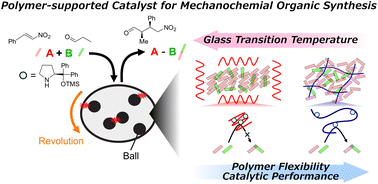
Fine chemical synthesis under solvent-free or solvent-less mechanochemical conditions is highly desirable from a green chemistry perspective. However, the inherently low contact efficiency between the catalyst and solid substrates often results in low reaction efficiency. Polymer-assisted grinding (POLAG) in a ball mill has been developed for solvent-less organic synthesis, where polymers are used as additives to effectively disperse solid reactants. Specifically, polymer-supported catalysts have been shown to function as POLAG additives to enhance catalytic performance. However, the effects of the structures of polymer-supported catalysts on their catalytic performance have not been fully investigated. Here, we prepared polymer-supported catalysts bearing the Hayashi–Jørgensen catalyst with different polymer backbones and chemical structures of spacer monomers. In an asymmetric Michael addition reaction in the presence of solid reactants in a ball mill, the polymer-supported catalyst exhibited a significantly higher turnover number compared to its small-molecule counterpart. Additionally, a correlation between the glass transition temperature of the polymer-supported catalyst and the turnover frequency was confirmed, which suggested that the flexible polymer support facilitated solid dispersion and boosted subsequent catalytic cycles.
 Please wait while we load your content...


