


In situ/operando characterization of MXene electrodes for energy storage applications†

Abstract
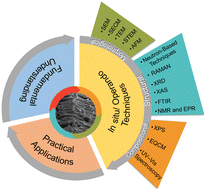
The ever-increasing demand for energy has led to advancements in energy storage devices. Advanced electrode materials and a greater understanding of the underlying electrochemical processes are essential for moving into more practical applications. MXenes, a new family of layered early transition metal carbides and/or nitrides, have been widely researched using both theoretical and experimental methods to better understand their unique properties and potential applications. Their high surface area and the presence of dangling bonds endow MXenes with unique properties, making them good contenders for various energy storage applications. The characterization of the device behavior of these MXenes under real-world conditions (operando) or at the site of operation (in situ) without disassembly can provide pivotal kinetic information that would otherwise be lost. The focus of this review is on the in situ/operando characterization of MXene electrodes for energy storage applications, highlighting the role of MXene materials in energy storage, providing detailed insights into MXene electrode behavior in different electrolytes, summarizing the latest advances in MXene characterization and their implications, and offering a comparative analysis of the strengths and limitations of each technique. It also discusses emerging trends, unresolved challenges, and specific research gaps prevailing in the in situ/operando characterization of MXenes.
- This article is part of the themed collections: Journal of Materials Chemistry A Recent Review Articles and Supercapacitors for a sustainable energy future
 Please wait while we load your content...


