


 PLATFORM UPDATE:


Co-encapsulation of temozolomide and PbS quantum dots in apoferritin for transferrin receptor 1 targeting, imaging and treatment of glioblastoma

Abstract
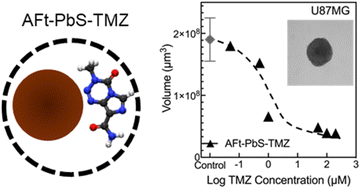
Apoferritin (AFt) nanocages represent a promising drug delivery platform by targeting transferrin receptor 1 (TfR1) that is abundantly expressed on both blood–brain barrier (BBB) endothelial and glioma cells, offering promising opportunities for intractable brain cancer treatment. We report the development of a theranostic agent based on lead sulfide quantum dots (PbS QDs) and temozolomide (TMZ) co-encapsulated inside horse spleen AFt cages (AFt-PbS-TMZ). In vitro evaluation of AFt-PbS-TMZ revealed cancer-selective enhancement of growth inhibition in glioblastoma (GBM) cells (U373M, U373V, and U87MG) compared to non-encapsulated agents. These findings in two-dimensional cultures were further corroborated by the results in three-dimensional 3D U87MG tumour spheroids, where the use of AFt-PbS-TMZ significantly enhanced TMZ efficacy; the treatment resulted in a significant (p < 0.0001) decrease in spheroid volumes and cell viability. Additionally, the near-infrared emission of the PbS QDs enabled imaging of the nanoparticle delivery. The emission of the PbS QDs was clearly detectable within the cell spheroids, even at concentrations significantly lower than GI50 values, offering opportunities for non-invasive deep tissue imaging. These results reveal that AFt-PbS-TMZ can be an efficient theranostic agent for targeted cancer drug delivery, addressing limitations associated with current treatment and therapeutic monitoring.
 Please wait while we load your content...


