


Novel thiazole–phthalimide-based heterobimetallic Cu(ii)–M(ii) complexes: synthesis, characterization, and therapeutic properties against arsenic-induced lung damage in rats
 *ab
Asmaa M.
Fahim,
*c
*ab
Asmaa M.
Fahim,
*c
Abstract
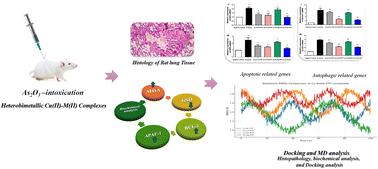
Prolonged exposure to arsenic trioxide (As2O3) brings about oxidative stress, inflammation, apoptosis, and, ultimately, irreversible pulmonary damage. In this study, we synthesized and characterized a new series of thiazole–phthalimide-based heterobimetallic Cu(II)–M(II)/M(I) complexes (M = Co, Ni, Zn, Ag) using elemental analysis, spectroscopic methods (FT-IR, UV–Vis, 1H NMR, MS), thermal techniques (TGA/DTG), and X-ray diffraction (XRD). We subsequently evaluated the protective effects of these complexes against As₂O₃-induced pulmonary toxicity in female Wistar rats. Chronic As2O3-exposure (4 mg kg−1 for 30 days) significantly increased oxidative stress markers, including malondialdehyde (MDA), BCL2, and APAF-1, while markedly reducing glutathione (GSH) activity. In addition, As2O3-exposure significantly raised the expression levels of apoptotic genes (BAX and ERK) and autophagic genes (Beclin1 and LC3). These findings were supported by the histological examination of lung tissue. Among the analogues produced, As2O3-Cu–Zn–PTP and As2O3-Cu–Ni–PTP provided robust attenuation of oxidative stress, restored antioxidant defenses, and modulated the expression of apoptotic and autophagic genes. Additional support came from molecular docking and MD simulations, both confirming stable ligand–protein binding with BAX (PDB 4S0O) and BCL-2 (PDB 1G5M). In addition, all interactions were substantiated by favorable MM/PBSA energy profiles.
 Please wait while we load your content...


