


Hydrophobic deep eutectic solvents for sustainable lithium recovery in battery recycling systems
 a
Qibo
Zhang
*ab
a
Qibo
Zhang
*ab
Abstract
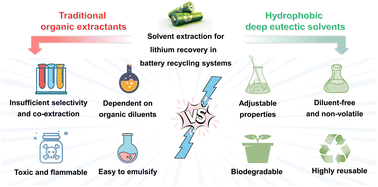
The sustainable recovery of lithium from spent lithium-ion batteries (LIBs) is a growing priority for the energy transition, yet existing recycling technologies such as pyrometallurgy and hydrometallurgy remain energy-intensive and environmentally burdensome. Hydrophobic deep eutectic solvents (HDESs) have recently emerged as promising alternatives to volatile organic solvents, offering advantages such as low volatility, tunable intermolecular interactions, and the ability to sustain synergistic extraction mechanisms. This review critically evaluates HDES-based extraction systems reported to date, comparing their performance to conventional kerosene-diluted solvents while integrating evidence from life cycle assessment (LCA) and economic analyses. Across diverse formulations, HDESs often achieve comparable or superior lithium separation, particularly by reproducing cooperative effects between extractants without the need for external diluents. However, current systems remain constrained by high solvent mass inputs, energy-intensive synthesis, and continued reliance on conventional commercial extractants, which limits selectivity for lithium over divalent cations. From these comparisons, key insights emerge: HDESs represent a genuine step toward greener lithium recovery, yet their long-term impact depends on designing novel extractants tailored to the eutectic environment, improving scalability, and addressing synthesis-related energy burdens.
- This article is part of the themed collections: Sustainable Energy & Fuels Recent HOT Articles and Sustainable Energy & Fuels 2026 Review Articles
 Please wait while we load your content...


