Pentafluoroethyl(fluoro)phosphate ionic liquids: synthesis and properties

Roland Graf a, Tobias Preitschopf a, Younes K. J. Bejaoui a, Nils Schopper a, Ludwig Zapf a, Tanja Knuplez a, Leon N. Schneider a, Lukas K. A. Jobst a, Jan A. P. Sprenger a, Laura Wolz a, Rüdiger Bertermann a, Michael Schulte b, Nikolai V. Ignat’ev ac and Maik Finze *a
aJulius Maximilian University Würzburg, Institute of Inorganic Chemistry, Institute for Sustainable Chemistry & Catalysis with Boron (ICB), Am Hubland, 97074, Würzburg, Germany. E-mail: maik.finze@uni-wuerzburg.de
bMerck Life Science KGaA, Frankfurter Straße 250, 64293, Darmstadt, Germany
cConsultant, Merck Life Science KGaA, Frankfurter Straße 250, 64293, Darmstadt, Germany

Received 7th January 2026 , Accepted 18th February 2026

First published on 19th February 2026


Abstract

Ionic liquids (ILs) composed of the 1-ethyl-3-methylimidazolium [EMIm]+, 1-butyl-3-methylimidazolium [BMIm]+, or butylmethylpyrrolidinium [Pyr14]+ cation and fluorophosphate anions with three, two, or one pentafluorethyl substituents bonded to phosphorus [mer-(C2F5)3PF3] (FAP3), [trans-(C2F5)2PF4] (FAP2), and [(C2F5)PF5] (FAP1) were synthesized from tris(pentafluorethyl)difluorophosphorane. The FAP ILs were characterized by NMR, IR, and Raman spectroscopy and elemental analysis and the single crystal structures of [EMIm]+ ILs with the anions FAP3, FAP2, and FAP1 and of [BMIm]FAP1 were elucidated. The thermal, physicochemical, and electrochemical properties of the ionic liquids were investigated. [BMIm]FAP2 has the lowest dynamic viscosity and the highest specific conductivity among the series of [BMIm]+ ILs making it a promising IL for different applications. The interpretation of the data was aided by results from density functional theory (DFT) calculations. Evaluation of structural, spectroscopic, and theoretical data showed the weakly coordinating nature of the series of phosphate anions to increase in the order of [PF6] < FAP1 < FAP2 < FAP3. The influence of the size, shape, flexibility and the coordinative behavior of the three FAP anions and the hexafluorophosphate anion on the ionic liquid properties was assessed.

Introduction

Ionic liquids (ILs) have emerged as an important class of materials for different applications,1–5 for example electronic devices,6–10 lubrication,11 medicine and pharmaceuticals,12–14 and chemical synthesis.15–18 Because of the broad general interest in ILs, the synthesis and characterization of ILs with different properties that meet the demands of various applications are of importance. Among the many different anions that have been used in IL chemistry in general and for applications in the field of electrochemistry in particular, the hexafluorophosphate anion is one of the most often chosen anions.1–5

General requirements for ILs used in electrochemical devices such as batteries and supercapacitors are high thermal, electrochemical, and chemical stabilities, and low viscosity as well as high electrical conductivity.7–9,19–29 Low-melting fluorophosphates represent an important class of ILs with the hexafluorophosphate anion as one of the early prototype anions used in IL design.1–5,30–32 The exchange of one or more fluorine substituents for perfluoroalkyl groups at phosphorus enables tuning of the chemical, thermal, and physicochemical properties.33–37 Especially, the tris(pentafluoroethyl)trifluorophosphate anion [(C2F5)3PF3] (FAP3),34,38–40 which is a weakly coordinating anion,41 has been employed in IL chemistry (Scheme 1). The FAP3 anion is accessible from the strong Lewis acid tris(pentafluoroethyl)difluorophosphorane (C2F5)3PF242 that has been used in organic and frustrated Lewis pair (FLP) chemistry43–47 and for the generation of cationic transition metal complexes48–50 and other cations51 with the FAP3 counteranion.52 Ionic liquids with the related pentafluoroethyl(fluoro)phosphate anions [trans-(C2F5)2PF4] (FAP2) and [(C2F5)PF5] (FAP1) have been used only rarely in IL chemistry and coordination chemistry, alike (Scheme 1).33,34,39,40


image file: d6cp00061d-s1.tif
Scheme 1 Cations and anions used in this study.

Herein, we describe the synthesis of three series of ionic liquids based on the pentafluoroethyl(fluoro)phosphate anions [(C2F5)nPF6–n] (n = 3 (FAP3), 2 (FAP2), and 1 (FAP1))33,36 with the cations 1-ethyl-3-methylimidazolium [EMIm]+, 1-butyl-3-methylimidazolium [BMIm]+, and 1-butyl-1-methylpyrrolidinium [Pyr14]+ or [BMPL]+ (Scheme 1). Selected physicochemical, thermal, and structural properties of these ionic liquids and the respective hexafluorophosphate ILs are presented, and trends are discussed.

Results and discussion

Synthesis of pentafluoroethyl(fluoro)phosphate (FAP) ionic liquids

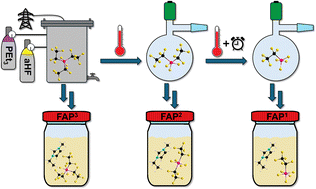
The starting material for the synthesis of the family of pentafluoroethyl(fluoro)phosphates is the strong Lewis acid tris(pentafluoroethyl)phosphorane (C2F5)3PF252 that was obtained by electrochemical fluorination (ECF, Simons process)34,53 of triethylphosphane in anhydrous hydrogen fluoride (aHF) as outlined in Scheme 2.39,42,54 The reaction of (C2F5)3PF2 with potassium fluoride yielded potassium tris(pentafluoroethyl)trifluorophosphate K[(C2F5)3PF3] (KFAP3).38,55 KFAP3 was used for the preparation of [EMIm]FAP3, [BMIm]FAP3, and [Pyr14]FAP3via metathesis in aqueous solution to obtain the three room temperature ionic liquids (RTILs) in yields of 89–93% (Scheme 2).33–36
image file: d6cp00061d-s2.tif
Scheme 2 Synthesis of FAP-ILs using triethylphosphane as the key starting compound.

The synthesis of the ionic liquids with the bis(pentafluoroethyl)tetrafluorophosphate anion [trans-(C2F5)2PF4] (FAP2) and the (pentafluoroethyl)pentafluorophosphate anion [(C2F5)PF5] (FAP1) started with the reaction of (C2F5)3PF2 with water at 100–110 °C or 125 °C to yield bis(pentafluoroethyl)phosphinic acid (C2F5)2P(O)OH56–59 or pentafluoroethylphosphonic acid (C2F5)P(O)(OH)2, respectively.56,59 In the next step, the acids (C2F5)2P(O)OH and (C2F5)P(O)(OH)2 were converted into the respective fluorophosphate anions [trans-(C2F5)2PF4] (FAP2) and [(C2F5)PF5] (FAP1), with aHF (Scheme 2) to provide solutions of {H(HF)x}[(C2F5)2PF4] and {H(HF)x}[(C2F5)PF5] in hydrogen fluoride.34 These solutions were diluted with water by the addition of crushed ice and subsequent metatheses gave the corresponding FAP2 and FAP1 ILs in yields of 70–90% and 62–81%, respectively (Scheme 2). The yields of the ILs with the FAP2 and FAP1 anions were slightly lower than those of the FAP3-based ionic liquids, which is explained by the higher hydrophobicity of FAP3 ILs. Hence, separation of ionic liquids with the FAP2 and FAP1 anions from the aqueous phase was slightly less effective and additional washing of the ILs after separation from the aqueous mother liquor with distilled water led to lower yields. This assumption is furthermore evident from the average lower yields of FAP1 compared to FAP2 ILs as the hydrophobicity decreases from FAP2 to FAP1, i.e. with decreasing number of hydrophobic pentafluoroethyl groups at phosphorus. The yields of the ILs were improved by extraction of the aqueous mother liquors with dichloromethane.

All ionic liquids were characterized by NMR, Raman and infrared spectroscopy, elemental analysis, and high-resolution mass spectrometry (HRMS, see the SI). The relevant sections of the 19F and 31P NMR spectra of [EMIm]FAP3, [EMIm]FAP2, [EMIm]FAP1, and [EMIm][PF6] depicted in Fig. 1 provide evidence for the formation of the anions [mer-(C2F5)3PF3] and [trans-(C2F5)2PF4] as sole isomers of FAP3 and FAP2, respectively.


image file: d6cp00061d-f1.tif
Fig. 1 19F and 31P NMR spectra of [EMIm][(C2F5)nPF6–n] (n = 1 (FAP1), 2 (FAP2), and 3 (FAP3)) and [PF6] in CD3CN.

Crystal structures

The crystal structures of the ILs [EMIm][(C2F5)nPF6–n] (n = 3 (FAP3), 2 (FAP2), and 1 (FAP1)) and [BMIm]FAP1 were determined by single-crystal X-ray diffraction (SC-XRD; Fig. 2 and 3). In addition, the crystal structure of [EMIm][PF6] was redetermined.30,60,61 In contrast to the wealth of crystal structures of hexafluorophosphates that were reported in general, only relatively few structures of pentafluoroethyl(fluoro)phosphates were published. Most of them are structures of salts of the [(C2F5)3PF3] anion (FAP3),48–51,62–66 including salts with organic cations such as alkylammonium cations, e.g. [N(CH3)4]FAP3.62 Importantly, in all cases, the FAP3 anion adopts the meridional form, i.e. [mer-(C2F5)3PF3]. So far, only one report on the crystal structures of the FAP2 and FAP1 anions, i.e. [N(nC4H9)3(CH3)][trans-(C2F5)2PF4] (disordered anion) and [N(nC4H9)3(CH3)][(C2F5)PF5] determined at 22 °C, has been published.67
image file: d6cp00061d-f2.tif
Fig. 2 The anions [(C2F5)nPF6–n] (n = 1 (FAP1), 2 (FAP2), and 3 (FAP3)) and [PF6] in the crystal structures of the [EMIm]+ salts (thermal ellipsoids are set at the 25% probability level) and the electrostatic surface potential (ESP) plot calculated at the B3LYP/def2-TZVPP level of theory.

image file: d6cp00061d-f3.tif
Fig. 3 Environments of the anions [(C2F5)nPF6–n] (n = 1 (FAP1), 2 (FAP2), and 3 (FAP3)) and [PF6] in the crystal structures of their [EMIm]+ salts displaying the surrounding ions with significant interactions. dnorm mapped onto the Hirshfeld surfaces of the respective central phosphate anion (all atoms are shown with arbitrary radii; top). 2D-fingerprint plots highlighting the hydrogen bonds (Hcation⋯Fanion) of the phosphate anions (middle) and the intermolecular fluorine–fluorine interactions (Fanion⋯Fanion) (bottom) including the Hirshfeld surface contribution of the respective interaction to the sum of ion⋯anion interactions (in %).68,69

The single-crystal X-ray diffraction studies provide an important insight into the ion–ion arrangement and interactions in the solid state. The latter often correlate with ion–ion interactions in the liquid phase,70–75i.e. theories of quasi- and pseudo-lattices have been developed that consider the liquid phase as the collapsed crystal.76–79 Crystals of [EMIm]FAP3, [EMIm]FAP1, and [BMIm]FAP1, which have melting points below room temperature (vide infra), were grown by manual in situ cryo-crystallization.80–85 Selected experimental and calculated (B3LYP/def2-TZVPP) bond parameters of the fluorophosphate anions are collected in Table 1.

Table 1 Selected experimental and calculateda bond propertiesb of the anions [(C2F5)nPF6–n] (n = 1 (FAP1), 2 (FAP2), and 3 (FAP3)) and [PF6]
Anion Sym.c d(P–F) d(P–C) d(C–C) d(C–F2) d(C–F3)
trans-FPF trans-CPF trans-FPC trans-CPC trans-FPC trans-CPC trans-CPF trans-CPC trans-CPF trans-CPC
a B3LYP/def2-TZVPP. b d in pm. c Idealized symmetry of the anion. d [mer-(C2F5)3PF3] (FAP3): exptl [calcd]: ∢trans(CPC) = 169.1(2)° [169.1°], ∢cis(CPC) = 94.4(2) and 95.5(2)°95.0° [95.0°], ∢trans(CPF) = 174.7(2)° [175.3°], ∢cis(CPF) = 85.2(2) and 92.1(2)° [85.2 and 91.6°], ∢trans(FPF) = 177.2(2)° [176.8°], ∢cis(FPF) = 89.5(2) and 93.2(2)° [90.1 and 93.2°]. e Anion geometry is close to Cs. f [trans-(C2F5)2PF4] (FAP2): exptl [calcd]: ∢trans(CPC) = (I) 180°, (II) 172.5(4)° [180°].
[mer-(C2F5)3PF3][thin space (1/6-em)]d [EMIm]+ C 1 (Cs)e 162.8(3) 162.3(3) 196.1(6) 194.3(4) 156.0(5) 154.7(7) 136.7(5) 136.7(8) 132.7(6) 133.0(8)
Calcd C s 164.2 163.2 200.4 198.5 156.0 155.6 136.7 136.7 134.2 134.3
[trans-(C2F5)2PF4][thin space (1/6-em)]f [EMIm]+Ia C i 161.2(5) 192.4(8) 146.6(15) 139.6(10) 134.6(11)
[EMIm]+Ib C i 161.4(5) 190.2(8) 152.2(10) 138.3(10) 133.6(10)
[EMIm]+II C 1 161.4(4) 189.5(9) 151.5(15) 139.9(10) 134.5(11)
Calcd C 2h 163.4 195.1 155.2 136.7 134.5
[(C2F5)PF5] [EMIm]+ C 1 (Cs)e 161.04(16) 160.44(13) 191.0(2) 153.5(3) 136.2(3) 133.5(3)
[BMIm]+ C 1 (Cs)e 160.78(16) 160.21(15) 191.4(2) 153.5(3) 136.2(3) 133.1(3)
Calcd C s 163.0 161.8 195.8 155.2 137.1 134.6
[PF6] [EMIm]+ C 1 160.04(10)
Calcd O h 162.8


The phosphate anion in the crystal of [EMIm]FAP3 comprises the meridional form, which is in agreement with the NMR spectroscopic assignment (Fig. 1). The anion exhibits almost Cs symmetry in accordance with the DFT-optimized geometry (Table 1). The three crystallographically independent FAP2 anions in the crystal of its [EMIm]+ salt contain the pentafluoroethyl groups in the trans configuration, which is in line with NMR data (Fig. 1). Two of the crystallographically independent FAP2 anions are located at the centre of inversion, which is an energetic minimum (DFT calculations), while the pentafluoroethyl groups of the third FAP2 anion are twisted from a joint plane by (69.3(9)°; Fig. 2). The geometry of the pentafluoroethyl(pentafluoro)phosphate anion in the crystals of [EMIm]FAP1 and [BMIm]FAP1 is close to Cs, which is the symmetry predicted by DFT calculations (Table 1).

The phosphorus fluorine distance of the trans-F–P–F moiety decreases in the order FAP3 > FAP2 > FAP1 > [PF6] (Table 1). Similarly, the P–F distance trans to a C2F5 group in the FAP1 anion is shorter than that in the FAP3 anion. The P–F distance trans to a C2F5 group is shorter than d(P–F) with a fluorine atom in the trans position. The P–C distances reveal the same trends as the P–F bonds (Table 1).

The ion volume65,86–96 and the ion mass97 are important measures for the ionic liquid properties. The ion volume was deduced using the unit cell volumes (Vcell) and the number of formula units in the unit cells (Z; Table 2). The ion pair volumes (Vm) were calculated by the division of Vcell by Z. The anion volumes (Vm) were finally estimated using literature values of Vm of [(C2F5)3PF3] (335 Å3)86 and [PF6] (111 Å3)86 as the reference (Table 2).

Table 2 Fluoride ion affinity (FIA)a of the corresponding phosphorane Lewis acid, selected structural and crystallographic data of the [EMIm]+ salts of [(C2F5)nPF6–n] (n = 1 (FAP1), 2 (FAP2), 3 (FAP3)) and [PF6],b and the anion volume (Vanion) and mass (Manion)
Anion FIAa [KJ mol−1] M [g mol−1] S.G.c Z Z V cell 3] V m 3] V m [thin space (1/6-em)] 3] P(Platon)g [%] V m(vdW)(Platon)h3] V m(vdW) [thin space (1/6-em)] (Olex2)i3] V m(vdW)(Olex2)j3]
a FIA = –ΔH; phosphorane + F → fluorophosphate anion; B3LYP/def2-TZVPP. b The crystal structure of [EMIm][PF6] was investigated at 100 K,60 301 K,30 and 173 K,61 earlier. c S.G. = space group of the [EMIm]+ salt. d All structures determined at 100 K. e V m = Vcell·Z−1. f V m = VmVm+; Vm+([EMIm]+) = 143 Å3; deduced from Vm+([BMIm]+) = 197 Å3, Vm([PF6]) = 111 Å3, and Vm([(C2F5)3PF3]) = 335 Å3;86 additional literature values: Vm([PF6]) = 123 Å3, Vm([(C2F5)3PF3]) = 379 Å3.98 g P = packing index.99,100 h van der Waals volume of one formula unit obtained with the Platon program package.99–101 i van der Waals volume of the anion calculated from the crystallographic data using the Olex2 program.102 j The van der Waals volume of the ion pairs was calculated from the respective Vm(vdW) and the mean value of Vm(vdW)+([EMIm]+) = 104 Å3 obtained from the crystal structures of the fluorophosphates listed in Table 1 using the Olex2 program.102
[mer-(C2F5)3PF3] 445.4 445.01 Ia 4 1 1912.67(5) 478 335 70.7 338 227 331
[trans-(C2F5)2PF4] 468.8 345.00 P[1 with combining macron] 4 2 1608.53(8) 402 259 71.1 286 175 279
[(C2F5)PF5] 469.3 244.98 P21/c 4 1 1346.25(3) 337 194 69.2 233 122 226
[PF6] 353.9 144.96 P21/c 4 1 1016.45(2) 254 11186 70.8 180 69 173


The van der Waals volume was assessed using the program packages Olex2102 and Platon,99–101 both of which resulted in very similar volumes (Table 2). The van der Waals volume of the phosphate anions decreases from [mer-(C2F5)3PF3] (331 Å3) to [PF6] (173 Å3) by ca. 53 Å3 per C2F5 group.

The noncovalent interionic interactions in the crystals of the [EMIm]+ ionic liquids were evaluated via Hirshfeld surface analysis,103–107 which is an established tool for the interpretation of intermolecular interactions in crystal structures, especially for organic salts such as ionic liquids.108–112 The analysis was performed using the program CrystalExplorer21.68,69

Anions and cations are interconnected via F⋯H hydrogen bonds,113,114 as shown by excerpts of the crystal structures and the Hirshfeld surface of the respective fluorophosphate anion shown in Fig. 3. The H-bonded motifs are dominated by the H atoms of the central imidazolium ring, which are the most acidic ones. However, further H bonds are present for the alkyl chains as can be seen from the crystal structure excerpts in Fig. 3. The 2D-fingerprint plots68,103–107 and the Hirshfeld surface contributions in Fig. 3 show that the relative importance of the F⋯H hydrogen bonds increase in the order of [EMIm]FAP3 < [EMIm]FAP2 < [EMIm]FAP1 < [EMIm][PF6]. This trend parallels the decrease in the weakly coordinating nature of the four related fluorophosphate anions, which is deduced from the electrostatic potential plots (ESP) depicted in Fig. 2. Additionally, IR and 1H NMR spectroscopic data of the neat [BMIm]+ ILs with the three FAP and the [PF6] anion provide evidence for the decrease of anion–cation interactions via hydrogen bonds (vide infra).

The anion–anion interactions are based on weak F⋯F contacts as evident from 2D-fingerprint plots, Hirshfeld surface contributions, and crystal structure excerpts shown in Fig. 3. The F⋯F contacts mostly involve fluorine atoms bonded to carbon and only to a lesser extent F atoms at phosphorus. So, F⋯F is not relevant for [EMIm][PF6] and of minor importance for [EMIm]FAP1. The contribution of F⋯F contacts to the Hirshfeld surface of [EMIm]FAP2 and [EMIm]FAP3 is practically the same. Shorter F⋯F distances in [EMIm]FAP3 are indicative for stronger F⋯F interactions. Intramolecular F⋯F interactions were proposed for [EMIm]FAP3 in a theoretical study, earlier.115

Weakly coordinating nature of [(C2F5)nPF6–n] (n = 3 (FAP3), 2 (FAP2), and 1 (FAP1)) and [PF6]

The IR spectra as well as the 1H NMR spectra of 1,3-dialkylimidazolium salts are well-known to contain valuable information on the cation–anion interaction.116–118 So, the IR and 1H NMR spectra of the series of neat [BMIm]+ ILs with the three FAP anions and the [PF6] anion, which are all liquids at room temperature, were investigated.

The IR spectra of the four [BMIm]+ salts reveal a slight but steady increase in [small nu, Greek, tilde](CH) in the order of [PF6] < FAP1 < FAP2 < FAP3 as evident from the respective section depicted in Fig. 4. For example, the band with the highest wavenumber, which is assigned to the symmetric C–H stretch of the backbone CH units of the imidazolium ring, are shifted from 3171 for [BMIm][PF6] to 3178 cm−1 for [BMIm]FAP3. In the literature, the shift in [small nu, Greek, tilde](CH) was related to a decrease in hydrogen bonding for related [BMIm]+ ionic liquids.117,119–121 Thus, the IR spectroscopic data are indicative for a reduction of cation–anion interactions with increasing number of pentafluoroethyl groups at phosphorus.


image file: d6cp00061d-f4.tif
Fig. 4 Section of the IR spectra and 1H NMR spectra of the neat room temperature ionic liquids [BMIm]FAP3, [BMIm]FAP2, [BMIm]FAP1, and [BMIm][PF6]. (The 1H NMR spectra were measured in NMR coaxial tubes with the RTIL in the 4 mm insert and a DMSO[d6] film in the outer tube; water in the DMSO-d6 film is labelled by asterisks.)

The 1H NMR data of the neat [BMIm]+ salts of the FAP anions and [PF6] provide an analogous picture as the IR data of a decrease of cation–anion interaction with increasing number of C2F5 groups bonded to phosphorus. δ(1H) of H2, H4, and H5 of the imidazolium ring of the [BMIm]+ cation is known to shift to higher resonance frequency (downfield) with increasing coordination of the counteranion,120,122 which is evident from the spectra shown in Fig. 4. The signal of H2 is most strongly affected as highlighted by the inset in Fig. 4 because this hydrogen atom is a stronger hydrogen bond donor than H4 and H5.

In summary, the spectroscopic trends of the [BMIm]+ salts provide additional evidence for the increasing weakly coordinating nature of the four fluorophosphate anions with a higher number of pentafluoroethyl groups at phosphorus. Earlier, stronger cation–anion interactions were predicted in a theoretical study for [BMIm][PF6] than for [BMIm]FAP3 as well, and the interaction between [BMIm]+ and FAP3 was described to be mostly electrostatic.123 Furthermore, the decrease in coordinating ability in the order of [PF6], [(C2F5)PF5], [trans-(C2F5)2PF4], and [mer-(C2F5)3PF3] is supported by the crystallographic data of the [EMIm]+ salts (Fig. 3), the electrostatic potential plots (Fig. 2), and the fluoride ion affinity (FIA) calculated for the corresponding Lewis acids (Table 2).

Thermal properties

Eight of the twelve investigated compounds are liquid at room temperature (RTIL). The combination of the cations [EMIm]+, [BMIm]+, or [Pyr14]+ with the anions FAP3 and FAP1 results in RTILs with melting points between –8 ([EMIm][FAP1]) and 13 °C ([Pyr14][FAP1] (Table 3). In contrast, only one ionic liquid based on the FAP2 anion, namely [BMIm]FAP2 (Tmp = –10 °C), has a melting point below room temperature. [EMIm]FAP2 and [Pyr14]FAP2 are solids at 25 °C. In the case of the [PF6] anion, only the [BMIm]+ salt is a liquid at room temperature and the [EMIm]+ and the [Pyr14]+ salts are solids (Table 3). The relatively high melting point of the [PF6] ionic liquids is explained by the high anion symmetry (Oh) and thus rigidity, which leads to a low melting entropy (entropy of fusion) and in turn to a relatively high melting point.124–128 In the case of the FAP2 anion, the situation obviously is more complex as [EMIm]FAP2 and [Pyr14]FAP2 have the highest melting point in the respective series, whereas [BMIm]FAP2 has the lowest melting point among the [BMIm]+ ILs studied herein (Table 3). The FAP2 anion can adopt a high symmetry (Ci) conformation but it can easily change to a conformer with lower symmetry as evident from the SC-XRD study of [EMIm]FAP2. This flexibility in combination with a suitable cation such as [BMIm]+ can lead to a very low-melting IL.
Table 3 Thermal properties of pentafluoroethyl(fluoro)phosphates and hexafluorophosphates with [EMIm]+, [BMIm]+, and [PYR14]+ as countercationsa
IL T mp [°C]b T g [°C]c T dec [°C]d
a Temperatures are onset values (differential scanning calorimetry, DSC), measurements with a heating rate of 10 K min−1. b T mp = melting point. c T g = glass transition temperature. d T dec = decomposition temperature. e T mp = –1 °C,34Tdec = 300 °C.36 f n.o. = not observed. g T mp = 62–64 °C.34 h T mp = –2 °C.34 i T mp = –61 °C (cited: 58–70 °C).129 j T mp = 10 °C, Tg = –77 °C;130Tg = –77 °C (cited: Tmp = 3–11 °C).129 k T mp = 4 °C, Tg = –116 °C, Tcr = –40 °C (Tcr = crystallization temperature);131Tmp = < –50 °C; Tdec = 250 °C.36
[EMIm]FAP3[thin space (1/6-em)]e –1 n.o.f 338
[EMIm]FAP2[thin space (1/6-em)]g 66 n.o. 366
[EMIm]FAP1[thin space (1/6-em)]h –8 n.o. 356
[EMIm][PF6]i 61 n.o. 340
[BMIm]FAP3 1 n.o. 356
[BMIm]FAP2 –10 –93 380
[BMIm]FAP1 –5 –96 374
[BMIm][PF6][thin space (1/6-em)]j 11 –86 347
[Pyr14]FAP3[thin space (1/6-em)]k 4 –81 342
[Pyr14]FAP2 112 n.o. 350
[Pyr14]FAP1 13 –89 326
[Pyr14][PF6] 87 n.o. 320


The thermal behaviour was investigated by differential scanning calorimetry (DSC; Table 3). The thermal stability is high in general, and similar to the stability of perfluoroalkylsulfonylimide112 and cyanoborate ILs132–134 Decomposition starts at similar temperatures for all salts with the organic cations [EMIm]+, [BMIm]+, and [Pyr14]+ and the fluorophosphate anions. Noteworthily, the FAP2 anion provides the highest thermal stability with all three cations. The general (but not strict) trend in thermal stability with respect to the anions is FAP2 > FAP1 > FAP3 > [PF6]. Hence, the trend in thermal stability is related to the fluoride ion affinities of the conjugated phosphoranes (Table 2).

The isobaric specific heat capacity (cP) under standard conditions of the [BMIm]+ ILs was determined by DSC measurements using a sapphire standard.135 The specific heat capacity increases with a lower number of C2F5 groups bonded to phosphorus, i.e., [BMIm]FAP3 has the lowest value and [BMIm]FAP1 the highest value of 1.19 and 1.59 J g−1 K−1, respectively (Table 4). The IL [BMIm][PF6] does not fit into this series with a cP of 1.36 J g−1 K−1.

Table 4 Principal thermal characteristics of [BMIm]FAPn (n = 1, 2, and 3) and [BMIm][PF6] measured by accelerating rate calorimetry (ARC)
IL [BMIm][PF6] [BMIm]FAP1 [BMIm]FAP2 [BMIm]FAP3
a Onset temperature. b Temperature at a maximum heating rate. c Heating rate. d Total specific heat release. e Specific heat capacity determined by DSC measurements at 25 °C. f c P = 1.43 J g−1 K−1.136 g c P = 1.19 J g−1 K−1.137
T on [°C] 345 325 335 291
HR max [K min−1] 0.33 0.13 ≥0.69 0.35
ΔHd [J g−1] 902 534 >1080 603
c P [J g−1 K−1] 1.36f 1.59 1.30 1.19g


The thermal stability of the [BMIm]+-based ionic liquids below 500 °C was examined in more detail by accelerating rate calorimetry (ARC).138 Semi-logarithmic plots of the adiabatic self-heating rate as a function of temperature for the four compounds are presented in Fig. 5 (left). The comparatively high onset temperatures (Ton) of exothermic self-heating determined in this study (Table 4) underline the inherent thermal robustness of the [BMIm]+-based ILs and their suitability as thermally stable materials under conventional operating conditions.139,140 The sequence of Ton values observed for the fluorinated pentafluoroethylphosphate ILs follows the same trend as in the DSC measurements (Table 3), while occurring at lower absolute temperatures. This shift arises from the adiabatic nature and higher sensitivity of ARC, which enables earlier detection of self-heating due to the absence of heat dissipation and the continuous accumulation of released energy within the sample. Moreover, the continuous linear heating rate of 10 K min−1 applied in DSC compared to the ARC measurements of 2 K min−1 can delay the detection of the decomposition onset. It should be noted, however, that, in the DSC experiments, [BMIm][PF6] exhibits the lowest onset temperature, contrary to the ARC results (Tables 3 and 4). This discrepancy likely reflects the fundamentally different measurement conditions of the two techniques. Additional factors such as variations in heat transfer, reaction kinetics, and the evolution of volatile products may also contribute to the differing onset behavior. All [BMIm]+ ILs exhibit very low maximum self-heating rates (<1 K min−1, Table 4), confirming their slow, non-autocatalytic decomposition and the correspondingly limited potential for rapid thermal runaway under adiabatic conditions.138 These low rates, in combination with the moderate total specific heat release determined for each compound (Table 4), indicate that none of the investigated [BMIm]+ ILs pose a significant risk of uncontrolled thermal decomposition or energetic failure.141


image file: d6cp00061d-f5.tif
Fig. 5 Adiabatic self-heating rates of [BMIm]FAPn (n = 1, 2, and 3) and [BMIm][PF6] determined by accelerating rate calorimetry (ARC) as a function of temperature (left) and gas-phase FT-IR spectra of volatile high-temperature decomposition products of [BMIm][PF6] and [BMIm]FAP3 obtained during ARC experiments (right). Butane, methane, and pentafluoroethane (C2F5H) were identified as the predominant constituents contributing to the observed spectra.

To further elucidate the decomposition pathways, gas-phase FT-IR spectra of the volatile products evolved during the ARC experiments were recorded for [BMIm][PF6] and [BMIm]FAP3 (Fig. 5, right). The spectra display distinct absorption bands characteristic of aliphatic and fluorinated hydrocarbons. For [BMIm][PF6], the formation of butane and methane indicates that thermal degradation primarily involves cleavage of the butyl and methyl substituents of the imidazolium cation. In contrast, the detection of pentafluoroethane from [BMIm]FAP3 points to fragmentation of the fluorinated anion and partial release of perfluoroalkyl moieties at elevated temperatures.

Physical properties of the pentafluoroethyl(fluoro)phosphate ILs

The selected properties of the room temperature ionic liquids (RTILs) at 20 °C, i.e., viscosity, density, conductivity, diffusivity, and electrochemical stabilities, with the pentafluoroethyl(fluoro)phosphate anions summarized in Table 5. The complete data are presented in the SI. The focus of the discussion will be on the [BMIm]+ ILs because all four salts of this series, i.e., with the anions FAP3, FAP2, FAP1, and [PF6] are liquid at room temperature. In contrast, with the cations [EMIm]+ and [Pyr14]+, only the FAP3 and FAP1 salts are RTILs (Table 3). Noteworthily, the relevance of the pentafluoroethyl groups with respect to anion flexibility and their impact on physicochemical properties of ILs was discussed earlier, e.g. based on theoretical studies on [BMIm]FAP3 and [BMIm][PF6].142,143 However, a comparative study that includes RTILs with the FAP anions [trans-(C2F5)2PF4] (FAP2) and [(C2F5)PF5] (FAP1) has not been described so far.
Table 5 Selected physical and electrochemical properties of RTILs with pentafluoroethyl(fluoro)phosphate anions FAP3, FAP2, and FAP1 as well as [PF6] at 20 °Ca
RTIL η ρ c D + D σ Λ NMR Λ imp I E c E a ΔE
[mPa s] [g cm−3] [mol L−1] [10−11 m2 s−1] [10−11 m2 s−1] [mS cm−1] [cm2 S mol−1] [cm2 S mol−1] [V] [V] [V]
a Dynamic viscosity η; density ρ; concentration c; diffusion coefficients of cations (D+) and anions (D); specific conductivity σ measured via impedance spectroscopy; molar conductivities calculated by ΛNMR = (D+ + D)NAe2k−1T−1 and Λimp = σMρ−1; ionicity I = ΛimpΛNMR−1; cathodic and anodic limits Ec and Ea; electrochemical window ΔE = EaEc; details of the measurements and the assessment of the electrochemical limits144,145 can be found in the SI. b [EMIm]FAP3 (@ 20 °C): η = 76.57 mPa s, ρ = 1.715 g cm−3;97σ = 4.40 mS cm−1.36 c [BMIm]FAP3 (@ 20 °C):146η = ca. 99.999 mPa s, ρ = 1.63 g cm−3.137 d [BMIm][PF6] (@ 20 °C): ρ = 1.373 g cm−3, η = 354.0 mPa s, σ = 1.1 mS cm−1, D+ = 0.50 m2 s−1, D = 0.38 m2 s−1;130η = 371.0 mPa s;147η = 340.49 mPa s.148η = 308.3 mPa s.149 e [Pyr14]FAP3 (@ 20 °C): η = 288 mPa s.150
[EMIm][mer-(C2F5)3PF3]b 75.7 1.71 3.08 2.59 1.38 4.4 1.52 1.44 0.95 –2.02 3.22 5.24
[EMIm][(C2F5)PF5] 43.7 1.57 4.41 4.06 2.52 7.5 2.51 1.71 0.68 –2.08 2.95 5.03
[BMIm][mer-(C2F5)3PF3]c 91.9 1.63 2.78 1.55 1.13 2.2 1.01 0.79 0.78 –2.07 3.23 5.30
[BMIm][trans-(C2F5)2PF4] 64.7 1.54 3.19 2.07 1.88 3.4 1.51 1.07 0.71 –2.03 3.10 5.13
[BMIm][(C2F5)PF5] 69.5 1.47 3.83 2.10 1.51 3.2 1.38 0.83 0.60 –2.05 2.94 4.99
[BMIm][PF6]d 389.8 1.37 4.83 0.54 0.41 1.1 0.36 0.23 0.64 –1.94 2.80 4.74
[Pyr14][mer-(C2F5)3PF3]e 287.5 1.59 2.71 0.48 0.46 0.9 0.36 0.34 0.96 –2.91 3.43 6.34
[Pyr14][(C2F5)PF5] 122.8 1.42 3.67 1.20 0.98 2.0 0.83 0.55 0.65 –2.92 3.17 6.09


Electrochemical stability. Ionic liquids with fluorophosphate anions exhibit high electrochemical stabilities in general (Table 5 and Fig. 6), and they often possess larger electrochemical windows than other commonly applied ILs such as bis(trifluoromethylsulfonyl)amide-TFSI) or fluoroborate-based ILs.151,152 Especially, FAP3 ILs have been reported to be electrochemically very robust.33,36,153
image file: d6cp00061d-f6.tif
Fig. 6 Cyclic voltammograms of the neat pentafluoroethyl(fluoro)phosphate and [PF6] ionic liquids at 20 °C (scan rate: 50 mV s−1, glassy carbon working electrode).

The anodic stability of the fluorophosphate anions in the ILs increases in the order of [PF6] < FAP1 < FAP2 < FAP3 by an increment of approximately 0.14 V per exchange of a fluorine substituent against a pentafluoroethyl group independent on the countercation (Table 5 and Fig. 6).

The [Pyr14]+ RTILs are electrochemically more stable than their [EMIm]+ or [BMIm]+ counterparts, which is explained by the higher electrochemical robustness of the [Pyr14]+ cation (Table 5). So, especially the reductive stability of the [Pyr14]+ ILs is higher. The increase in anodic stability is less pronounced, as the oxidative stability is mostly determined by the fluorophosphate anion. In summary, [Pyr14][mer-(C2F5)3PF3] ([Pyr14]FAP3) provides the largest electrochemical window of 6.34 V of the ILs investigated in this study. This value is close to the electrochemical window of 6.6 V,36 reported earlier.

Density and molar concentration. The density of the ILs with the fluorophosphate anions correlates with the mass of the anions (Table 5 and Fig. 7). So, in the series of [BMIm]+ ILs, the density increases with increasing number of pentafluoroethyl groups, i.e., increasing mass in the order of [PF6] < FAP1 < FAP2 < FAP3. So, [BMIm]FAP3 has the highest density in the series of 1.63 g mL−1 while [BMIm][PF6] has the lowest one of 1.37 g mL−1 at 20 °C. The densities of the other two [BMIm]+ ILs are in between, with 1.47 g mL−1 for [BMIm]FAP1 and 1.54 g mL−1 for [BMIm]FAP2. The increase in density in the series of [BMIm]+ ILs does not follow a strict incremental trend. Hence, it does not only reflect the different number of C2F5 groups at phosphorus. This behavior is rationalized by effects such as interionic interactions (vide supra) and ion geometry that influence the packing of the IL and, thus, the density.88,89,154 The density linearly decreases with increasing temperature (Fig. 7).
image file: d6cp00061d-f7.tif
Fig. 7 Temperature dependence of the densities (ρ) of the neat fluorophosphate RTILs investigated in this study.

The molar concentration of the [BMIm]+ ILs reveals an inverse trend as the density (Table 5). It decreases in the order of [BMIm][PF6] > [BMIm]FAP1 > [BMIm]FAP2 > [BMIm]FAP3. Thus, it parallels the ion size (Table 2); the smaller the anion the higher the concentration.

[EMIm]FAP3 and [Pyr14]FAP3 have a higher density than the respective FAP1 ILs, which mirrors the trend found for the [BMIm]+ ILs (Table 5 and Fig. 7).

Viscosities. The pentafluoroethyl(fluoro)phosphate ILs with [BMIm]+, [EMIm]+, and [Pyr14]+ as countercations possess low dynamic viscosities (η) in general that decrease with increasing temperature (Table 5 and Fig. 8). [EMIm]FAP2 and [Pyr14]FAP2 as well as the respective hexafluorophosphate ILs are solids at room temperature (Table 3), which limits evaluation of trends in viscosity, conductivity, and diffusivity (vide infra) for all three FAP anions and the parent [PF6] ion to the series of [BMIm]+ ILs.
image file: d6cp00061d-f8.tif
Fig. 8 Temperature dependence of the dynamic viscosities (η; top) and specific conductivities (σ; bottom) of the neat fluorophosphate RTILs investigated in this study. Table S4 in the SI contains details on the Vogel–Fulcher–Tammann (VFT) fits of η and σ.

The viscosities of [BMIm]FAP3, [BMIm]FAP2, and [BMIm]FAP1 of 91.9, 64.7, and 69.5 mPa s at 20 °C are much lower than the viscosity of [BMIm][PF6] of 389.8 mPa s (Table 5 and Fig. 8). The relatively high viscosity of [BMIm][PF6] is due to the high charge density of the [PF6] ion as evident from the ESP plot in Fig. 2 that leads to stronger interionic Coulomb interactions and hydrogen bonds. The latter is also evident from the IR and 1H NMR spectroscopic data in Fig. 4 and from the finger print plot of [EMIm][PF6] in Fig. 3. [BMIm]FAP2 reveals the lowest viscosity in the series, which is rationalized by a combination of different effects. The FAP2 anion is weakly coordinating (vide supra) and thus reveals weak anion–cation interactions (see for example Fig. 4). Furthermore, it is non-spherical and exhibits a high degree of flexibility (Fig. 2), similar to the TFSI anion. [BMIm]FAP1 is slightly more viscous than [BMIm]FAP2, which predominately reflects the more coordinative (less weakly coordinating) nature of the [(C2F5)PF5] ion compared to the [trans-(C2F5)2PF4] ion. Albeit the FAP3 ion is the least coordinating anion in the series, it is a more spherical and less flexible ion with a higher molecular mass thus rendering [BMIm]FAP3 more viscous than [BMIm]FAP2 and [BMIm]FAP1.

In the case of the [EMIm]+ and [Pyr14]+ RTILs, the FAP1 salt is less viscous than the respective FAP3 salt, resembling the same trend as the one found for the [BMIm]+ RTILs (Table 5 and Fig. 8). The two RTILs [EMIm]FAP3 and [EMIm]FAP1 are less viscous that the analogous [BMIm]+ RTILs, while the respective [Pyr14]+ RTILs are more viscous.

The dynamic viscosity of the FAP ILs and [BMIm][PF6] strongly decrease with increasing temperature as depicted in Fig. 8. The strong difference in the viscosity of the [BMIm]+ ILs with the three FAP anions compared to [BMIm][PF6] is retained over the whole temperature range studied (20 to 80 °C).

Conductivities and self-diffusivities. Specific conductivities (σ) were measured using impedance spectroscopy (Table 5 and Fig. 8). In general, the specific conductivities (σ) follow opposite trends described for the dynamic viscosities. Therefore, [EMIm]FAP1 provides the highest conductivity of 7.0 mS cm−1 and [Pyr14]FAP3 the lowest one of 0.9 mS cm−1. Within the series of [BMIm]+ ILs, the specific conductivity at 20 °C increases in the order of [BMIm][PF6] < [BMIm]FAP3 < [BMIm]FAP1 < [BMIm]FAP2. The temperature dependence of the specific conductivity is presented in Fig. 8.

The self-diffusion coefficients listed in Table 5 were derived from diffusion-ordered spectroscopy (DOSY) NMR studies separately for anions (D) and cations (D+) on the pure ionic liquids. Details on the DOSY experiments and temperature-dependent data can be found in the SI. The diffusion coefficients of the cations (D+) are higher than the respective diffusion coefficients of the fluorophosphate anions (D). This behavior, i.e., anions move slower than cations, was rationalized by the formation of large, heavy and thus slowly moving negatively charged ion pairs of the type {cationn(anion)n+1} as demonstrated by a detailed DOSY study on [BMIm][PF6].155 The self-diffusion coefficients of the cations of [BMIm]FAP1 and [BMIm]FAP2 are very similar, while D is significantly larger for [BMIm]FAP2. In contrast, smaller values were obtained for [BMIm]FAP3 (Table 5). The high diffusivity of the FAP2 anion in its [BMIm]+ salt corresponds well to the low viscosity and high conductivity of this IL.

[EMIm]FAP1 and [Pyr14]FAP1 were found to have higher self-diffusion coefficients than their FAP3 counterparts. These observations are rationalized by the different anion mass, size, shape, and coordination ability (WCA nature)156 as discussed for the three anions FAP3, FAP2, and FAP1 in the preceding section for the viscosity.

The molar conductivities ΛNMR calculated from the self-diffusion coefficients of the [BMIm]+ ILs follow the trend of the molar conductivities derived from the specific conductivities σ (Table 5). ΛNMR is larger than Λimp for all ILs, in general. This is typical because ΛNMR takes into account all moving particles including neutral ion pairs, while Λimp only considers charged particles.

Noteworthily, the diffusivity of the ions in [BMIm][PF6] is very low compared to that of the FAP ILs with the [BMIm]+ cation, resulting in a low value for ΛNMR for [BMIm][PF6] either (Table 5). This mirrors the high dynamic viscosity of [BMIm][PF6] and low specific conductivity, which are all related to the relatively strong anion–cation interaction between [BMIm]+ and [PF6] (vide supra).

The ionicity, which is defined as I = Λimp·ΛNMR−1,157–160 serves as a measure for the ionic nature of an IL.130,158 The ionicity of the ILs investigated herein is listed in Table 5. It is high, in general, and increases with increasing number of C2F5 groups at phosphorus in each series of RTILs. The highest ionicity is calculated for [EMIm]FAP3 (0.95) and [Pyr14]FAP3 (0.96). In the series of [BMIm]+ ILs, the ionicity steadily increases from [BMIm][PF6] to [BMIm]FAP3 (Table 5). This trend once more reflects the increasing weakly coordinating nature of the fluorophosphate anions in the order of [PF6] < FAP1 < FAP2 < FAP3 (vide supra) (Fig. 9).


image file: d6cp00061d-f9.tif
Fig. 9 Dynamic viscosities (η) and molar conductivities Λimp and ΛNMR of the [BMIm]+ ILs of [(C2F5)nPF6–n] (n = 0 ([PF6]), 1 (FAP1), 2 (FAP2), and 3 (FAP3)).

Conclusions

The pentafluoroethyl(fluoro)phosphate anions are valuable building blocks for the design of thermally and electrochemically robust ILs. There is an obvious beneficial influence of the pentafluoroethyl groups at phosphorus with respect to physicochemical properties, i.e. low dynamic viscosity and high specific conductivity. While the anions [(C2F5)3PF3] (FAP3) and [(C2F5)PF5] (FAP1) form room temperature ionic liquids with all three cations employed in this study, i.e. [EMIm]+, [BMIm]+, and [Pyr14]+, only [BMIm]FAP2 is liquid at room temperature and the respective [EMIm]+ and [Pyr14]+ salts are solids. Noteworthily, [BMIm]FAP2 exhibits highly promising IL properties; for example, it is the least viscous and highest conductive IL in the series of [BMIm]FAP ILs. Hence, the choice of the FAP anion with respect to IL design has to be made always under careful consideration of the countercation.

The present study furthermore provides a case study of the influence of anion parameters on IL properties in general, including anion size and mass as well as flexibility. In addition, this study presents the first in-depth investigation on the relative coordination ability of the three FAP anions that decreases in the order FAP1 > FAP2 > FAP3 as evident from structural and spectroscopic data as well as electrochemical measures and is in line with calculated data.

Author contributions

Roland Graf: conceptualization, synthesis, data curation and analysis, and writing (original draft). Tobias Preitschopf: ARC measurements and writing (original draft). Nils Schopper: electrochemical studies. Younes K. J. Bejaoui: SCXRD (in situ cryo-crystallization). Ludwig Zapf: electrochemical studies. Tanja Knuplez: synthesis. Leon N. Schneider: synthesis. Lukas Jobst: synthesis. Jan A. P. Sprenger: DSC and STA measurements. Laura Wolz: DOSY NMR studies. Rüdiger Bertermann: DOSY NMR studies. Michael Schulte: conceptualization. Nikolai V. Ignat’ev: conceptualization and writing (review and editing). Maik Finze: supervision, conceptualization, and writing (original manuscript, review and editing).

Conflicts of interest

There are no conflicts to declare.

Data availability

The data supporting this article are included in both the main text and the supplementary information (SI). Supplementary information is available. See DOI: https://doi.org/10.1039/d6cp00061d.

CCDC 2520839, 2520840, 2520841, 2520842 and 2520843 contain the supplementary crystallographic data for this paper.161a–e

Acknowledgements

Generous support from Merck KGaA (Darmstadt, Germany) is gratefully acknowledged.

References

  1. G. Kaur, H. Kumar and M. Singla, J. Mol. Liq., 2022, 351, 118556 CrossRef CAS.
  2. S. K. Singh and A. W. Savoy, J. Mol. Liq., 2020, 297, 112038 CrossRef CAS.
  3. A. J. Greer, J. Jacquemin and C. Hardacre, Molecules, 2020, 25, 5207 CrossRef CAS PubMed.
  4. T. Welton, Biophys. Rev., 2018, 10, 691–706 CrossRef CAS PubMed.
  5. T. Welton, Proc. R. Soc. London, Ser. A, 2015, 471, 20150502 Search PubMed.
  6. T. Zhou, C. Gui, L. Sun, Y. Hu, H. Lyu, Z. Wang, Z. Song and G. Yu, Chem. Rev., 2023, 123, 12170–12253 CrossRef CAS PubMed.
  7. W. Zhou, M. Zhang, X. Kong, W. Huang and Q. Zhang, Adv. Sci., 2021, 8, 2004490 CrossRef CAS PubMed.
  8. Q. Yang, Z. Zhang, X.-G. Sun, Y.-S. Hu, H. Xing and S. Dai, Chem. Soc. Rev., 2018, 47, 2020–2064 RSC.
  9. M. Watanabe, M. L. Thomas, S. Zhang, K. Ueno, T. Yasuda and K. Dokko, Chem. Rev., 2017, 117, 7190–7239 CrossRef CAS PubMed.
  10. D. R. MacFarlane, M. Forsyth, P. C. Howlett, M. Kar, S. Passerini, J. M. Pringle, H. Ohno, M. Watanabe, F. Yan, W. Zheng, S. Zhang and J. Zhang, Nat. Rev. Mater., 2016, 1, 15005 CrossRef CAS.
  11. Y. Zhou and J. Qu, ACS Appl. Mater. Interfaces, 2017, 9, 3209–3222 CrossRef CAS PubMed.
  12. Y. Zhuo, H.-L. Cheng, Y.-G. Zhao and H.-R. Cui, Pharmaceutics, 2024, 16, 151 CrossRef CAS PubMed.
  13. K. S. Egorova, E. G. Gordeev and V. P. Ananikov, Chem. Rev., 2017, 117, 7132–7189 CrossRef CAS PubMed.
  14. N. Adawiyah, M. Moniruzzaman, S. Hawatulaila and M. Goto, MedChemComm, 2016, 7, 1881–1897 RSC.
  15. R. L. Vekariya, J. Mol. Liq., 2017, 227, 44–60 CrossRef CAS.
  16. J. P. Hallett and T. Welton, Chem. Rev., 2011, 111, 3508–3576 CrossRef CAS PubMed.
  17. Ionic Liquids in Synthesis, ed. P. Wasserscheid and T. Welton, Wiley-VCH Verlag GmbH & Co. KGaA, Weinheim, 2nd edn, 2007 Search PubMed.
  18. P. Wasserscheid and W. Keim, Angew. Chem., Int. Ed., 2000, 39, 3772–3789 CrossRef CAS PubMed.
  19. M. Armand, F. Endres, D. R. MacFarlane, H. Ohno and B. Scrosati, Nat. Mater., 2009, 8, 621–629 CrossRef CAS PubMed.
  20. G. Choudhary, J. Dhariwal, M. Saha, S. Trivedi, M. K. Banjare, R. Kanaoujiya and K. Behera, Environ. Sci. & Pollut. Res. Int., 2024, 31, 10296–10316 CrossRef CAS PubMed.
  21. E. Kim, J. Han, S. Ryu, Y. Choi and J. Yoo, Materials, 2021, 14, 4000 CrossRef CAS PubMed.
  22. L. Miao, Z. Song, D. Zhu, L. Li, L. Gan and M. Liu, Energy & Fuels, 2021, 35, 8443–8455 CrossRef CAS.
  23. S. Shahzad, A. Shah, E. Kowsari, F. J. Iftikhar, A. Nawab, B. Piro, M. S. Akhter, U. A. Rana and Y. Zou, Glob. Chall., 2019, 3, 1800023 CrossRef PubMed.
  24. X. Wang, M. Salari, D.-E. Jiang, J. Chapman Varela, B. Anasori, D. J. Wesolowski, S. Dai, M. W. Grinstaff and Y. Gogotsi, Nat. Rev. Mater., 2020, 5, 787–808 CrossRef CAS.
  25. H. Liu and H. Yu, J. Mater. Sci. Technol., 2019, 35, 674–686 CrossRef CAS.
  26. A. Eftekhari, Energy Storage Mater., 2017, 9, 47–69 CrossRef.
  27. Y. Anil Kumar, S. Vignesh, T. Ramachandran, A. M. Fouda, H. H. Hegazy, M. Moniruzzaman and T. Hwan Oh, J. Ind. Eng. Chem., 2025, 145, 191–215 CrossRef CAS.
  28. S. Chaudhari, P. Nandi and C. Subramaniam, Nanoscale, 2025, 17, 13121–13144 RSC.
  29. E. Pameté, L. Köps, F. A. Kreth, S. Pohlmann, A. Varzi, T. Brousse, A. Balducci and V. Presser, Adv. Energy Mater., 2023, 13, 2301008 CrossRef.
  30. J. Fuller, R. T. Carlin, H. C. De Long and D. Haworth, J. Chem. Soc., Chem. Commun., 1994, 299–300 RSC.
  31. V. R. Koch, L. A. Dominey, C. Nanjundiah and M. J. Ondrechen, J. Electrochem. Soc., 1996, 143, 798–803 CrossRef CAS.
  32. P. D. McCrary and R. D. Rogers, Chem. Commun., 2013, 49, 6011–6014 RSC.
  33. N. V. Ignat’ev, M. Finze, J. A. P. Sprenger, C. Kerpen, E. Bernhardt and H. Willner, J. Fluorine Chem., 2015, 177, 46–54 CrossRef.
  34. N. V. Ignat’ev, H. Willner and P. Sartori, J. Fluorine Chem., 2009, 130, 1183–1191 CrossRef.
  35. N. V. Ignat’ev, W.-R. Pitner and U. Welz-Biermann, ACS Symp. Ser., 2007, 950, 281–287 CrossRef.
  36. N. V. Ignat’ev, U. Welz-Biermann, A. Kucheryna, G. Bissky and H. Willner, J. Fluorine Chem., 2005, 126, 1150–1159 CrossRef.
  37. M. Schmidt, U. Heider, W. Geissler, N. Ignatyev and V. Hilarius, Merck Patent GmbH, EP1162204A1, 2001 Search PubMed.
  38. N. V. Pavlenko and L. M. Yagupol'skii, J. Gen. Chem. USSR, 1989, 59, 469–473 Search PubMed.
  39. N. Ignatiev and P. Sartori, Merck Patent GmbH, DE19641138, 1998 Search PubMed.
  40. M. Schmidt, U. Heider, A. Kuehner, R. Oesten, M. Jungnitz, N. Ignat'ev and P. Sartori, J. Power Sources, 2001, 97–98, 557–560 CrossRef CAS.
  41. I. M. Riddlestone, A. Kraft, J. Schaefer and I. Krossing, Angew. Chem. Int. Ed., 2018, 57, 13982–14024 CrossRef CAS PubMed.
  42. N. Ignat’ev and P. Sartori, J. Fluorine Chem., 2000, 103, 57–61 CrossRef.
  43. B. Bittner, K. Koppe, V. Bilir, W. Frank, H. Willner and N. Ignat’ev, J. Fluorine Chem., 2015, 169, 50–60 CrossRef CAS.
  44. B. Bittner, K. Koppe, W. Frank and N. Ignat’ev, J. Fluorine Chem., 2016, 182, 22–27 CrossRef CAS.
  45. J. Bader, B. Neumann, H.-G. Stammler, N. Ignat’ev and B. Hoge, Chem. Eur. J., 2018, 24, 6975–6982 CrossRef CAS PubMed.
  46. J. Bader, B. Neumann, H.-G. Stammler, N. Ignat’ev and B. Hoge, J. Fluorine Chem., 2018, 207, 12–17 CrossRef CAS.
  47. S. A. Föhrenbacher, V. Zeh, M. J. Krahfuss, N. V. Ignat'ev, M. Finze and U. Radius, Eur. J. Inorg. Chem., 2021, 1941–1960 CrossRef.
  48. S. A. Föhrenbacher, M. J. Krahfuß, L. Zapf, A. Friedrich, N. V. Ignat’ev, M. Finze and M. Radius, Chem. Eur. J., 2021, 27, 3504–3516 CrossRef PubMed.
  49. M. Riethmann, S. A. Föhrenbacher, H. Keiling, N. V. Ignat'ev, M. Finze and M. Radius, Inorg. Chem., 2024, 63, 8351–8365 CrossRef CAS PubMed.
  50. M. Riethmann, S. A. Föhrenbacher, C. Luz, N. V. Ignat'ev, M. Finze and U. Radius, Dalton Trans., 2025, 54, 9310–9328 RSC.
  51. S. Solyntjes, B. Neumann, H.-G. Stammler, N. Ignat’ev and B. Hoge, Eur. J. Inorg. Chem., 2016, 3999–4010 CrossRef CAS.
  52. N. V. Ignat’ev, J. Bader, K. Koppe, B. Hoge and H. Willner, J. Fluorine Chem., 2015, 171, 36–45 CrossRef.
  53. N. Ignat'ev, in Modern Synthesis Processes and Reactivity of Fluorinated Compounds, ed. H. Groult, F. Leroux, A. Tressaud, Elsevier Inc., London, UK, 2016 Search PubMed.
  54. U. Heider, V. Hilarius, P. Sartori and N. Ignatiev, Merck Patent GmbH, DE19846636, 2000 Search PubMed.
  55. M. Schmidt, A. Kühner, M. Jungnitz, F. Ott and N. Ignatyev, Merck Patent GmbH, DE10119278, 2002 Search PubMed.
  56. N. M. Ignatyev, D. Bejan and H. Willner, Merck Patent GmbH, WO2010012359, 2010 Search PubMed.
  57. N. Ignatyev, M. Weiden, U. Welz-Biermann, U. Heider, P. Sartori, A. Kucheryna and H. Willner, Merck Patent GmbH, WO2003087111, 2003 Search PubMed.
  58. U. Welz-Biermann, N. Ignatyev, M. Weiden, U. Heider, A. Kucheryna, H. Willner and P. Sartori, Merck Patent GmbH, WO2003087110, 2003 Search PubMed.
  59. N. V. Ignat’ev, D. Bejan and H. Willner, Chim. Oggi – Chem. Today, 2011, 29, 42–45 Search PubMed.
  60. B. L. Barker, G. G. Stanley, F. R. Fronczek, CCDC 228745: Experimental Crystal Structure Determination, 2004 DOI:10.5517/cc7p0ws.
  61. W. M. Reichert, J. D. Holbrey, R. P. Swatloski, K. E. Gutowski, A. E. Visser, M. Nieuwenhuyzen, K. R. Seddon and R. D. Rogers, Cryst. Growth Des., 2007, 7, 1106–1114 CrossRef CAS.
  62. X. Han, J. Ke, N. Suleiman, W. Levason, D. Pugh, W. Zhang, G. Reid, P. Licence and M. W. George, Phys. Chem. Chem. Phys., 2016, 18, 14359–14369 RSC.
  63. D. Pliquett, P. S. Schulz, F. W. Heinemann, A. Bause and P. Wasserscheid, Phys. Chem. Chem. Phys., 2016, 18, 28242–28253 RSC.
  64. I. G. Mokrushin, P. A. Permyakov, O. A. Pinegina, P. S. Poturaev, M. V. Dmitriev and I. V. Markin, Molbank, 2023, 2023, M1687 CrossRef CAS.
  65. W. Beichel, U. P. Preiss, B. Benkmil, G. Steinfeld, P. Eiden, A. Kraft and I. Krossing, Z. Anorg. Allg. Chem., 2013, 639, 2153–2161 CrossRef CAS.
  66. H. Kimata and T. Mochida, Cryst. Growth Des., 2018, 18, 7562–7569 CrossRef CAS.
  67. I. G. Mokrushin, O. A. Pinegina, M. P. Krasnovskikh, M. V. Dmitriev, I. V. Markin and A. L. Kozen, ChemChemTech [Izv. Vyssh. Uchebn. Zaved. Khim. Khim. Tekhnol.], 2024, 67, 55–61 Search PubMed.
  68. P. R. Spackman, M. J. Turner, J. J. McKinnon, S. K. Wolff, D. J. Grimwood, D. Jayatilaka and M. A. Spackman, J. Appl. Crystallogr., 2021, 54, 1006–1011 CrossRef CAS PubMed.
  69. P. R. Spackman, M. J. Turner, J. J. McKinnon, S. K. Wolff, D. J. Grimwood, D. Jayatilaka and M. A. Spackman, CrystalExplorer 25, University of Western Australia, 2005 Search PubMed.
  70. A. R. Choudhury, N. Winterton, A. Steiner, A. I. Cooper and K. A. Johnson, CrystEngComm, 2006, 8, 742–745 RSC.
  71. A. R. Choudhury, N. Winterton, A. Steiner, A. I. Cooper and K. A. Johnson, J. Am. Chem. Soc., 2005, 127, 16792–16793 CrossRef CAS PubMed.
  72. H. Li, L. Su, X. Cheng, K. Yang and G. Yang, J. Phys. Chem. B, 2014, 118, 8684–8690 CrossRef CAS PubMed.
  73. L. Su, M. Li, X.-L. Zhu, Z. Wang, Z.-N. Chen, F. Li, Q. Zhou and S. Hong, J. Phys. Chem. B, 2010, 114, 5061–5065 CrossRef CAS PubMed.
  74. A.-V. Mudring, Aust. J. Chem., 2010, 63, 544–564 CrossRef CAS.
  75. G. R. Desiraju, J. Am. Chem. Soc., 2013, 135, 9952–9967 CrossRef CAS PubMed.
  76. C. M. Burba, J. Janzen, E. D. Butson and G. L. Coltrain, J. Phys. Chem. B, 2013, 117, 8814–8820 CrossRef CAS PubMed.
  77. R. Hayes, G. G. Warr and R. Atkin, Chem. Rev., 2015, 115, 6357–6426 CrossRef CAS PubMed.
  78. L. M. Varela, J. Carrete, M. Turmine, E. Rilo and O. Cabeza, J. Phys. Chem. B, 2009, 113, 12500–12505 CrossRef CAS PubMed.
  79. S. Bouguerra, I. B. Malham, P. L’etellier, A. Mayaffre and M. Turmine, J. Chem. Thermodyn., 2008, 40, 146–154 CrossRef CAS.
  80. M. Bujak, H.-G. Stammler and N. W. Mitzel, Cryst. Growth Des., 2020, 20, 3217–3223 CrossRef CAS.
  81. M. A. Viswamitra and K. K. Kannan, Nature, 1966, 209, 1016–1017 CrossRef CAS.
  82. M. Bujak, H.-G. Stammler, S. Blomeyer and N. W. Mitzel, Chem. Commun., 2019, 55, 175–178 RSC.
  83. M. T. Kirchner, D. Bläser and R. Boese, Chem. Eur. J., 2010, 16, 2131–2146 CrossRef CAS PubMed.
  84. K. Vojinović, U. Losehand and N. W. Mitzel, Dalton Trans., 2004, 2578–2581 RSC.
  85. D. A. Bond, Chem. Commun., 2003, 250–251 RSC.
  86. W. Beichel, Y. Yu, G. Dlubek, R. Krause-Rehberg, J. Pionteck, D. Pfefferkorn, S. Bulut, D. Bejan, C. Friedrich and I. Krossing, Phys. Chem. Chem. Phys., 2013, 15, 8821–8830 RSC.
  87. I. Krossing, J. M. Slattery, C. Daguenet, P. J. Dyson, A. Oleinikova and H. Weingärtner, J. Am. Chem. Soc., 2006, 128, 13427–13434 CrossRef CAS PubMed.
  88. J. M. Slattery, C. Daguenet, P. J. Dyson, T. J. S. Schubert and I. Krossing, Angew. Chem. Int. Ed., 2007, 46, 5384–5388 CrossRef CAS PubMed.
  89. C. Ye and J. M. Shreeve, J. Phys. Chem. A, 2007, 111, 1456–1461 CrossRef CAS PubMed.
  90. W. Beichel, P. Eiden and I. Krossing, ChemPhysChem, 2013, 14, 3221–3226 CrossRef CAS PubMed.
  91. K. Bica, M. Deetlefs, C. Schröder and K. R. Seddon, Phys. Chem. Chem. Phys., 2013, 15, 2703–2711 RSC.
  92. A. Rupp, N. Roznyatovskaya, H. Scherer, W. Beichel, P. Klose, C. Sturm, A. Hoffmann, J. Tübke, T. Koslowski and I. Krossing, Chem. Eur. J., 2014, 20, 9794–9804 CrossRef CAS PubMed.
  93. Y. Marcus, J. Mol. Liq., 2015, 209, 289–293 CrossRef CAS.
  94. Y. V. Nelyubina, A. S. Shaplov, E. I. Lozinskaya, M. I. Buzin and Y. S. Vygodskii, J. Am. Chem. Soc., 2016, 138, 10076–10079 CrossRef CAS PubMed.
  95. L. Glasser and H. D. B. Jenkins, Phys. Chem. Chem. Phys., 2016, 18, 21226–21240 RSC.
  96. N. J. Brooks, F. Castiglione, C. M. Doherty, A. Dolan, A. J. Hill, P. A. Hunt, R. P. Matthews, M. Mauri, A. Mele, R. Simonutti, I. J. Villar-Garcia, C. C. Weber and T. Welton, Chem. Sci., 2017, 8, 6359–6374 RSC.
  97. P. Barthen, W. Frank and N. Ignatiev, Ionics, 2015, 21, 149–159 CrossRef CAS.
  98. K. Paduszyński and U. Domańska, Ind. Eng. Chem. Res., 2012, 51, 591–604 CrossRef.
  99. A. L. Spek, Acta Crystallogr. Sect. C: Cryst. Struct. Commun., 2015, 71, 9–18 CrossRef CAS PubMed.
  100. A. L. Spek, PLATON, A Multipurpose Crystallographic Tool, Utrecht University, Utrecht, The Netherlands, 2010 Search PubMed.
  101. A. L. Spek, Acta Crystallogr., Sect. B: Struct. Sci., 2009, D65, 148–155 Search PubMed.
  102. O. V. Dolomanov, L. J. Bourhis, R. J. Gildea, J. A. K. Howard and H. Puschmann, J. Appl. Crystallogr., 2009, 42, 339–341 CrossRef CAS.
  103. F. L. Hirshfeld, Theor. Chim. Acta, 1977, 44, 129–138 CrossRef CAS.
  104. J. J. McKinnon, M. A. Spackman and A. S. Mitchell, Acta Crystallogr. Sect. B: Struct. Sci., 2004, 60, 627–668 CrossRef PubMed.
  105. J. J. McKinnon, D. Jayatilaka and M. A. Spackman, Chem. Commun., 2007, 3814–3816 RSC.
  106. M. A. Spackman and D. Jayatilaka, CrystEngComm, 2009, 11, 19–32 RSC.
  107. M. A. Spackman, J. J. McKinnon and D. Jayatilaka, CrystEngComm, 2008, 10, 377–388 CAS.
  108. P. M. Dean, J. M. Pringle, C. M. Forsyth, J. L. Scott and D. R. MacFarlane, New J. Chem., 2008, 32, 2121–2126 RSC.
  109. B. Burgenmeister, K. Sonnenberg, S. Riedel and I. Krossing, Chem. Eur. J., 2017, 23, 11312–11322 CrossRef CAS PubMed.
  110. J. Traver, E. Chenard, M. Zeller, G. L. Guillet, W. E. Lynch and P. C. Hillesheim, J. Mol. Struct., 2021, 1232, 130046 CrossRef CAS.
  111. B. O’Rourke, C. Lauderback, L. I. Teodoro, M. Grimm, M. Zeller, A. Mirjafari, G. L. Guillet and P. C. Hillesheim, ACS Omega, 2021, 6, 32285–32296 CrossRef PubMed.
  112. Y. K. J. Bejaoui, F. Philippi, H.-G. Stammler, K. Radacki, L. Zapf, N. Schopper, K. Goloviznina, K. A. M. Maibom, R. Graf, J. A. P. Sprenger, R. Bertermann, H. Braunschweig, T. Welton, N. V. Ignat’ev and M. Finze, Chem. Sci., 2023, 14, 2200–2214 RSC.
  113. P. A. Hunt, C. R. Ashworth and R. P. Matthews, Chem. Soc. Rev., 2015, 44, 1257–1288 RSC.
  114. T. Steiner, Angew. Chem. Int. Ed., 2002, 41, 48–76 CrossRef CAS.
  115. I. V. Voroshylova, F. Teixeira, R. Costa, C. M. Pereira and M. N. D. S. Cordeiro, Phys. Chem. Chem. Phys., 2016, 18, 2617–2628 RSC.
  116. H. K. Stassen, R. Ludwig, A. Wulf and J. Dupont, Chem. Eur. J., 2015, 21, 8324–8335 CrossRef CAS PubMed.
  117. V. H. Paschoal, L. F. O. Faria and M. C. C. Ribeiro, Chem. Rev., 2017, 117, 7053–7112 CrossRef CAS PubMed.
  118. D. Bankmann and R. Giernoth, Prog. Nucl. Magn. Reson. Spectrosc., 2007, 51, 63–90 CrossRef CAS.
  119. J. van den Broeke, M. Stam, M. Lutz, H. Kooijman, A. L. Spek, B.-J. Deelman and G. van Koten, Eur. J. Inorg. Chem., 2003, 2798–2811 CrossRef CAS.
  120. S. Cha, M. Ao, W. Sung, B. Moon, B. Ahlström, P. Johansson, Y. Ouchi and D. Kim, Phys. Chem. Chem. Phys., 2014, 16, 9591–9601 RSC.
  121. E. R. Talaty, S. Raja, V. J. Storhaug, A. Dölle and W. R. Carper, J. Phys. Chem. B, 2004, 108, 13177–13184 CrossRef CAS.
  122. A. D. Headley and N. M. Jackson, J. Phys. Org. Chem., 2002, 15, 52–55 CrossRef CAS.
  123. I. V. Voroshylova, E. S. C. Ferreira, M. Malček, R. Costa, C. M. Pereira and M. N. D. S. Cordeiro, Phys. Chem. Chem. Phys., 2018, 20, 14899–14918 RSC.
  124. T. Endo, K. Sunada, H. Sumida and Y. Kimura, Chem. Sci., 2022, 13, 7560–7565 Search PubMed.
  125. S. Cheng, M. Musiał, Z. Wojnarowska and M. Paluch, J. Chem. Phys, 2020, 152, 091101 Search PubMed.
  126. F. Philippi and T. Welton, Phys. Chem. Chem. Phys., 2021, 23, 6993–7021 RSC.
  127. F. Philippi, D. Rauber, O. Palumbo, K. Goloviznina, J. McDaniel, D. Pugh, S. N. Suarez, C. C. Fraenza, A. Padua, C. W. M. Kay and T. Welton, Chem. Sci., 2022, 13, 9176–9190 RSC.
  128. P. M. Dean, J. M. Pringle and D. MacFarlane, Phys. Chem. Chem. Phys., 2010, 12, 9144–9153 RSC.
  129. P. B. P. Serra, F. M. S. Ribeiro, M. A. A. Rocha, M. Fulem, K. Růžička, J. A. P. Coutinho and L. M. N. B. F. Santos, J. Mol. Liq., 2017, 248, 678–687 CrossRef CAS.
  130. H. Tokuda, S. Tsuzuki, M. A. B. H. Susan, K. Hayamizu and M. Watanabe, J. Phys. Chem. B, 2006, 110, 19593–19600 CrossRef CAS PubMed.
  131. S. I. Fletcher, F. B. Sillars, N. E. Hudson and P. J. Hall, J. Chem. Eng. Data, 2010, 55, 778–782 CrossRef CAS.
  132. J. Riefer, L. Zapf, J. A. P. Sprenger, R. Wirthensohn, S. Endres, A.-C. Pöppler, M. Gutmann, L. Meinel, N. V. Ignat’ev and M. Finze, Phys. Chem. Chem. Phys., 2023, 25, 5037–5048 Search PubMed.
  133. N. Schopper, J. Landmann, J. A. P. Sprenger, L. Zapf, R. Bertermann, N. V. Ignat'ev and M. Finze, Chem. Eur. J., 2023, 29, e202301497 CrossRef CAS PubMed.
  134. J. Landmann, J. A. P. Sprenger, P. T. Hennig, R. Bertermann, M. Grüne, F. Würthner, N. V. Ignat'ev and M. Finze, Chem. Eur. J., 2018, 24, 608–623 CrossRef CAS PubMed.
  135. T. L. Shaw and J. C. Carrol, Int. J. Thermophys., 1998, 19, 1671–1680 CrossRef CAS.
  136. J. Troncoso, C. A. Cerdeiriña, Y. A. Sanmamed, L. Romaní and L. P. N. Rebelo, J. Chem. Eng. Data, 2006, 51, 1856–1859 CrossRef CAS.
  137. J. Safarov, F. Lesch, K. Suleymanli, A. Aliyev, A. Shahverdiyev, E. Hassel and I. Abdulagatov, J. Chem. Eng. Data, 2017, 62, 3620–3631 CrossRef CAS.
  138. J. Ding, K. Liu, C. Xu, J. Li, X. Yan, J. Liang, M. Feng, A. A. Kossoy, J. Xu and D. Hu, Chem. Thermodyn. Therm. Anal., 2025, 18, 100182 CrossRef CAS.
  139. C. Xu and Z. Cheng, Processes, 2021, 9, 337 CrossRef CAS.
  140. Y. Cao and T. Mu, Ind. Eng. Chem. Res., 2014, 53, 8651–8664 CrossRef CAS.
  141. R. N. Walters and R. E. Lyon, J. Appl. Polym. Sci., 2003, 87, 548–563 CrossRef CAS.
  142. M. H. Kowsari and S. Ebrahimi, Phys. Chem. Chem. Phys., 2018, 20, 13379–13393 RSC.
  143. S. Ebrahimi and M. H. Kowsari, Phys. Chem. Chem. Phys., 2019, 21, 3195–3210 RSC.
  144. M. P. S. Mousavi, A. J. Dittmer, B. E. Wilson, J. Hu, A. Stein and P. Bühlmann, J. Electrochem. Soc., 2015, 162, A2250–A2258 CrossRef CAS.
  145. P. Gancarz, E. Zorębski and M. Dzida, Electrochem. Commun., 2021, 130, 107107 CrossRef CAS.
  146. It is well documented in the literature that small impurities have a strong effect on the physicochemical properties of ILs.145 So, for ILs that are hard to purify, e.g. because they are miscible with water or as they are prone to hydrolysis, often different numbers for physicochemical properties are found in the literature. For example, the viscosity and the specific conductivity of [BMIm][PF6] significantly change upon addition of water, acetone, or ethanol.145 Presumably, small impurities in [BMIm][PF6] are the reason for different dynamic viscosities and specific conductivities as well as other physicochemical properties that can be found in the literature. For example, the dynamic viscosity of [BMIm][PF6] at 20 °C spans a wide range from approximately 308.3–371.0 mPa s.
  147. K. R. Seddon, A. Stark and M.-J. Torres, Pure Appl. Chem, 2000, 72, 2275–2287 CrossRef CAS.
  148. A. B. Pereiro, J. L. Legido and A. Rodríguez, J. Chem. Thermodyn., 2007, 39, 1168–1175 CrossRef CAS.
  149. L. C. Branco, J. N. Rosa, J. J. Moura Ramos and C. A. M. Afonso, Chem. Eur. J., 2002, 8, 3671–3677 CrossRef CAS PubMed.
  150. S. Kakinuma and H. Shirota, J. Phys. Chem. B, 2019, 123, 1307–1323 CrossRef CAS PubMed.
  151. Y. Chen, S. Liu, Z. Bi, Z. Li, F. Zhou, R. Shi and T. Mu, Green Energy Environ., 2024, 9, 966–991 CrossRef CAS.
  152. M. Hayyan, F. S. Mjalli, M. A. Hashim, I. M. AlNashef and T. X. Mei, J. Ind. Eng. Chem., 2013, 19, 106–112 CrossRef CAS.
  153. S. Seki, N. Serizawa, K. Hayamizu, S. Tsuzuki, Y. Umebayashi, K. Takei and H. Miyashiro, J. Electrochem. Soc., 2012, 159, A967–A971 CrossRef CAS.
  154. D. Santos, M. Santos, E. Franceschi, C. Dariva, A. Barison and S. Mattedi, J. Chem. Eng. Data, 2016, 61, 348–353 CrossRef CAS.
  155. W.-T. Chen, W.-Y. Hsu, M.-Y. Lin, C.-C. Tai, S.-P. Wang and I.-W. Sun, J. Chin. Chem. Soc., 2010, 57, 1293–1298 CrossRef CAS.
  156. S. Tsuzuki, ChemPhysChem, 2012, 13, 1664–1670 CrossRef CAS PubMed.
  157. A. Noda, K. Hayamizu and H. Watanabe, J. Phys. Chem. B, 2001, 105, 4603–4610 CrossRef CAS.
  158. K. Ueno, H. Tokuda and M. Watanabe, Phys. Chem. Chem. Phys., 2010, 12, 1649–1658 RSC.
  159. D. R. MacFarlane, M. Forsyth, E. I. Izgorodina, A. P. Abbott, G. Annat and K. Fraser, Phys. Chem. Chem. Phys., 2009, 11, 4962–4967 RSC.
  160. O. Hollóczki, F. Malberg, T. Welton and B. Kirchner, Phys. Chem. Chem. Phys., 2014, 16, 16880–16890 RSC.
  161. (a) CCDC 2520839: Experimental Crystal Structure Determination, 2026 DOI:10.5517/ccdc.csd.cc2qm4dx; (b) CCDC 2520840: Experimental Crystal Structure Determination, 2026 DOI:10.5517/ccdc.csd.cc2qm4fy; (c) CCDC 2520841: Experimental Crystal Structure Determination, 2026 DOI:10.5517/ccdc.csd.cc2qm4gz; (d) CCDC 2520842: Experimental Crystal Structure Determination, 2026 DOI:10.5517/ccdc.csd.cc2qm4h0; (e) CCDC 2520843: Experimental Crystal Structure Determination, 2026 DOI:10.5517/ccdc.csd.cc2qm4j1.

This journal is © the Owner Societies 2026
Click here to see how this site uses Cookies. View our privacy policy here.