


Impact of exposure conditions on the uptake of nanoparticles by cultured cells

Abstract
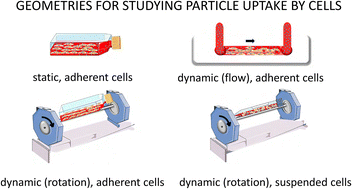
The way in which nanoparticles interact with cells in basic cell culture models depends not only on the physicochemical properties of the nanoparticles and the biological properties of different cell types but also on the geometry used for the cell culture. In this study, the effect of cell culture geometry on the uptake of nanoparticles is compared quantitatively. HeLa cells are used for the entire study in order to minimize cell-specific effects. Polymer-coated gold nanoparticles with similar surface chemistry, but different sizes, C are used as the model system. Four different cell culture geometries were investigated: adherent cells with static medium above them, adherent cells with medium flowing above them in a microfluidics channel, adherent cells where the cell culture is slowly rotated, and suspended cells in a rotating culture. The size-dependent uptake of the different nanoparticles by the cells under these culture conditions is analyzed in terms of elemental intracellular gold per cell. The results show that relating the uptake of nanoparticles to their physicochemical properties may depend on the applied cell culture geometry. While adherent cells in the static culture favor uptake of larger nanoparticles, suspended cells in rotation culture preferentially take up smaller nanoparticles. Direct comparison of the uptake of six different nanoparticle types in cells in four different cell culture geometries enables quantitative analysis. This study suggests that the geometry of in vitro cell culture systems should be optimized with respect to the in vivo scenarios they emulate. While this fact is known and has been discussed by several groups, in this work, the effects can be quantitatively discussed, thanks to a systematic direct comparison.
- This article is part of the themed collection: Recent Review Articles
 Please wait while we load your content...


