DFT simulations and fine-tuned theoretical linear solvation energy relationship (TLSER) models for predicting organic compound adsorption onto diverse boron nitride nanotubes (BNNTs)
Received
25th September 2025
, Accepted 31st October 2025
First published on 13th November 2025
Abstract
Exploring the adsorption of organic compounds onto boron nitride nanotubes (BNNTs) is essential for designing advanced BNNT-based absorbents to remove emerging organic pollutants from the environment. Herein, density functional theory (DFT) computations were carried out for exploring the adsorption of 30 organic compounds onto 14 BNNTs with varying diameters and types of chirality. Furthermore, 14 predictive models based on the fine-tuned theoretical linear solvation energy relationship (TLSER) were established for estimating the adsorption energy (Ead) values onto BNNTs. These prediction models are applicable to aliphatic and aromatic hydrocarbons featuring diverse substituents, i.e., –CH3, –NH2, –NO2, –OH, –F, –CN, –C(O)CH3, –CH2CH2OH, –CH2OH, –CH2CH3 and –CH2CH2CH3. Besides, the results imply that the adsorption energies can be enhanced by increasing the diameter of BNNTs. The functional groups of the organic compounds can further promote the adsorption onto BNNTs. The more functional groups, the more effective the adsorption. The dispersion interactions were identified as the primary driving forces in the adsorption, while the hydrogen-donating ability had minimal effects on the adsorption. These results provide molecular-level insights into diverse organic compound adsorption onto BNNTs with different diameters and types of chirality, and also offer efficient tools for predicting the adsorption behavior onto BNNTs so as to rationally design high-performance BNNT-based absorbents.
Environmental significance
Designing highly efficient absorbents is essential for removing organic pollutants from the environment. As an emerging adsorbent material, boron nitride nanotubes (BNNTs) demonstrate great potential in this regard. Structural properties, e.g., the diameter and type of chirality, are key factors influencing the adsorption capabilities of BNNTs. However, the effects of the diameter/chirality on diverse organic pollutant adsorption remain poorly understood. In this study, we investigated the adsorption of 30 organic pollutants with different functional groups onto 14 BNNTs with diverse diameters/types of chirality via density functional theory (DFT) computations. Moreover, on the basis of the fine-tuned theoretical linear solvation energy relationship (TLSER), 14 predictive models were established highly efficiently estimating the adsorption energies onto distinct BNNTs. Our study can not only give insights into the adsorption mechanisms onto BNNTs, but also can enable high-throughput prediction of adsorption, thereby supporting the rational design of BNNT-based absorbents.
|
1. Introduction
Due to their extraordinary physicochemical characteristics, including high specific surface area, chemical stability, corrosion resistance, thermal resistivity etc., boron nitride (BN) nanomaterials have shown great potential in various applications.1–6 Note that the highest specific surface area for BN nanomaterials can be up to 1488 m2 g−1,7 which makes BN a rising star in the field of adsorbent research. It is widely known that adsorption is an effective, convenient and eco-friendly technique for removing organic pollutants from the environment.8,9 As a representative of one-dimensional BN nanomaterials, BN nanotubes (BNNTs) have attracted more and more attention as potential adsorbents.10,11 Therefore, it is of great significance to investigate organic pollutant adsorption onto BNNTs so as to utilize BNNTs as adsorbents and design novel effective adsorbents based on BNNTs to remove organic pollutants from the environment.
To date, some studies have been carried out to investigate the adsorption of different compounds onto BNNTs.12–16 The results from these studies have shown that BNNTs have different adsorption capabilities for various compounds, e.g., the binding energy for arginine–BNNT is 3.53 eV, which is stronger than that for aspartic acid–BNNT (0.94 eV) and tryptophan–BNNT (0.36 eV).17 Different adsorption mechanisms including electrostatic interactions,10,18 π–π interactions,10,18 hydrogen bonds14 and van der Waals forces19 may be involved in the adsorption processes. The underlying adsorption mechanisms of various organic compounds onto BNNTs need to be further elucidated. Besides, the diameter12 or chirality20 of BNNTs can also influence the adsorption, e.g., BNNTs with a diameter of 13.96 Å show the greatest adsorption capability for paracetamol among the BNNTs with diameters in the range of 5.63–13.96 Å;12 for the armchair and zigzag BNNTs having the same diameter, letrozole is chemically adsorbed on the armchair BNNTs, while it is physically adsorbed on zigzag BNNTs.20 However, the effects of the diameter/chirality of BNNTs on the adsorption of various organic compounds onto diverse BNNTs still remain unclear.
In recent years, density functional theory (DFT) calculations have emerged as an important technique for probing the adsorption mechanisms at the molecular level.21–30 Given the large number of organic compounds, it is impractical to explore the adsorption of each organic compound onto BNNTs with different types of chirality or diameters through DFT simulations. Therefore, it is imperative to establish predictive models for the adsorption of different organic compounds onto structurally distinct BNNTs.
Analogous to the polyparameter linear free energy relationship (pp-LFER),31–34 the theoretical linear solvation energy relationship (TLSER)35,36 has also been employed to predict the adsorption/partition of organic compounds.37–39 The TLSER model is also mechanistically clear and based on six theoretical molecular descriptors40–42 addressing the interactions related to hydrogen bonds, van der Waals/cavity terms and dipole/polarizability. Unlike the descriptor values from experimental determination in the pp-LFER, the molecular descriptors used in the TLSER are computationally generated and independent of experiments, which enable the developed models to predict adsorption of the compounds lacking experimentally determined descriptors. Note that the TLSER model can be solely utilized for predicting the adsorption behavior of organic compounds in an aqueous environment. In order to adapt the model for predicting the adsorption of organic compounds onto BNNTs in the atmospheric environment, we fine-tuned the TLSER model by using the logarithmic value of the n-hexadecane/air partition coefficient (L) instead of the volume term (V), which is similar to the pp-LFER framework applicable to the adsorption in a gaseous environment.
In this study, DFT calculations were carried out to simulate the adsorption of 30 diverse aliphatic and aromatic compounds onto 14 BNNTs with varying chirality and diameters, so as to examine the effects of functional groups of the organic compounds and the structures of BNNTs on the adsorption. Afterwards, the adsorption energy (Ead) values were estimated according to the energies from the DFT computations. Moreover, the L values for these 30 organic compounds were predicted through a previously established model. On the basis of the Ead values and theoretical molecular structural descriptor values, 14 fine-tuned TLSER models were further established for predicting the adsorption of organic compounds onto BNNTs with different types of chirality and diameters. These 14 fine-tuned TLSER models can serve as efficient tools for high-throughput estimation of organic compound adsorption onto BNNTs.
2. Materials and methods
2.1 Boron nitride nanotubes (BNNTs) and organic compounds
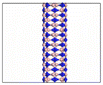
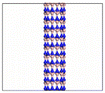
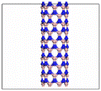
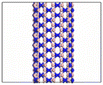
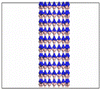
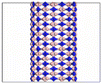
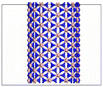
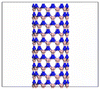
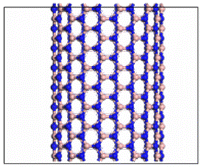
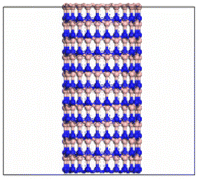
As shown in Table 1, 14 BNNTs with distinct diameter and chirality, i.e., zigzag BNNTs (6, 0), (7, 0), (8, 0), (9, 0), (10, 0), (11, 0), and (12, 0) and armchair BNNTs (4, 4), (5, 5), (6, 6), (7, 7), (8, 8), (9, 9) and (10, 10), are utilized as adsorbents. The established zigzag BNNTs are 1 × 1 × 5 supercells, while the built armchair BNNTs are 1 × 1 × 8 supercells. These BNNT models were constructed to be sufficiently long so that the distances between the organic compounds and their periodic images exceed 10 Å,43 thereby eliminating interactions between these adjacent periodic images. All the established BNNTs show semiconducting characteristics. Besides, 30 organic compounds including aliphatic and aromatic compounds with various functional groups are applied as adsorbates (Table 2).
Table 1 Boron nitride nanotubes (BNNTs) and their diameters (D)
| Armchair BNNTs |
Zigzag BNNTs |
|
|
|
D = 5.42 Å |
D = 4.70 Å |
| BNNTs(4, 4) |
BNNTs(6, 0) |

|

|
|
D = 6.78 Å |
D = 5.48 Å |
| BNNTs(5, 5) |
BNNTs(7, 0) |

|
|
|
D = 8.14 Å |
D = 6.26 Å |
| BNNTs(6, 6) |
BNNTs(8, 0) |
|
|
|
D = 9.49 Å |
D = 7.05 Å |
| BNNTs(7, 7) |
BNNTs(9, 0) |
|

|
|
D = 10.85 Å |
D = 7.83 Å |
| BNNTs(8, 8) |
BNNTs(10, 0) |
|
|
|
D = 12.20 Å |
D = 8.61 Å |
| BNNTs(9, 9) |
BNNTs(11, 0) |
|
|
|
D = 13.56 Å |
D = 9.39 Å |
| BNNTs(10, 10) |
BNNTs(12, 0) |
Table 2 Organic compounds and adsorption energies (Ead) from DFT calculations
| No. |
Compound |
E
ad (kcal mol−1) |
| (6, 0) |
(7, 0) |
(8, 0) |
(9, 0) |
(10, 0) |
(11, 0) |
(12, 0) |
| 1 |
Formic acid |
−5.35 |
−6.43 |
−6.56 |
−10.76 |
−10.60 |
−11.51 |
−13.44 |
| 2 |
Malonic acid |
−13.88 |
−14.93 |
−15.74 |
−17.07 |
−17.95 |
−20.68 |
−21.06 |
| 3 |
Cyclohexane |
−9.46 |
−11.80 |
−12.45 |
−13.18 |
−13.39 |
−14.26 |
−16.30 |
| 4 |
Methyl cyclohexane |
−11.49 |
−12.59 |
−12.70 |
−15.38 |
−15.43 |
−15.83 |
−18.64 |
| 5 |
Benzene |
−10.79 |
−12.29 |
−12.65 |
−14.34 |
−17.18 |
−18.25 |
−20.37 |
| 6 |
Toluene |
−16.23 |
−17.29 |
−18.88 |
−19.58 |
−19.86 |
−21.04 |
−23.51 |
| 7 |
Aniline |
−16.85 |
−18.54 |
−19.09 |
−20.53 |
−20.61 |
−21.63 |
−23.30 |
| 8 |
Phenol |
−15.42 |
−17.16 |
−17.64 |
−18.33 |
−19.23 |
−20.43 |
−21.80 |
| 9 |
Nitrobenzene |
−15.08 |
−15.54 |
−15.89 |
−16.67 |
−18.01 |
−19.94 |
−21.41 |
| 10 |
Benzonitrile |
−15.54 |
−16.19 |
−16.68 |
−17.69 |
−19.09 |
−19.56 |
−20.66 |
| 11 |
Ethylbenzene |
−14.35 |
−17.38 |
−18.04 |
−18.41 |
−20.41 |
−20.65 |
−22.07 |
| 12 |
Acetophenone |
−20.39 |
−22.26 |
−22.56 |
−22.96 |
−23.49 |
−25.29 |
−26.87 |
| 13 |
Phenethyl alcohol |
−15.96 |
−18.91 |
−19.10 |
−20.61 |
−20.85 |
−21.54 |
−22.36 |
| 14 |
Propylbenzene |
−18.43 |
−20.65 |
−20.53 |
−21.17 |
−24.74 |
−25.52 |
−26.70 |
| 15 |
1,3-Dinitrobenzene |
−16.67 |
−17.48 |
−18.82 |
−19.74 |
−20.04 |
−20.15 |
−23.38 |
| 16 |
1,4-Dinitrobenzene |
−17.25 |
−19.17 |
−19.77 |
−20.22 |
−21.13 |
−21.87 |
−23.98 |
| 17 |
4-Nitrotoluene |
−18.32 |
−20.67 |
−21.06 |
−21.84 |
−21.86 |
−22.19 |
−24.65 |
| 18 |
1,4-Xylene |
−16.27 |
−20.23 |
−20.37 |
−20.52 |
−22.85 |
−22.75 |
−23.23 |
| 19 |
3-Methylphenol |
−17.79 |
−18.04 |
−19.14 |
−19.49 |
−19.92 |
−23.22 |
−23.45 |
| 20 |
4-Fluorophenol |
−16.27 |
−18.38 |
−18.46 |
−18.85 |
−19.63 |
−19.51 |
−20.10 |
| 21 |
4-Ethylphenol |
−16.74 |
−18.90 |
−20.41 |
−20.57 |
−20.98 |
−21.68 |
−23.82 |
| 22 |
3-Methyl benzyl alcohol |
−20.09 |
−22.45 |
−22.91 |
−24.10 |
−24.15 |
−24.63 |
−27.62 |
| 23 |
3,5-Dimethylphenol |
−21.74 |
−23.85 |
−24.72 |
−25.56 |
−25.92 |
−27.53 |
−27.75 |
| 24 |
2,4-Dinitrotoluene |
−21.08 |
−21.28 |
−24.23 |
−25.84 |
−26.08 |
−26.82 |
−27.32 |
| 25 |
Naphthalene |
−19.89 |
−21.96 |
−22.03 |
−23.12 |
−23.37 |
−24.51 |
−24.98 |
| 26 |
Biphenyl |
−23.97 |
−25.72 |
−28.14 |
−29.05 |
−29.89 |
−30.27 |
−30.82 |
| 27 |
1-Methylnaphthalene |
−21.52 |
−22.94 |
−23.80 |
−25.27 |
−29.12 |
−30.40 |
−32.53 |
| 28 |
Fluorene |
−23.43 |
−25.34 |
−26.92 |
−28.57 |
−33.26 |
−34.53 |
−36.72 |
| 29 |
Phenanthrene |
−24.20 |
−26.29 |
−27.00 |
−28.17 |
−28.44 |
−28.94 |
−32.50 |
| 30 |
Anthracene |
−27.93 |
−30.33 |
−31.08 |
−31.29 |
−32.04 |
−32.73 |
−33.26 |
| No. |
Compound |
E
ad (kcal mol−1) |
| (4, 4) |
(5, 5) |
(6, 6) |
(7, 7) |
(8, 8) |
(9, 9) |
(10, 10) |
| 1 |
Formic acid |
−7.90 |
−8.79 |
−8.74 |
−9.53 |
−9.57 |
−9.37 |
−10.37 |
| 2 |
Malonic acid |
−13.79 |
−15.28 |
−15.32 |
−15.99 |
−16.29 |
−17.24 |
−18.94 |
| 3 |
Cyclohexane |
−10.78 |
−11.35 |
−11.35 |
−11.73 |
−12.66 |
−12.87 |
−14.13 |
| 4 |
Methyl cyclohexane |
−12.71 |
−13.40 |
−13.48 |
−13.90 |
−15.28 |
−15.26 |
−15.74 |
| 5 |
Benzene |
−12.76 |
−14.46 |
−15.36 |
−15.16 |
−16.10 |
−16.13 |
−16.27 |
| 6 |
Toluene |
−18.57 |
−18.70 |
−18.72 |
−19.31 |
−20.57 |
−20.78 |
−21.06 |
| 7 |
Aniline |
−17.83 |
−20.29 |
−21.33 |
−22.06 |
−22.45 |
−23.28 |
−24.73 |
| 8 |
Phenol |
−17.10 |
−18.01 |
−18.62 |
−19.58 |
−19.63 |
−19.83 |
−20.87 |
| 9 |
Nitrobenzene |
−17.19 |
−17.44 |
−18.74 |
−19.08 |
−19.22 |
−19.34 |
−20.52 |
| 10 |
Benzonitrile |
−18.02 |
−18.48 |
−18.62 |
−18.73 |
−19.33 |
−20.07 |
−20.58 |
| 11 |
Ethylbenzene |
−17.03 |
−17.96 |
−18.63 |
−19.28 |
−20.56 |
−20.68 |
−22.03 |
| 12 |
Acetophenone |
−22.03 |
−22.90 |
−22.80 |
−23.41 |
−24.26 |
−24.47 |
−23.98 |
| 13 |
Phenethyl alcohol |
−19.73 |
−19.96 |
−20.68 |
−21.28 |
−21.34 |
−22.01 |
−22.80 |
| 14 |
Propylene |
−20.92 |
−23.79 |
−23.91 |
−23.75 |
−24.18 |
−25.51 |
−26.89 |
| 15 |
1,3-Dinitrobenzene |
−20.24 |
−20.72 |
−20.64 |
−21.74 |
−21.54 |
−21.75 |
−22.79 |
| 16 |
1,4-Dinitrobenzene |
−18.27 |
−19.82 |
−22.63 |
−23.32 |
−24.33 |
−24.66 |
−26.00 |
| 17 |
4-Nitrotoluene |
−19.28 |
−19.44 |
−21.02 |
−21.78 |
−22.81 |
−23.21 |
−24.02 |
| 18 |
1,4-Xylene |
−18.48 |
−19.35 |
−21.08 |
−21.12 |
−21.15 |
−22.48 |
−22.77 |
| 19 |
3-Methylphenol |
−18.65 |
−19.65 |
−19.58 |
−20.49 |
−21.25 |
−22.07 |
−22.02 |
| 20 |
4-Fluorophenol |
−16.97 |
−18.53 |
−18.73 |
−18.85 |
−18.78 |
−19.67 |
−20.18 |
| 21 |
4-Ethylphenol |
−20.15 |
−23.04 |
−23.53 |
−24.87 |
−25.27 |
−25.34 |
−26.49 |
| 22 |
3-Methyl benzyl alcohol |
−20.78 |
−23.01 |
−23.38 |
−23.89 |
−24.02 |
−24.03 |
−24.35 |
| 23 |
3,5-Dimethylphenol |
−24.83 |
−26.51 |
−26.53 |
−28.39 |
−28.92 |
−28.55 |
−29.53 |
| 24 |
2,4-Dinitrotoluene |
−20.81 |
−22.56 |
−23.75 |
−23.96 |
−24.13 |
−25.49 |
−25.67 |
| 25 |
Naphthalene |
−21.25 |
−21.46 |
−23.66 |
−24.08 |
−23.91 |
−25.48 |
−25.61 |
| 26 |
Biphenyl |
−25.98 |
−26.94 |
−26.95 |
−27.89 |
−28.58 |
−28.67 |
−31.11 |
| 27 |
1-Methylnaphthalene |
−26.79 |
−27.41 |
−27.53 |
−29.43 |
−30.89 |
−30.47 |
−32.10 |
| 28 |
Fluorene |
−29.37 |
−30.18 |
−30.72 |
−32.44 |
−32.31 |
−32.87 |
−34.27 |
| 29 |
Phenanthrene |
−30.23 |
−31.27 |
−31.60 |
−32.53 |
−33.67 |
−34.83 |
−36.87 |
| 30 |
Anthracene |
−27.19 |
−28.08 |
−28.38 |
−29.27 |
−29.60 |
−31.10 |
−31.79 |
2.2 Density functional theory calculations
The DMol3 module44,45 was applied for performing the density functional theory (DFT) calculations. Perdew–Burke–Ernzerhof (PBE) under the generalized gradient approximation (GGA) was utilized for characterizing the exchange–correlation term,46 and the double-numerical basis with polarization functions (DNP)47,48 was also used in the DFT calculations. Besides, the long-range electrostatic interactions were described with the Grimme van der Waals (vdW) correction49 through the PBE+D2 method. This method is equivalent to the 6-31G** basis set developed by Pople.50 Besides, we also simulated the adsorption of formic acid and benzene onto the BN nanosheet through PBE+D2 and PBE+D3 (ref. 51) methods respectively, and found that the adsorption energies obtained from these two methods were in good agreement (Table S1 of the SI), which has also been confirmed by Dzade et al.52 The Monkhorst–Pack k-point mesh was set as 1 × 1 × 2, and the value for Methfessel–Paxton smearing was 0.005 Ha.53 The convergence tolerances for energy and force is 2.0 × 10⁻⁵ Ha and 0.004 Ha Å−1, respectively. All the organic compounds used in this study were neutral. Besides, the overall charges of the adsorption complexes were set to zero and spin-restricted calculations were utilized for the DFT computations. Note that the Adsorption Locator module54 (more details about the simulations can be found in Table S2) was utilized for searching for the optimal adsorption configurations, which would be further computed with the aforementioned DFT method.
2.3 Adsorption energies (Ead)
Adsorption energies (Ead) of the organic compounds on BNNTs can be calculated as:| | | Ead = EBNNTs+X − EX − EBNNTs | (1) |
where the subscript BNNTs and X represent the boron nitride nanotubes and the adsorbate, respectively. BNNTs + X is the complex system including the boron nitride nanotubes and the adsorbate. EBNNTs+X, EX and EBNNTs denote the total energy of the complex system, adsorbate and BNNTs, correspondingly.
2.4 Theoretical molecular structural descriptors
The molecular structures of these 30 organic compounds were optimized with the PM7 method55 in the MOPAC2016 (ref. 56) software package. Afterwards, the atomic charges, polarizability, and molecular orbital energy levels [i.e., the lowest unoccupied orbital energy level (ELUMO) and the highest occupied orbital energy level (EHOMO)] can be obtained from the optimized results. We further calculated six theoretical molecular structural descriptors including SA (conductor-like screening model area), Mi [mean first ionization potential (scaled on the carbon atom)], SCBO [sum of conventional bond orders (H-depleted)], nH (number of hydrogen atoms), nCIC [number of rings (cyclomatic number)] and Hy (hydrophilic factor) with Dragon software, so as to estimate the logarithmic value of the n-hexadecane/air partition coefficient (L) according to a previous predictive model with the following evaluation parameter values (R2 = 0.958, RMSEt = 0.620, Q2LOO = 0.957, Q2v = 0.961, RMSEv = 0.604).57
Based on the values for the aforementioned molecular structural descriptors, we established prediction models by using the fine-tuned TLSER35,36,58 model as follows:
| | log![[thin space (1/6-em)]](https://www.rsc.org/images/entities/char_2009.gif) K = lL + fq+ + eq− + pπ + aεα + bεβ + g K = lL + fq+ + eq− + pπ + aεα + bεβ + g | (2) |
where log
K denotes the logarithmic value of adsorption equilibrium coefficients. In this study,
Ead values were used instead of log
K values.
L denotes the logarithmic value of the
n-hexadecane/air partition coefficient, characterizing the interactions related to the dispersion effects or cavity terms.
q+ and
q− characterize the electrostatic interactions.
q+ represents the most positive formal charge of the hydrogen atom in the molecule, while
q− represents the absolute value of the most negative formal charge in the molecule. π can be obtained by dividing the molecular polarizability by 100 ×
V (molecular volume), which quantifies the mobility of electrons throughout the molecule in response to an induced dipole,
59 and describes the interactions related to the polarizability. This normalization makes π dimensionless and independent of the molecular size.
εα, defined as
ELUMO −
EHOMO(H2O), represents the covalent acidity;
εβ, defined as
ELUMO(H2O) −
EHOMO, denotes the covalent basicity.
l,
f,
e,
p,
a and
b are the fitting coefficients, and
g is the constant.
2.5 Development and evaluation of the prediction models
The Ead values for 30 organic compounds on distinct BNNTs and the theoretical molecular structural descriptor values of these 30 organic compounds were utilized for establishing and validating the prediction models. The total dataset was randomly split into a training set (25 organic compounds) and a validation set (5 organic compounds). Multiple linear regression (MLR) was applied for developing the prediction models on the basis of the fine-tuned TLSER framework. We used these parameters, i.e., the determination coefficient (R2), root mean square error (i.e., RMSEt for the training set and RMSEv for the validation set), leave-one-out cross-validated Q2 (Q2LOO) and external explained variance (Q2V), so as to evaluate the goodness of fit, robustness, and prediction ability of the established prediction models. Based on the Q2LOO values (Q2 > 0.50), along with the values for other parameters, the optimal prediction models were selected. Moreover, the Mann–Whitney U tests (Table S3) were conducted and further verified the representativeness of the validation set. We further calculated standardized residuals (δ*) and leverage values (hi) for characterizing the application domain (AD) of the developed prediction models with Williams plots.60
3. Results and discussion
3.1 Adsorption energies (Ead) on BNNTs and adsorption configurations at equilibrium
Fig. 1 shows that the Ead values on armchair BNNTs are in the range of −7.90–−36.87 kcal mol−1, while the Ead values on zigzag BNNTs range from −5.35 to −36.72 kcal mol−1. Besides, the distances between the mass center of organic compounds and the surface of BNNTs at equilibrium are in the range of 2.82–4.10 Å (Table S4 and structures in the SI). All these distances and Ead values indicate that there exist van der Waals interactions.
 |
| | Fig. 1 Box and whisker plots for adsorption energy (Ead) values of organic compounds on (a) armchair BNNTs and (b) zigzag BNNTs (the upper/lower whiskers denote the maximum/minimum values; the top/bottom of the box represent the upper/lower quartiles; the line inside the box is the median). | |
3.2 Effects of diameters of BNNTs and functional groups of organic compounds on adsorption
The Ead values for 30 organic compounds on 14 BNNTs with different diameters and types of chirality are shown in Fig. 2–6. The results show that regardless of whether the organic compounds are aliphatic or aromatic, their Ead values on BNNTs increase with the increase in the diameter of BNNTs. Besides, with the increase in the diameter of BNNTs, the adsorption energies of organic compounds on zigzag (n, 0) BNNTs increase more greatly than those on armchair (n, n) BNNTs.
 |
| | Fig. 2 Adsorption energies (Ead) on BNNTs for (a) formic acid, (b) malonic acid, (c) cyclohexane, (d) methyl cyclohexane, (e) benzene and (f) toluene. | |
 |
| | Fig. 3 Adsorption energies (Ead) on BNNTs for (a) aniline, (b) phenol, (c) nitrobenzene, (d) benzonitrile, (e) ethylbenzene and (f) acetophenone. | |
 |
| | Fig. 4 Adsorption energies (Ead) on BNNTs for (a) phenethyl alcohol, (b) propylbenzene, (c) 1,3-nitrobenzene, (d) 1,4-nitrobenzene, (e) 4-nitrotoluene and (f) 1,4-xylene. | |
 |
| | Fig. 5 Adsorption energies (Ead) on BNNTs for (a) 3-methylphenol, (b) 4-fluorophenol, (c) 4-ethylphenol, (d) 3-methyl benzyl alcohol, (e) 3,5-dimethylphenol and (f) 2,4-dinitrotoluene. | |
 |
| | Fig. 6 Adsorption energies (Ead) on BNNTs for (a) naphthalene, (b) biphenyl, (c) 1-methylnaphthalene, (d) fluorene, (e) phenanthrene and (f) anthracene. | |
Herein, we also investigated the adsorption of organic compounds with diverse functional groups onto 14 BNNTs, so as to explore the effects of different functional groups on the adsorption. Among the aliphatic compounds, i.e., formic acid, malonic acid, cyclohexane and methyl cyclohexane, the Ead values for formic acid on 14 BNNTs are the weakest, while the Ead values for malonic acid on 14 BNNTs are the strongest. The Ead values for malonic acid on BNNTs are stronger than those for cyclohexane and methyl cyclohexane on BNNTs. The reason may be that the carboxyl group in malonic acid has strong electron-withdrawing ability resulting in the increase in the electrostatic interactions between malonic acid and BNNTs. Besides, the Ead values for methyl cyclohexane on BNNTs are stronger than those for cyclohexane on BNNTs, indicating that the substituents can increase the adsorption energies on BNNTs. Note that the Ead values for benzene on BNNTs are stronger than those for cyclohexane on BNNTs. It can be ascribed to π electrons of the benzene ring, which can interact with the surface of BNNTs through π–π interactions.
In terms of the aromatic compounds featuring diverse functional groups, different functional groups can have distinct effects on the adsorption of aromatic compounds onto BNNTs (Fig. 2–6). The Ead values for all the mono-substituted aromatic compounds including toluene, aniline, phenol, nitrobenzene, benzonitrile, ethylbenzene, acetophenone, phenylethanol and propylbenzene on BNNTs are stronger than those for benzene on BNNTs. The effects of the electron-withdrawing substituents on the adsorption are different from those of the electron-donating substituents on the adsorption onto BNNTs. For the compounds having functional groups with similar electron-donating ability, i.e., toluene, ethylbenzene and propylbenzene, the adsorption energies for propylbenzene on BNNTs are the strongest. A similar phenomenon has also been found in the adsorption onto graphene.61 This implies that the substituent of the organic compound with a larger volume tends to be adsorbed onto BNNTs. In addition, the interactions between the organic compounds with the BNNTs increase with the increase in the number of substituents. For example, the adsorption energies for 1,3-dinitrobenzene/1,4-dinitrobenzene on BNNTs are stronger than those for nitrobenzene; the adsorption energies for 1,4-xylene on BNNTs are stronger than those for toluene on BNNTs; the adsorption energies for 3,5-dimethylphenol on BNNTs are also stronger than those for 3-methylphenol. Note that although both 1,3-dinitrobenzene and 1,4-dinitrobenzene have two nitro functional groups, the adsorption energies for 1,3-dinitrobenzene on BNNTs are different from those for 1,4-dinitrobenzene on BNNTs. This indicates that the different substitution positions can affect the charge distribution of organic compounds, thereby influencing the interactions between them and BNNTs. For polycyclic aromatic hydrocarbons, more phenyl rings can increase their adsorption energies on BNNTs. For example, the adsorption energies for fluorene, phenanthrene and anthracene with three phenyl rings on BNNTs are stronger than those for naphthalene with two rings. Besides, for the isomers, i.e., phenanthrene and anthracene, they also have different adsorption energies on BNNTs. Anthracene is more liable to be adsorbed on zigzag BNNTs than phenanthrene, while phenanthrene is more liable to be adsorbed on armchair BNNTs than anthracene.
To sum up, the adsorption of organic compounds onto BNNTs increases with the increase in the diameter of BNNTs. Aromatic compounds have π–π interactions with BNNTs, resulting in stronger adsorption on BNNTs in comparison with aliphatic hydrocarbons having the same number of carbon atoms. The functional groups of organic compounds can enhance their interactions with BNNTs. The more functional groups, the stronger the adsorption energies on BNNTs. Besides, the position of the functional groups has varying effects on adsorption.
3.3 Prediction models based on the fine-tuned TLSER for Ead values on BNNTs
On the basis of Ead values from DFT calculations and theoretical molecular structural descriptors for these 30 organic compounds, 14 predictive models, being established for predicting the adsorption onto BNNTs, are as follows:
BNNTs (6, 0),
| | | Ead = −3.768L + 24.031q+ + 15.793q− + 2.996π − 0.132εα + 1.797εβ − 23.507 nt = 25, R2 = 0.92, RMSEt = 1.26, F = 33.102, p < 0.001, nv = 5, Q2LOO = 0.86, Q2v = 0.92, RMSEV = 1.98 | (3) |
BNNTs (7, 0),
| | | Ead = −3.652L + 26.663q+ + 16.857q− + 2.866π − 0.258εα + 2.392εβ − 28.787 nt = 25, R2 = 0.91, RMSEt = 1.37, F = 30.090, p < 0.001, nv = 5, Q2LOO = 0.84, Q2v = 0.94, RMSEV = 2.15 | (4) |
BNNTs (8, 0),
| | | Ead = −4.002L + 22.794q+ + 14.905q− + 3.033π − 0.203εα + 2.067εβ − 26.778 nt = 25, R2 = 0.89, R2 = 1.56, F = 25.514, p < 0.001, nv = 5, Q2LOO = 0.81, Q2v = 0.96, RMSEV = 2.25 | (5) |
BNNTs (9, 0),
| | | Ead = −4.480L + 23.428q+ + 14.989q− + 3.679π − 0.447εα + 1.528εβ − 23.329 nt = 25, R2 = 0.90, RMSEt = 1.51, F = 26.185, p < 0.001, nv = 5, Q2LOO = 0.83, Q2v = 0.95, RMSEV = 1.78 | (6) |
BNNTs (10, 0),
| | | Ead = −5.003L + 26.452q+ + 9.556q− + 6.443π + 0.097εα + 2.599εβ − 47.081 nt = 25, R2 = 0.90, RMSEt = 1.59, F = 26.886, p < 0.001, nv = 5, Q2LOO = 0.80, Q2v = 0.96, RMSEV = 2.46 | (7) |
BNNTs (11, 0),
| | | Ead = −5.703L + 29.812q+ + 10.252q− + 8.945π + 0.258εα + 2.868εβ − 59.038nt = 25, R2 = 0.89, RMSEt = 1.65, F = 24.740, p < 0.001, nv = 5, Q2LOO = 0.80, Q2v = 0.87, RMSEv = 2.51 | (8) |
BNNTs (12, 0),
| | | Ead = −5.825L + 34.846q+ + 14.114q− + 8.172π − 0.164εα + 2.269εβ − 49.567nt = 25, R2 = 0.91, RMSEt = 1.46, F = 31.641, p < 0.001, nv = 5, Q2LOO = 0.81, Q2v = 0.93, RMSEv = 2.58 | (9) |
BNNTs (4, 4),
| | | Ead = −4.853L + 32.849q+ + 17.179q− + 5.106π − 0.248εα + 2.406εβ − 34.442 nt = 25, R2 = 0.94, RMSEt = 1.26, F = 44.426, p < 0.001, nv = 5, Q2LOO = 0.83, Q2v = 0.92, RMSEv = 2.24 | (10) |
BNNTs (5, 5),
| | | Ead = −5.204L + 27.292q+ + 14.692q− + 6.267π − 0.135εα + 2.609εβ − 41.339 nt = 25, R2 = 0.93, RMSEt = 1.36, F = 39.204, p < 0.001, nv = 5, Q2LOO = 0.76, Q2v = 0.98, RMSEv = 2.25 | (11) |
BNNTs (6, 6),
| | | Ead = −4.767L + 26.808q+ + 14.835q− + 5.221π + 0.058εα + 2.467εβ − 39.066 nt = 25, R2 = 0.93, RMSEt = 1.36, F = 38.199, p < 0.001, nv = 5, Q2LOO = 0.74, Q2v = 0.97, RMSEv = 1.80 | (12) |
BNNTs (7, 7),
| | | Ead = −5.193L + 28.120q+ + 17.324q− + 5.447π − 0.131εα + 2.467εβ − 37.172 nt = 25, R2 = 0.93, RMSEt = 1.46, F = 37.700, p < 0.001, nv = 5, Q2LOO = 0.76, Q2v = 0.96, RMSEv = 1.98 | (13) |
BNNTs (8, 8),
| | | Ead = −5.337L + 34.778q+ + 19.098q− + 6.032π − 0.237εα + 2.556εβ − 40.105 nt = 25, R2 = 0.91, RMSEt = 1.58, F = 31.605, p < 0.001, nv = 5, Q2LOO = 0.74, Q2v = 0.97, RMSEv = 2.08 | (14) |
BNNTs (9, 9),
| | | Ead = −5.495L + 32.709q+ + 16.842q− + 6.345π − 0.089εα + 2.540εβ − 42.299 nt = 25, R2 = 0.93, RMSEt = 1.42, F = 41.041, p < 0.001, nv = 5, Q2LOO = 0.81, Q2v = 0.97, RMSEv = 1.70 | (15) |
BNNTs (10, 10),
| | | Ead = −6.209L + 30.124q+ + 14.086q− + 7.671π − 0.075εα + 2.353εβ − 45.154 nt = 25, R2 = 0.92, RMSEt = 1.56, F = 36.921, p < 0.001, nv = 5, Q2LOO = 0.79, Q2v = 0.99, RMSEv = 1.72 | (16) |
In the developed models, nt and nv represent the number of organic compounds in the training set and validation set, respectively. According to the criteria (R2 > 0.60 and Q2 > 0.50),62 we can know that the developed 14 predictive models perform well in terms of the goodness of fit, robustness and predictive ability. Fig. 7–9 show that the predicted Ead values from the prediction models are in good agreement with those Ead values from DFT calculations.
 |
| | Fig. 7 Predicted Ead values from the fine-tuned TLSER models (Ead_pre) versus those from DFT computations (Ead_DFT) for organic compounds on (a) BNNTs(6, 0) and (b) BNNTs(4, 4). | |
 |
| | Fig. 8 Predicted Ead values from the fine-tuned TLSER models (Ead_pre) versus those from DFT computations (Ead_DFT) for organic compounds on (a) BNNTs(7, 0), (b) BNNTs(5, 5), (c) BNNTs(8, 0), (d) BNNTs(6, 6), (e) BNNTs(9, 0) and (f) BNNTs(7, 7). | |
 |
| | Fig. 9 Predicted Ead values from the fine-tuned TLSER models (Ead_pre) versus those from DFT computations (Ead_DFT) for organic compounds on (a) BNNTs(10, 0), (b) BNNTs(8, 8), (c) BNNTs(11, 0), (d) BNNTs(9, 9), (e) BNNTs(12, 0) and (f) BNNTs(10, 10). | |
The applicability domains (ADs) for these 14 prediction models are characterized based on standardized residuals (δ*) and leverage values (hi) (Fig. 10–12). These figures show that the absolute values of δ* for these 25 organic compounds in the training set are less than 3, and the hi values for these compounds are less than 0.84 (h*), indicating that no outliers exist. Notably, the ADs depend on the training set utilized for establishing predictive models, thus, the ADs for these 14 predictive models are the same. All the ADs cover various aliphatic and aromatic hydrocarbons with different substituents, i.e., –CH3, –NH2, –NO2, –OH, –F, –CN, –C(O)CH3, –CH2CH2OH, –CH2OH, –CH2CH3 and –CH2CH2CH3.
 |
| | Fig. 10 Williams plots of prediction models for (a) BNNTs(6, 0), (b) BNNTs(4, 4), (c) BNNTs(7, 0) and (d) BNNTs(5, 5). | |
 |
| | Fig. 11 Williams plots of prediction models for (a) BNNTs(8, 0), (b) BNNTs(6, 6), (c) BNNTs(9, 0), (d) BNNTs(7, 7), (e) BNNTs(10, 0) and (f) BNNTs(8, 8). | |
 |
| | Fig. 12 Williams plots of prediction models for (a) BNNTs(11, 0), (b) BNNTs(9, 9), (c) BNNTs(12, 0) and (d) BNNTs(10, 10). | |
3.4 Adsorption mechanisms on BNNTs
As exhibited in the established prediction models (eqn (3)–(16)), six theoretical molecular structural descriptors including L, q+, q−, π, εα and εβ have different coefficients, implying that they play different roles in the adsorption prediction.
In terms of the descriptor L, the coefficients for L in these 14 prediction models are negative. This means that the increase of the L value will result in the decrease in the Ead values, thereby promoting the adsorption of organic compounds onto BNNTs. L denotes the logarithmic value of the n-hexadecane/air partition coefficient, describing the interactions related to the dispersion forces. The larger the L values, the stronger the dispersion interactions between organic compounds and BNNTs, which can enhance the adsorption onto BNNTs. As listed in Fig. 13 and Table S5, the standardized coefficients also indicate that the descriptor L has the most significant effects on these 14 fine-tuned TLSER models. This suggests that dispersion interactions play dominant roles in the adsorption of organic compounds onto BNNTs.
 |
| | Fig. 13 Radar compass plots with the standardized coefficients in the prediction models for (a) zigzag BNNTs (6, 0), (7, 0), (8, 0), (9, 0), (10, 0), (11, 0) and (12, 0), and (b) armchair BNNTs (4, 4), (5, 5), (6, 6), (7, 7), (8, 8), (9, 9) and (10, 10). | |
Note that the coefficients for the descriptors q+ and q− in eqn (3)–(16) are positive, implying that the Ead values will become less negative with the increase in the values for q+/q−. The compound with a more negative Ead value is liable to be adsorbed onto BNNTs. Therefore, the increase in the values for q+/q− will suppress the adsorption onto BNNTs. q+ denotes the most positive formal charge in the compound, while q− represents the absolute value of the most negative formal charge in the compound. A compound with a larger q+ value means that the atoms in the compound except for the hydrogen atoms have more electrons, which can enhance the electrostatic repulsive forces between these atoms and BNNTs. Although the electrostatic attractive forces between the hydrogen atoms and BNNTs can be enhanced, the increase for the attractive forces are less than that for repulsive forces. Therefore, the interactions between the organic compounds and BNNTs decrease with the increase in the value of q+. Likewise, a larger q− value means that the atom in the compound has more negative formal charge, resulting in the increase in the electrostatic repulsive forces, so as to reduce the adsorption of organic compounds onto BNNTs. The standardized coefficients for q+ and q− in Fig. 13 and Table S5 also show that they have positive contributions to the Ead values.
In addition, the coefficients for π in eqn (3)–(16) are also positive. This indicates that the increase of π will result in the increase in Ead values, thereby preventing the adsorption of organic compounds on BNNTs. π characterizes the interactions related to the polarizability of the compounds. The compound with a larger π value has larger polarizability. The distribution for the charges in the compounds will be influenced by the BNNTs rich in electrons, which results in the decrease of adsorption onto BNNTs. Moreover, the coefficients for εβ are also positive. This means that a compound with a lower εβ value can be adsorbed onto BNNTs more easily. εβ denotes the covalent basicity. A lower εβ value of a compound means a weaker electron-donating ability, indicating that the compound lacks electrons, thereby reducing the electrostatic repulsive forces between the compound and BNNTs and promoting the adsorption onto BNNTs. In terms of the coefficients for εα, they are different in eqn (3)–(16). For the prediction models applicable to BNNTs(6, 6), BNNTs(10, 0) and BNNTs(11, 0), the coefficients for εα are positive, while for the others, the coefficients for εα are negative. When the coefficients are positive, it means that εα has a positive contribution to the Ead values, and vice versa. As shown in Fig. 13 and Table S5, the standardized coefficients for εα show that it has the least contribution to the Ead values among these six descriptors.
In summary, different interactions play distinct roles in the adsorption of organic compounds onto BNNTs. For the adsorption of these 30 organic compounds onto 14 BNNTs with different diameters and types of chirality, dispersion forces play a dominant role in the adsorption, while the hydrogen-donating ability has less contribution to the adsorption.
4. Conclusions
In this study, we carried out DFT calculations for exploring the adsorption of 30 organic compounds onto 14 BNNTs with diverse diameters and types of chirality. Based on the fine-tuned TLSERs, 14 prediction models were established for estimating the Ead values on BNNTs. All the developed models have satisfactory goodness of fit, robustness and predictive ability. These developed models can be used for predicting the adsorption of different aliphatic and aromatic hydrocarbons on BNNTs. The ADs for the developed models cover organic compounds with diverse functional groups, i.e., –CH3, –NH2, –NO2, –OH, –F, –CN, –C(O)CH3, –CH2CH2OH, –CH2OH, –CH2CH3 and –CH2CH2CH3. The results showed that the Ead values for organic compounds on BNNTs increase with the increase of diameter. Functional groups of the organic compounds can enhance the interactions between the organic compounds and BNNTs. Besides, the adsorption will be enhanced with the increase in the number of functional groups. Adsorption mechanisms exhibited that the dispersion interactions prevail in the adsorption, whereas the hydrogen-donating ability has a comparatively minor effect on the adsorption. The fine-tuned TLSER models proposed in this study can offer an efficient alternative way for obtaining the adsorption data on BNNTs, paving a new way for high-throughput screening of potential BNNT-based absorbents.
Author contributions
The manuscript was written through contributions of all authors. All authors have given approval to the final version of the manuscript.
Conflicts of interest
The authors declare no competing financial interest.
Data availability
The data supporting this article have been included as part of the supplementary information (SI).
Supplementary information: (1) adsorption energies on BN nanosheets from PBE-D2 and PBE-D3 computations (Table S1); (2) simulated annealing calculation parameters for searching for the optimal adsorption configurations (Table S2); (3) Mann–Whitney U tests for the datasets (Table S3); (4) adsorption equilibrium configuration for the 30 organic compounds on 14 distinct boron nitride nanotubes (Table S4); (5) descriptors and their standardized coefficients in the developed models (Table S5). See DOI: https://doi.org/10.1039/d5en00889a.
Acknowledgements
This study was supported in China by the National Natural Science Foundation of China (No. 22206095) and the Fundamental Research Funds for the Central Universities (No. FRF-TP-22-087A1).
References
- Z. W. Li, A. T. Hall, Y. Q. Wang, Y. H. Li, D. O. Byrne, L. R. Scammell, R. R. Whitney, F. Allen, J. Cumings and A. Noy, Ion transport and ultra-efficient osmotic power generation in boron nitride nanotube porins, Sci. Adv., 2024, 10, eado8081 CrossRef PubMed.
- B. Luan and R. H. Zhou, Spontaneous ssDNA stretching on graphene and hexagonal boron nitride in plane heterostructures, Nat. Commun., 2019, 10, 4610 CrossRef PubMed.
- D. Wu, Z. P. Zhao, B. Lin, Y. Z. Song, J. J. Qi, J. Jiang, Z. F. Yuan, B. W. Cheng, M. Z. Zhao, Y. Tian, Z. C. Wang, M. H. Wu, K. Bian, K. H. Liu, L. M. Xu, X. C. Zeng, E. G. Wang and Y. Jiang, Probing structural superlubricity of two-dimensional water transport with atomic resolution, Science, 2024, 384, 1254–1259 CrossRef CAS PubMed.
- J. Pu, K. Zhang, Z. H. Wang, C. W. Li, K. P. Zhu, Y. G. Yao and G. Hong, Synthesis and modification of boron nitride nanomaterials for electrochemical energy storage: from theory to application, Adv. Funct. Mater., 2021, 31, 2106315 CrossRef CAS.
- X. D. Guo, N. Li, X. X. Yang, R. S. Qi, C. C. Wu, R. C. Shi, Y. H. Li, Y. Huang, F. J. García de Abajo, E. G. Wang, P. Gao and Q. Dai, Hyperbolic whispering-gallery phonon polaritons in boron nitride nanotubes, Nat. Nanotechnol., 2023, 18, 529–534 CrossRef CAS PubMed.
- M. Li, G. Huang, X. J. Chen, J. N. Yin, P. Zhang, Y. Yao, J. Shen, Y. W. Wu and J. Huang, Perspectives on environmental applications of hexagonal boron nitride nanomaterials, Nano Today, 2022, 44, 101486 CrossRef CAS.
- Q. H. Weng, W. B. Wang, C. Y. Zhi, Y. Bando and D. Golberg, Boron nitride porous microbelts for hydrogen storage, ACS Nano, 2013, 7, 1558–1565 CrossRef CAS PubMed.
- M. Wagner, K. Y. A. Lin, W. D. Oh and G. Lisak, Metal-organic frameworks for pesticidal persistent organic pollutants detection and adsorption – a mini review, J. Hazard. Mater., 2021, 413, 125325 CrossRef CAS PubMed.
- J. O. Ighalo, P. S. Yap, K. O. Iwuozor, C. O. Aniagor, T. Q. Liu, K. Dulta, F. U. Iwuchukwu and S. Rangabhashiyam, Adsorption of persistent organic pollutants (POPs) from the aqueous environment by nano-adsorbents: a review, Environ. Res., 2022, 212, 113123 CrossRef CAS PubMed.
- Q. Q. Song, J. L. Liang, Y. Fang, C. C. Cao, Z. Y. Liu, L. L. Li, Y. Huang, J. Lin and C. C. Tang, Selective adsorption behavior/mechanism of antibiotic contaminants on novel boron nitride bundles, J. Hazard. Mater., 2019, 364, 654–662 CrossRef CAS PubMed.
- R. X. Wang, D. J. Zhang and C. B. Liu, DFT study of the adsorption of 2,3,7,8-tetrachlorodibenzo-p-dioxin on pristine and Ni-doped boron nitride nanotubes, Chemosphere, 2017, 168, 18–24 CrossRef CAS PubMed.
- I.-Z. Zahra and M. Dehestani, Molecular dynamics simulation of paracetamol drug adsorption on boron nitride nanotube: Effects of temperature, nanotube length, diameter, and chirality, ChemistrySelect, 2019, 4, 7866–7873 CrossRef.
- S. Rozas, R. Alcalde, M. Atilhan and S. Aparicio, A theoretical study on the adsorption of acid gases by boron nitride-based nanomaterials, Appl. Surf. Sci., 2019, 480, 83–95 CrossRef CAS.
- R. Sundaram, S. Scheiner, A. K. Roy and T. Kar, Site and chirality selective chemical modifications of boron nitride nanotubes (BNNTs) via lewis acid–base interactions, Phys. Chem. Chem. Phys., 2015, 17, 3850–3866 RSC.
- X. Peng, Molecular simulation of adsorption and separation of N2 and CF4 on carbon and boron nitride nanostructures, Sep. Purif. Technol., 2024, 350, 127943 CrossRef CAS.
- F. Shayeganfar, J. Beheshtian and R. Shahsavari, First-principles study of water nanotubes captured inside carbon/boron nitride nanotubes, Langmuir, 2018, 34, 11176–11187 CrossRef CAS PubMed.
- S. Mukhopadhyay, R. H. Scheicher, R. Pandey and S. P. Karna, Sensitivity of boron nitride nanotubes toward biomolecules of different polarities, J. Phys. Chem. Lett., 2011, 2, 2442–2447 CrossRef CAS.
- Q. Q. Song, Y. Fang, Z. Y. Liu, L. L. Li, Y. R. Wang, J. L. Liang, Y. Huang, J. Lin, L. Hu, J. Zhang and C. C. Tang, The performance of porous hexagonal BN in high adsorption capacity towards antibiotics pollutants from aqueous solution, Chem. Eng. J., 2017, 325, 71–79 CrossRef CAS.
- P. K. Marvi, S. Amjad-Iranagh and R. Halladj, Molecular dynamics assessment of doxorubicin adsorption on surface-modified boron nitride nanotubes (BNNTs), J. Phys. Chem. B, 2021, 125, 13168–13180 CrossRef CAS PubMed.
- H. Sargazi-Avval, M. Yoosefian, M. Ghaffari-Moghaddam, M. Khajeh and M. Bohlooli, Potential applications of armchair, zigzag, and chiral boron nitride nanotubes as a drug delivery system: Letrozole anticancer drug encapsulation, Appl. Phys. A: Mater. Sci. Process., 2021, 127, 257 CrossRef CAS.
- D. Langhammer, J. Kullgren and L. Österlund, Photoinduced adsorption and oxidation of SO2 on anatase TiO2(101), J. Am. Chem. Soc., 2020, 142, 21767–21774 CrossRef CAS PubMed.
- B. Dinakar, A. C. Forse, H. Z. H. Jiang, Z. T. Zhu, J. H. Lee, E. J. Kim, S. T. Parker, C. J. Pollak, R. L. Siegelman, P. J. Milner, J. A. Reimer and J. R. Long, Overcoming metastable CO2 adsorption in a bulky diamine-appended metal-organic framework, J. Am. Chem. Soc., 2021, 143, 15258–15270 CrossRef CAS PubMed.
- J. S. Adams, M. Tanwar, H. Y. Chen, S. Vijayaraghavan, T. Ricciardulli, M. Neurock and D. W. Flaherty, Intentional formation of persistent surface redox mediators by adsorption of polyconjugated carbonyl complexes to Pd nanoparticles, J. Am. Chem. Soc., 2025, 147, 16885–16900 CrossRef CAS PubMed.
- A. R. Juárez, E. C. Anota, H. H. Cocoletzi and A. F. Riveros, Adsorption of chitosan on BN nanotubes: A DFT investigation, Appl. Surf. Sci., 2013, 268, 259–264 CrossRef.
- E. C. Anota and G. H. Cocoletzi, First-principles simulations of the chemical functionalization of (5,5) boron nitride nanotubes, J. Mol. Model., 2013, 19, 2335–2341 CrossRef PubMed.
- E. C. Anota, G. H. Cocoletzi and J. F. S. Ramírez, Armchair BN nanotubes—levothyroxine interactions: a molecular study, J. Mol. Model., 2013, 19, 4991–4996 CrossRef CAS PubMed.
- G. A. Okon, D. G. Malu, H. Y. Abdullah, C. R. Nwokoye, N. I. Gber, C. P. Egbo, J. A. Unyime and T. E. Gber, Chalcogenides encapsulated Pt-doped carbon quantum dot (Pt@CQD) as a carrier for the controlled release of lapachone: outlook from theoretical calculations, Diamond Relat. Mater., 2024, 149, 111628 CrossRef CAS.
- B. O. Ekpong, H. Y. Abdullah, E. Emmanuel, I. Benjamin and D. C. Agurokpon, Transition metals tailoring of phosphorus-doped gallium nitride nanotubes as sensors for N-butenyl homoserine lactone (BHL): a computational study, Comput. Theor. Chem., 2024, 1241, 114914 CrossRef CAS.
- K. W. Qadir, M. D. Mohammadi and H. Y. Abdullah, Modelling gas adsorption onto Al12(Zn)N12 surfaces: A theoretical study of CH4, CO, CO2, H2O, N2, NH3, NO, NO2, O2, and SO2 interactions, Comput. Theor. Chem., 2025, 1244, 115063 CrossRef CAS.
- K. W. Qadir, M. D. Mohammadi, F. K. M. Alosfur and H. Y. Abdullah, Interaction of CO, CO2, CSO, H2O, N2O, NO, NO2, O2, ONH, and SO2 gases onto BNNT(m,n)_x, (m = 3,
5, 7; n = 0, 3, 5, 7; x = 3–9), J. Mol. Model., 2025, 31, 20 CrossRef CAS PubMed.
- M. H. Abraham, Scales of solute hydrogen-bonding: Their construction and application to physicochemical and biochemical processes, Chem. Soc. Rev., 1993, 22, 73–83 RSC.
- M. H. Abraham, Hydrogen-bonding. 31. Construction of a scale of solute effective or summation hydrogen-bond basicity, J. Phys. Org. Chem., 1993, 6, 660–684 CrossRef CAS.
- M. H. Abraham, G. S. Whiting, R. M. Doherty and W. J. Shuely, Hydrogen bonding. XVI. A new solute solvation parameter, π2H, from gas chromatographic data, J. Chromatogr., 1991, 587, 213–228 CrossRef CAS.
- M. H. Abraham, G. S. Whiting, R. M. Doherty and W. J. Shuely, Hydrogen bonding. Part 13. A new method for the characterization of GLC stationary phases-The Laffort data set, J. Chem. Soc., Perkin Trans. 2, 1990, 8, 1451–1460 RSC.
- G. R. Famini and L. Y. Wilson, Using theoretical descriptors in quantitative structure activity relationships: application to partition properties of alkyl (1-phenylsulfonyl) cycloalkane-carboxylates, Chemosphere, 1997, 35, 2417–2447 CrossRef CAS.
- G. R. Famini and L. Y. Wilson, Using theoretical descriptors in linear free energy relationships: characterizing several polarity, acid and basicity scales, J. Phys. Org. Chem., 1999, 12, 645–653 CrossRef CAS.
- Y. Wang, J. Comer, Z. F. Chen, J. W. Chen and J. C. Gumbart, Exploring adsorption of neutral aromatic pollutants onto graphene nanomaterials via molecular dynamics simulations and theoretical linear solvation energy relationships, Environ. Sci.: Nano, 2018, 5, 2117–2128 RSC.
- H. H. Liu, M. B. Wei, X. H. Yang, C. Yin and X. He, Development of TLSER model and QSAR model for predicting partition coefficients of hydrophobic organic chemicals between low density polyethylene film and water, Sci. Total Environ., 2017, 574, 1371–1378 CrossRef CAS PubMed.
- T. Y. Zhu, M. Li, J. Wu, Y. J. Wang and R. P. Singh, Predicting low density polyethylene-air partition coefficients using theoretical linear solvation energy relationships, J. Water Supply: Res. Technol.--AQUA, 2018, 67, 715–723 CrossRef.
- J. S. Murray, P. Politzer and G. R. Famini, Theoretical alternatives to linear solvation energy relationships, J. Mol. Struct.: THEOCHEM, 1998, 454, 299–306 CrossRef CAS.
- L. Y. Wilson and G. R. Famini, Using theoretical descriptors in quantitative structure-activity relationships: some toxicological indices, J. Med. Chem., 1991, 34, 1668–1674 CrossRef CAS PubMed.
- Z. Y. Wang, Z. C. Zhai and L. S. Wang, QSPR modeling of adsorption coefficient KOC of alkyl(1-phenylsulfonyl) cycloalkane-carboxylates on soil and sediments using MLSER model and ab initio, J. Mol. Struct.: THEOCHEM, 2005, 732, 79–85 CrossRef CAS.
- C. Liu, T. R. Cundari and A. K. Wilson, CO2 reduction on transition metal (Fe, Co, Ni, and Cu) surfaces: in comparison with homogeneous catalysis, J. Phys. Chem. C, 2012, 116, 5681–5688 CrossRef CAS.
- B. Delley, From molecules to solids with the DMol3 approach, J. Chem. Phys., 2000, 113, 7756–7764 CrossRef CAS.
- B. Delley, An all-electron numerical method for solving the local density functional for polyatomic molecules, J. Chem. Phys., 1990, 92, 508–517 CrossRef CAS.
- J. P. Perdew, K. Burke and M. Ernzerhof, Generalized gradient approximation made simple, Phys. Rev. Lett., 1996, 77, 3865–3868 CrossRef CAS PubMed.
- N. A. Benedek, I. K. Snook, K. Latham and I. Yarovsky, Application of numerical basis sets to hydrogen bonded systems: a density functional theory study, J. Chem. Phys., 2005, 122, 144102–144108 CrossRef CAS PubMed.
- Y. Inada and H. Orita, Efficiency of numerical basis sets for predicting the binding energies of hydrogen bonded complexes: Evidence of small basis set superposition error compared to Gaussian basis sets, J. Comput. Chem., 2008, 29, 225–232 CrossRef CAS PubMed.
- S. Grimme, Semiempirical GGA-type density functional constructed with a long-range dispersion correction, J. Comput. Chem., 2006, 27, 1787–1799 CrossRef CAS PubMed.
- P. Liu and J. A. Rodriguez, Catalysts for hydrogen evolution from the [NiFe] hydrogenase to the Ni2P (001) surface: the importance of ensemble effect, J. Am. Chem. Soc., 2005, 127, 14871–14878 CrossRef CAS PubMed.
- S. Grimme, S. Ehrlich and L. Goerigk, Effect of the damping function in dispersion corrected density functional theory, J. Comput. Chem., 2011, 32, 1456–1465 CrossRef CAS PubMed.
- N. Y. Dzade, A. Roldan and N. H. de Leeuw, Structures and properties of As(OH)3 adsorption complexes on hydrated mackinawite (FeS) surfaces: a DFT-D2 study, Environ. Sci. Technol., 2017, 51, 3461–3470 CrossRef CAS PubMed.
- H. M. Wang, H. X. Wang, Y. Chen, Y. J. Liu, J. X. Zhao, Q. H. Cai and X. Z. Wang, Phosphorus-doped graphene and (8, 0) carbon nanotube: structural, electronic, magnetic properties, and chemical reactivity, Appl. Surf. Sci., 2013, 273, 302–309 CrossRef CAS.
- S. Kirkpatrick, C. D. Gelatt and M. P. Vecchi, Optimization by simulated annealing, Science, 1983, 220, 671–680 CrossRef CAS PubMed.
- J. J. P. Stewart, Optimization of parameters for semiempirical methods VI: more modifications to the NDDO approximations and re-optimization of parameters, J. Mol. Model., 2013, 19, 1–32 CrossRef CAS PubMed.
- MOPAC2016™, http://openmopac.net/home.html, (accessed September 2025).
- Y. Wang, W. H. Tang, Z. J. Xiao, W. H. Yang, Y. Peng, J. W. Chen and J. H. Li, Novel quantitative structure activity relationship models for predicting hexadecane/air partition coefficients of organic compounds, J. Environ. Sci., 2023, 124, 98–104 CrossRef CAS PubMed.
- L. Y. Wilson and G. R. Famini, Using theoretical descriptors in quantitative structure-activity relationships: some toxicological indices, J. Med. Chem., 1991, 34, 1668–1674 CrossRef CAS PubMed.
- L. Y. Wilson, Using theoretical descriptors in Quantitative Structure-Activity Relationships: some toxicological indices, J. Med. Chem., 1991, 34, 1668–1674 CrossRef CAS PubMed.
- P. Gramatica, Principles of QSAR models validation: internal and external, QSAR Comb. Sci., 2007, 26, 694–701 CrossRef CAS.
- Y. Wang, J. W. Chen, X. X. Wei, A. J. H. Maldonado and Z. F. Chen, Unveiling adsorption mechanisms of organic pollutants onto carbon nanomaterials by density functional theory computations and linear free energy relationship modeling, Environ. Sci. Technol., 2017, 51, 11820–11828 CrossRef CAS PubMed.
- A. Golbraikh, M. Shen, Z. Y. Xiao, Y. D. Xiao, K. H. Lee and A. Tropsha, Rational selection of training and test sets for the development of validated QSAR models, J. Comput.-Aided Mol. Des., 2003, 17, 241–253 CrossRef CAS PubMed.
|
| This journal is © The Royal Society of Chemistry 2026 |
Click here to see how this site uses Cookies. View our privacy policy here. 

 ab,
Zijun
Xiao
cd,
Xiaoguang
Zhao
e,
Yakun
Qu
ab,
Zijun
Xiao
cd,
Xiaoguang
Zhao
e,
Yakun
Qu


