


Carbon dots and metal–organic frameworks based nanohybrids for improved biosensing and biomedical applications

Abstract
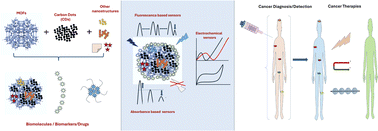
Composites of carbon dots (CDs) and metal–organic frameworks (CDs@MOFs) have emerged as a novel class of hybrid nanomaterials that integrate the high porosity and structural versatility of MOFs with the outstanding optical properties and biocompatibility of CDs. Although relatively new, these materials have attracted growing interest as multifunctional platforms for applications in biosensing of bioactive molecules, drugs, and biomarkers, as well as in cancer diagnosis and treatment and antibacterial activity, thereby expanding their potential in biomedicine. The promising performance demonstrated in these areas underscores the need to review and analyze recent advances, along with the benefits and challenges associated with this new class of materials. This review aims to provide a summary of the progress made in the synthesis of CDs@MOFs, including the methodologies and precursors employed, and highlights how the synthesis approach directly influences material properties and guides the selection of the appropriate CDs@MOFs hybrid material based on the desired application. Subsequently, the applications of CDs@MOFs in biosensors for the detection of bioactive molecules, drugs, and biomarkers are discussed, emphasizing advances in detection mechanisms, analytical performance, and stability. Their emerging applications in cancer diagnosis and treatment, antibacterial activity, and wound therapy are also reviewed. Finally, current challenges are discussed, including the control of CD distribution within MOF structures, stability in physiological media, and the need for sustainable and cost-effective synthesis methods, along with an overview of future research and development opportunities.
- This article is part of the themed collections: Recent Review Articles and Quantum nanomaterials
 Please wait while we load your content...


