


Gaseous CO2 electrolysis: latest advances in electrode and electrolyzer technologies toward abating CO2 emissions

Abstract
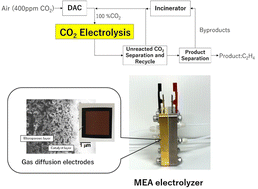
The conversion of CO2 into multicarbon (C2+) products via electrochemical reduction is considered a key technology for the sustainable production of fuels and chemicals. The performance of high-rate gaseous CO2 electrolysis is governed by interrelated factors such as the electrocatalysts, electrodes, electrolytes, and cell architectures. Despite the intensive focus on catalyst research, systematic studies addressing the other components remain scarce, leaving critical gaps in our understanding toward achieving higher performance in CO2 electrolysis systems. The nanoscale design of catalyst surface electronic structures and the macroscale design of electrodes and electrolyzer architectures both influence the overall activity of the electrochemical system. In designing macroscale components, it is necessary to establish benchmarks based on a comprehensive evaluation of CO2 emissions for the entire electrolysis process, because these parameters are directly linked to output metrics such as current density and cell voltage under practical operating conditions. This review summarizes recent advances in electrodes and electrolyzers, and through life-cycle assessment (LCA), evaluates key performance indicators (KPIs) for achieving negative emissions and assesses the current technology readiness of CO2 electrolysis.
- This article is part of the themed collections: 2026 Chemical Science Perspective & Review Collection , 2026 Chemical Science Covers and 15th anniversary: Chemical Science community collection
 Please wait while we load your content...


