


Directing robust built-in electric fields via imine linkage orientation in COFs for efficient dehydrogenative organic transformation coupled with H2O2 photosynthesis
 *b
*b
Abstract
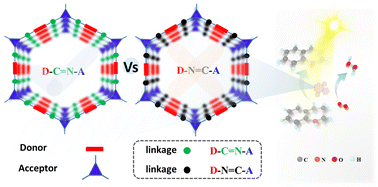
The built-in electric field (IEF) can be improved via developing donor–acceptor (D–A) type COF photocatalysts, yet available modulation strategies remain limited and poor. Here, we design a series of D–A COFs with isomeric imine linkages to promote the IEF and redox activity. The orientation of imine linkages on D/A centers can effectively adjust the dipole moment of COFs, which is increased by ∼50%, thereby enhancing the IEF. The charge separation efficiency is also elevated through the enhancement of the IEF, leading to exciton binding energy being reduced by ∼30% and charge-separated state lifetime prolonged 7-fold. Accordingly, the optimal COF exhibits impressive photocatalytic redox activities (5-fold promoted), achieving a remarkable tetrahydroquinoline dehydrogenation rate of 10.02 mmol g−1 h−1, far exceeding reported metal-free photocatalysts and even comparative with metal photocatalysts, along with a H2O2 production rate over 20.01 mmol g−1 h−1. Our findings establish a universal strategy to modulate the IEF, which contributes to designing high-performance COF photocatalysts.
- This article is part of the themed collections: 2026 Chemical Science HOT Article Collection and 2025 ChemSci Pick of the Week Collection
 Please wait while we load your content...


