


pH-dependent peptide aggregation and translocation across octanol and hexane interfaces: insights from umbrella sampling simulations

Abstract
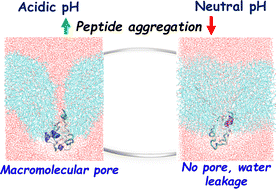
The pH-dependent peptides are membrane-permeabilizing peptides that can form macromolecular-sized pores at an acidic pH. Their mode of aggregation and mechanism of action with the cell membrane are still elusive. Herein, we approach the study of the aggregation and translocation pathways of pHD24 peptides through octanol–water and hexane–water interfaces at an acidic pH (pH 4) and a physiological pH (pH 7) to identify the differences in activities. The octanol–water interface and the hexane–water interface are known to mimic the complex phospholipid bilayers and are suitable as simple models for studying the multiple-peptide actions. At the acidic pH, the pHD24 peptides are found to be aggregated and translocated across the interface more easily than at pH 7. At the octanol–water interface, the peptides are translocated through a narrow water channel with an energy barrier of 309.6 kJ mol−1. The favourable peptide–peptide interaction, facilitated by hydrogen bonding and electrostatic interactions, enhances peptide aggregation at pH 4 and contributes to the formation of a relatively large pore. The results are in good agreement with the translocation of the pHD24 peptides through the heterogeneous membrane at an acidic pH. This study provides insights into the aggregation and translocation abilities of pHD peptides at a low pH through biomembrane mimic model systems, shedding light on the design of strategies for synthetic peptides in drug delivery.
- This article is part of the themed collection: Structure and dynamics of chemical systems: Honouring N. Sathyamurthy’s 75th birthday
 Please wait while we load your content...


