


Design of galectin-1-conjugated nanoparticles as potential immunomodulatory agents

Abstract
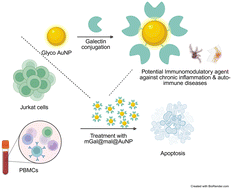
Autoimmune disorders are heterogeneous dynamic conditions characterized by dysregulated immune responses and caused by interruption of tolerogenic circuits. Although immunosuppressive drugs, including biological agents, are effective therapeutic options, several patients do not respond to these treatment or develop resistance mechanisms. Galectins, a family of soluble glycan-binding proteins, play central roles in the modulation of autoimmune inflammation. Galectin-1 (Gal-1), a prototype member of this family, interacts with specific N-acetyllactosamine (LacNAc) ligands present in N- and O-glycans via its conserved carbohydrate recognition domain (CRD). The immunomodulatory activity of Gal-1 involves regulation of T cell effector populations, inducing apoptosis of Th1 and Th17 cells, differentiation of tolerogenic dendritic cells and induction of myeloid-derived suppressor cells. To develop a rational galectin-based therapeutic strategy, we evaluated whether Gal-1 retains its function upon multivalent presentation on nanoparticles. Specifically, we report the design strategy, synthesis and characterization of galectin-1-conjugated glucose-stabilized gold nanoparticles, and compare their activities with unconjugated galectin-1. This formulation offers novel opportunities for treating a variety of autoimmune diseases, as well as chronic inflammatory disorders.
- This article is part of the themed collection: Celebrating the 5th Anniversary of RSC Medicinal Chemistry
 Please wait while we load your content...


