


Improving microalgae harvesting efficiency: electrochemical techniques and parameter optimization
 *a
*a
Abstract
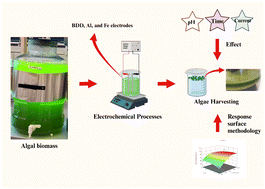
The harvesting microalgae is a challenging process that requires innovative and efficient technologies to make large-scale cultivation economically viable. This study investigated the effectiveness of electrochemical methods for harvesting microalgae Chlorella vulgaris. The operational parameters, such as electrolysis time, electrical current, and pH, were optimized using the response surface methodology based on the Box–Behnken design. The boron-doped diamond (BDD), aluminum (Al), and iron (Fe) electrodes were tested and compared. BDD–Al showed 99.3% of harvesting efficiency (time: 20 min, current: 100 mA, pH: 9), which is the highest value and a pH of 9. The physicochemical properties of the harvested algae, including lipids, proteins, carbohydrates, total suspended solids, and chlorophyll-a content, were examined. The content of harvested algae was found as 41.07–46.63% for protein, 5.5–16.9% for lipid, and 9.02–12.08% for carbohydrates (sugar). The chlorophyll-a concentrations varied from 6.7 to 8.36 μg mL−1. Optimized operating conditions for electrolysis time, pH, and current were determined, and harvesting efficiency was achieved at more than 99%. Energy consumptions for the highest harvesting efficiencies were found to be 0.2, 0.35, and 0.4 kWh kg−1 for BDD–Al, Al–Al, and Al–BDD electrode pairs, respectively. These values were lower than those of conventional algae harvesting methods. The results showed that the electrochemical harvesting techniques are promising alternatives with a high harvesting efficiency and low energy consumption.
- This article is part of the themed collection: Recent Open Access Articles
 Please wait while we load your content...


