


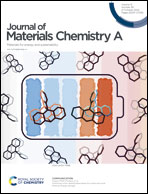
Engineered diatomic catalyst empowered electro-Fenton processes for advanced water purification
 b
and
Xiaoguang
Duan
*b
b
and
Xiaoguang
Duan
*b
Abstract
The heterogeneous electro-Fenton (EF) process has attracted tremendous interest as a promising advanced oxidation reaction to treat refractory organic contaminants in water. However, its practical application has been limited by unsatisfactory catalyst performance. Atomically dispersed metal catalysts are appealing for EF systems due to their high atomic utilization, intrinsic activity, and selectivity. In this review, we introduce the latest advances in metal-based single atom catalysts (SACs) for coordinating multiple oxygen reduction pathways in EF. First, we present a comprehensive summary of rational SAC design for selectively converting O2 to H2O2 and ultimately to ˙OH in successive reactions, as well as the associated mechanisms. Subsequently, we delve into the design and synthesis principles of diatomic catalysts (DACs), highlighting their collaborative functions to direct selective O2 conversion to ˙OH. Finally, we conclude the review by discussing current challenges and further directions for the intelligent design of electrodes and reactors coupled with well-defined DACs for EF-based purification technologies.

- This article is part of the themed collections: Nanomaterials for a sustainable future: From materials to devices and systems and Journal of Materials Chemistry A Recent Review Articles
 Please wait while we load your content...


