Anatoly A. Shatalov
Green Chem., 2017,19, 5092-5102
DOI:
10.1039/C7GC02218B,
Paper


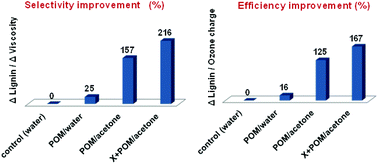
An extremely selective and effective delignification (bleaching) approach for upgrading of isolated cellulose fibers by ozone in the presence of mixed-addenda α-Keggin-type polyoxometalates (POM), such as heteropolyanions of series [PMo(12−n)VnO40](3+n)−, in aqueous solvent solutions has been developed, which is substantially superior to conventional bleaching techniques. Additional lignin removal (by 38.3%), improvement in brightness (by 16.5%), and the simultaneous increase in intrinsic viscosity (by 5.4%) observed after POM/ozonation of commercial eucalypt kraft pulp led to significant improvement in process selectivity and efficiency (by 157% and 125%, respectively) compared to common ozonation in water (with no catalyst and solvent). The intensification of POM catalysis by enzymatic pre-treatment of kraft pulp with highly specific xylanase preparations allowed further improving the selectivity and efficiency of POM-ozonation by ca. 60% and 40%, respectively. The integration of the POM/O3 stage into short totally chlorine-free bio-bleaching sequences, with hydrogen peroxide or/and alkali as the only additional reagents, made it possible to achieve the target properties of high grade cellulose fibers for commercial applications in a sustainable and ecologically friendly way.