


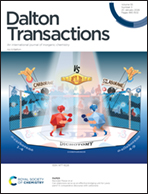
Dual reaction pathway catalysis: base free transfer hydrogenation of aromatic aldehydes by a NiAl LDH catalyst via in situ Ni(0) formation

Abstract
Formulating environmentally friendly and sustainable protocols for catalytic transfer hydrogenation (CTH) utilizing non-noble metal catalysts presents a considerable difficulty owing to their diminished activity relative to noble metals. This study presents a highly effective NiAl layered double hydroxide (LDH) catalyst produced by a traditional co-precipitation technique and activated in situ by isopropanol (IPA), functioning as both a hydrogen donor and a reducing agent. The CTH of benzaldehyde to benzyl alcohol proceeds efficiently under base-free conditions. Notably, during the reaction, a unique in situ transformation of Ni2+ species in the LDH to metallic Ni0 particles was observed, fundamentally shifting the reaction mechanism. Initial cycles proceed via a Meerwein–Ponndorf–Verley (MPV) pathway mediated by Lewis acidic and basic sites of the LDH. However, upon repeated use, the formation of Ni0 introduces a new metal-hydride-based pathway, wherein IPA dehydrogenation and aldehyde hydrogenation are facilitated by metallic Ni0 and Lewis acidic sites. This dual mechanistic pathway results in the dynamic evolution of the catalyst during the reaction. Control and poisoning studies further confirm the pivotal role of basic sites in the initial CTH process. This protocol provides an environmentally friendly and chemoselective method for synthesizing aromatic alcohols, demonstrating exceptional substrate tolerance and advantageous environmental metrics.

 Please wait while we load your content...


