


Optimization of the crystalline silicon surface by chemical treatment and hydrogenated amorphous silicon: a photoluminescence study

Abstract
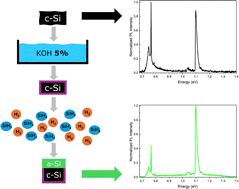
Interfacial defects significantly impact the performance of optoelectronic devices by influencing charge carrier recombination. This work focuses on optimizing the chemical cleaning of crystalline silicon (c-Si) substrates and the passivation of surface defects with an ultrathin layer of hydrogenated amorphous silicon (a-Si:H). The study measured low-temperature photoluminescence originating mainly from c-Si as a means of evaluating the influence of surface defect density on charge carrier recombination channels. Two different concentrations of KOH (5% and 45%) were used in the process of removing defects caused by c-Si cutting and two different conditions were used in the deposition of a-Si:H (pure SiH4 or SiH4 diluted in 50% H2). The thickness of the a-Si:H layer was varied, starting from ∼7 nm, depending on the deposition parameters. The two types of treatments were combined with different thicknesses. The results obtained showed that, for the passivation of optical defects on the c-Si surface, the best combination is a 5% KOH concentration with the deposition of the a-Si:H layer under SiH4 diluted in 50% H2. It was also verified that the thickness of this amorphous layer must be sufficiently thin so that the localization of excitons/charge carriers does not negatively influence the dynamics of charge carriers, with the best results being obtained for a value of ∼8.9 ± 0.2 nm. The experimental parameters identified here allow reducing the density of defects on the c-Si surface, potentially improving the performance of c-Si solar cells.
 Please wait while we load your content...


