

Ultrasonic exfoliation of a Cd-based metal–organic framework into ultrathin nanosheets for visible-light-initiated trifluoromethylation and sequential oxidation–cyclisation reactions
Xiong-Feng
Ma
 a,
Jianfei
Tong
a,
Zhuang
Miao
a,
Xiaodun
Deng
a,
Zhiqiang
Zhang
a,
Chunyang
Zhao
*c,
Yangyang
Liu
a,
Chengyu
Xi
a,
Hongliang
Du
*a,
Chaoqian
Ai
a,
Wenke
Li
a and
Hui
Chen
*b
a,
Jianfei
Tong
a,
Zhuang
Miao
a,
Xiaodun
Deng
a,
Zhiqiang
Zhang
a,
Chunyang
Zhao
*c,
Yangyang
Liu
a,
Chengyu
Xi
a,
Hongliang
Du
*a,
Chaoqian
Ai
a,
Wenke
Li
a and
Hui
Chen
*b
aCollege of Engineering, Xi'an International University, Xi'an, Shaanxi, China. E-mail: duhongliang@126.com
bSchool of Chemistry and Chemical Engineering, Xi'an University of Architecture and Technology, Xi'an, Shaanxi, China. E-mail: huichen@xauat.edu.cn
cSchool of Science, Xihua University, Chengdu, Sichuan, China. E-mail: 0120240049@xhu.ecu.cn
First published on 14th April 2026
Abstract
We fabricated a two-dimensional (2D) Cd(II) metal–organic framework [Cd2(ADPA)(H2O)2(NMP)2]n (denoted as XAIU-5; NMP = N-methylpyrrolidone) from Cd(NO3)2·4H2O and 5,5′-(anthracene-9,10-diyl)diisophthalic acid (H4ADPA). Single-crystal X-ray diffraction revealed that the layers are staggered, forming a 2D + 2D → three-dimensional (3D) supramolecular architecture. XAIU-5 vigorously photocatalysed the trifluoromethylation reaction and the sequential oxidation–cyclisation reaction under visible-light irradiation. Moreover, each Cd(II) center in the adjacent bimetallic motif is ligated by one water and one N-methyl-2-pyrrolidone molecule. Through density functional theory (DFT) calculation, it is found that water molecules are readily displaced during the reaction, thereby furnishing vacant active sites for the substrate molecules. Cd(II) acts as an electronic modulator that optimizes spin distribution, suppresses carrier recombination, and facilitates charge migration, thereby playing an essential role in the catalytic process. Ultrasonic exfoliation of XAIU-5 yielded single-layer structured nanosheets (XAIU-5-NS) with enhanced photocatalytic activity. This is attributed to the exposed straticulate Cd-ADPA units and reduced charge-transfer resistance, which facilitate electron–hole separation and substrate activation. The proposed strategy can sustainably synthesise trifluoromethyl drugs and thiazole, oxazole and imidazole products under visible light, indicating that catalyst nanosheets play a critical role in optimising photo-redox performance.
1 Introduction
Photocatalytic radical chemistry has emerged as a cornerstone of sustainable organic synthesis and environmental decontamination.1–4 Under visible-light excitation, a photo-redox catalyst generates open-shell intermediates such as carbon-, nitrogen- or oxygen-centred radicals through single-electron or hydrogen-atom transfer events.5–9 Chain-propagation cycles initiated by these transient species enable selective C–H/C–X (X = C, N, O, S) functionalisation of complex molecular scaffolds or rapid degradation of persistent pollutants.10–13 However, traditional inorganic semiconductors are limited by narrow absorption windows, slow surface dynamics and poor stability.14,15 Moreover, they are prone to corrosion during the reaction process, especially when reactions produce acidic by-products.Recently, these limitations have been transcended by metal–organic frameworks (MOFs), programmable photo-redox matrices that provide atomically precise coordination environments, tailorable band-gap energetics, high stability and mesoporous architectures.16–19 Two-dimensional MOFs (2D-MOFs) are exceptionally promising because their ultrathin structure minimises bulk recombination losses while maximising the density of coordinatively unsaturated open-metal sites that can act as Lewis acidic or redox-active hotspots.20–23 Ultrasonic exfoliation has lately been acknowledged as a non-destructive top-down approach that yields few-layer nanosheets while maintaining the long-range crystalline order of the original thick structure.22–25 During this process, transient cavitation events temporarily weaken the π–π stacking or hydrogen-bonded interlayer interactions, delaminating the sheets.26,27 Besides increasing the specific surface area by an order of magnitude, delamination functionalises the sheet edges with carboxylate or hydroxyl groups. These subtle surface reconstructions shorten charge-carrier diffusion pathways and prolong excited-state lifetimes, thereby amplifying the probability of productive electron-to-radical transfer.28,29 Representative examples are in situ photoexfoliated 2D-MOFs for CO2-to-CO conversion,30 Mn-MOF nanosheets that accelerate photocatalytic trifluoromethylation,31 an anthraquinone-decorated Cu-MOF that merges energy-transfer, ligand-to-metal charge transfer (MLCT) and hydrogen-atom transfer (HAT) pathways for C(sp3)–H oxygenation,32 and Cd-MOF nanosheets integrating a triple-lophine π-backbone that affords spatially separated D–A channels, ultrathin double-wall morphology and >88% visible-light-driven aerobic oxidation yields.33 Solvent coordination endows 2D MOFs with reversible interlayer breathing behaviour, achieving dynamic fine-tuning of the pore size to enhance adsorption selectivity.30–32,34,35 More importantly, coordinated solvents can be desorbed in situ during the catalytic process, exposing unsaturated metal open sites and drastically lowering the substrate coordination barrier, thereby facilitating vectorial electron transfer and accelerating the turnover frequency.
Herein, we synthesised a 2D Cd-MOF ([Cd2(ADPA)(H2O)2(NMP)2]n (XAIU-5), H4ADPA = 5,5′-(anthracene-9,10-diyl)diisophthalic acid) at 80 °C. Each Cd(II) ion is surrounded by six oxygen atoms: four oxygen atoms from three ADPA4− ligands, one oxygen atom from one coordinated H2O molecule and one oxygen atom from one coordinated NMP molecule. Each ADPA4− linker acts as a hexadentate node bridging six Cd(II) centres, affording a (4,4)-topological sheet perforated by rectangular apertures. The nets are stacked along the c-axis, forming large interlamellar voids that prompt mutual interweaving of two identical 2D lattices into a 2D + 2D → 3D supramolecular architecture. Sonication-induced cavitation overcomes weak van der Waals interactions between interlocked layers, yielding exfoliated XAIU-5 nanosheets (XAIU-5-NS) with a thickness of 1.3 nm. The delaminated material enhances the rates of photocatalytic trifluoromethylation of heteroarenes and aerobic oxidative coupling/cyclisation by twofold compared to XAIU-5. This performance gain is ascribed to shortened charge-diffusion pathways and an increased number of surface-exposed active sites. To our knowledge, we document the first demonstration of ultrasonically exfoliated Cd-MOF nanosheets as efficient platforms for visible-light-driven sequential oxidation–cyclisation reactions.
2 Experimental
2.1 Synthesis methods
2.2 Light-initiated trifluoromethylation reaction
The photocatalysts (5 µmol) were mixed with liquid (0.3 mmol) or solid (0.2 mmol) arenes, CF3SO2Na (0.4 mmol) and CH3CN (2 mL) in a 20 mL Schlenk tube under atmospheric conditions. The tube was sealed and irradiated under a 30 W white LED lamp for photocatalytic trifluoromethylation. Once the reaction was complete, the mixed reaction liquid was filtered and the reaction products were detected by gas chromatography-mass spectrometry (GC-MS), then quantitatively analysed using 19F nuclear magnetic resonance (NMR, with 2,2,2-trifyoroethanol as the internal standard). The reactant feeding ratio for the large-scale reaction is 10 times higher than that used in the aforementioned reaction.2.3 Light-initiated oxidative coupling cyclisation reaction
The photocatalyst (0.02 mmol), ethanol (2 mL), benzyl alcohol (0.2 mmol) and 1,2-phenylenediamine/2-aminophenol/2-aminobenzenethiol (0.2 mmol) were added to a Schlenk tube under an air atmosphere. The tube was sealed and irradiated under a 30 W white LED lamp for photocatalytic benzyl alcohol dehydrogenation. Once the reaction was complete, the suspension was filtered and the products were confirmed by GC-MS. The reactant feeding ratio for the large-scale reaction is 10 times higher than that used in the aforementioned reaction.3 Results and discussion
3.1 Crystal and chemical structure
Faint yellow oblong XAIU-5 crystals with a 2D planar structure were synthesised under hydrothermal conditions. The crystal structures are shown in Fig. 1 and listed in Table S1. The single-crystal X-ray diffraction (XRD) patterns indicate that XAIU-5 crystallises in the monoclinic P![[1 with combining macron]](https://www.rsc.org/images/entities/char_0031_0304.gif) space group. The asymmetric unit contains two Cd(II) ions, one ADPA4− ligand, two coordinated NMP molecules and two coordinated H2O molecules (Fig. 1a and Table S2). Each ligand in the minimum asymmetric unit exists in an identical coordination environment (coordination mode µ6-η2:η1:η1:η2:η1:η1; see Fig. S1). Therefore, the molecular formula is [Cd2(ADPA)(NMP)2(H2O)2]n (XAIU-5) (Fig. 1a). The Cd–O bond lengths are 2.232 (4)–2.399 (4) Å between the Cd(II) ions and ADPA4− ligands, 2.257 (4) Å between the Cd(II) ion and the coordinated NMP molecule and 2.345 (5) Å between the Cd(II) ion and the coordinated H2O molecule (Table S2). Each ADPA4− ligand connects six CdO6 cores (Fig. 1b and c). Coordination between the four carboxylate groups of the H4ADPA ligand and the Cd(II) ions affords a 2D MOF layer with a thickness of 13 Å. Adjacent layers likely aid the exfoliation of XAIU-5 into nanosheets (Fig. 1d).30,31
space group. The asymmetric unit contains two Cd(II) ions, one ADPA4− ligand, two coordinated NMP molecules and two coordinated H2O molecules (Fig. 1a and Table S2). Each ligand in the minimum asymmetric unit exists in an identical coordination environment (coordination mode µ6-η2:η1:η1:η2:η1:η1; see Fig. S1). Therefore, the molecular formula is [Cd2(ADPA)(NMP)2(H2O)2]n (XAIU-5) (Fig. 1a). The Cd–O bond lengths are 2.232 (4)–2.399 (4) Å between the Cd(II) ions and ADPA4− ligands, 2.257 (4) Å between the Cd(II) ion and the coordinated NMP molecule and 2.345 (5) Å between the Cd(II) ion and the coordinated H2O molecule (Table S2). Each ADPA4− ligand connects six CdO6 cores (Fig. 1b and c). Coordination between the four carboxylate groups of the H4ADPA ligand and the Cd(II) ions affords a 2D MOF layer with a thickness of 13 Å. Adjacent layers likely aid the exfoliation of XAIU-5 into nanosheets (Fig. 1d).30,31
 | ||
| Fig. 1 (a) The asymmetric unit of XAIU-5; (b and c) the 2D metal–organic layer of XAIU-5; (d) the monolayer to trilayers of XAIU-5. | ||
Field-emission scanning electron microscopy (FE-SEM) and high-resolution transmission electron microscopy (HRTEM) images of XAIU-5 reveal rod-like structures with widths exceeding 2 µm (Fig. 2a and S2a). The unique structural features imply weak interlayer interactions in XAIU-5 that can be disrupted via ultrasonication, forming ultrathin nanosheets. In fact, XAIU-5 peels into nanosheets when treated with N,N-dimethylformamide (DMF) in an ultrasonic cell-wall-breaking machine, obtaining XAIU-5-NS.30,31 FE-SEM and HRTEM images of XAIU-5-NS reveal nanosheet structures with widths below 1 µm (Fig. 2b and c). Energy-dispersive X-ray analysis of XAIU-5 and XAIU-5-NS confirms the presence of C, N, O and Cd (Fig. S2b and c), indicating that both samples possess the same chemical structure, which is consistent with the corresponding crystal structure. Electron microscopy images revealed the successful exfoliation of XAIU-5 into nanosheets. Atomic force microscopy images of XAIU-5-NS confirmed ultrathin nanosheets with an average thickness of 1.3 nm (Fig. 2d and S3), consistent with that of the single-layer Cd-MOF structure.
 | ||
| Fig. 2 The FE-SEM images of XAIU-5 (a) and XAIU-5-NS (b); the TEM (c) and AFM (d) images of XAIU-5-NS. | ||
Powder XRD patterns of XAIU-5 and XAIU-5-NS exhibit the characteristic diffraction peaks of the simulated pattern (Fig. 3a). In the X-ray photoelectron spectra of both samples, the peaks at binding energies of 405.88 and 405.98 eV are assigned to Cd 3d5/2 and those at 412.68 and 412.78 eV are assigned to Cd 3d3/2 (Fig. 3b).36,37 The ultraviolet-visible diffuse reflectance spectrum (UV-vis DRS) of XAIU-5 shows broad light absorption in the 300–600 nm range (Fig. 4a) with a gradual intensity decline after 410 nm. According to the Tauc plot, the band gap (Eg) of XAIU-5 is 2.32 eV (Fig. S4a). Mott–Schottky measurement revealed the intrinsic characteristics of an n-type semiconductor, and the flat potential of XAIU-5versus Ag/AgCl was determined to be −0.74 eV (Fig. S4b). Therefore, the position of the conduction band (CB) was estimated to be −0.54 eV versus NHE for XAIU-5. Furthermore, the valence band (VB) potential can be calculated as 1.78 eV versus NHE, according to the equation ECB = EVB − Eg (Fig. S4b, inset). The VB positions of the samples are higher than the lowest potential required to obtain ˙CF3 radicals from CF3SO2Na (1.24 eV) and superoxide anion (O2˙−) radicals from O2 (−0.33 eV), revealing the potential of the catalysts to drive the trifluoromethylation reaction via the ˙CF3 substitution process and the sequential oxidation–cyclisation reaction via the O2˙− substitution process. Therefore, we speculate that this MOF structure can serve as a light-activated photocatalyst for photocatalytic organic synthesis reactions.38,39
 | ||
| Fig. 3 PXRD (a) and Cd 2d XPS spectra (b) of XAIU-5 and XAIU-5-NS; (c) the UV-vis DRS of XAIU-5. | ||
 | ||
| Fig. 4 Diagram for white light driven trifluoromethylation reaction and the sequential oxidation–cyclisation reaction in semi-continuous flow mode. | ||
3.2 Photocatalytic properties
The trifluoromethyl substituent decisively influences the lipophilicity, metabolic stability and electronic properties of active agrochemicals, pharmaceutical leads and advanced functional materials. Therefore, operationally simple and energetically mild strategies for catalytic installation of the –CF3 motif have been actively sought in contemporary synthetic chemistry.40,41 The present study focuses on trifluoromethylation of benzene (1a) with CF3SO2Na (2a) as a model reaction, employing XAIU-5 and XAIU-5-NS as photocatalysts. The reaction did not proceed after adding equivalent Cd(NO3)2·4H2O or H4ADPA ligand to the trifluoromethylation reaction system (Table 1, entries 1 and 2). Adding 6 equivalents of the H4ADPA ligand to the reaction system resulted in a 22% yield of 3a, confirming that the π → π* transition in the ligand contributed to the reaction. Compared to the sequential addition of Cd(NO3)2·4H2O and the H4ADPA ligand, co-addition of the pre-mixed Cd(II) salt and ligand to the reaction system afforded product 3a in 17% yield (Table 1, entry 4). This observation indicates that, although the resulting mixture did not crystallize into a well-defined MOF, partial coordination between Cd(II) ions and the ligand occurred, which generated catalytically active sites essential for the reaction to proceed. Consequently, we propose that reaction initiation is contingent upon prior coordination of Cd(II) with the H4ADPA ligand, which collectively establishes the electronic prerequisites for catalytic activity. It was promoted in the presence of XAIU-5, affording the reaction product in 41% yield after 6 hours (Table 1, entry 5). Heating to 80 °C or in the dark with XAIU-5 also yielded no detectable benzotrifluoride (3a) (Table 1, entries 6 and 7). Replacing XAIU-5 with XAIU-5-NS improved the catalytic efficiency of benzotrifluoride (3a) production to 79% after 6 hours. This improvement was attributed to the nanosheet structure (Table 1, entry 8). The photocatalytic ability of XAIU-5-NS was almost double that of XAIU-5. The reaction yield was further enhanced by systematically optimising various contributing factors (solvents, catalytic amount and reaction time, Fig. S5). When acetone, ethanol (CH3CH2OH), dimethyl sulfoxide (DMSO), dichloromethane (CH2Cl2) and DMF solvents were individually included in the reaction mixture, the benzotrifluoride yield was significantly reduced or non-detectable (Fig. S5a). The optimal photocatalyst-loading amount and reaction time were determined as 0.02 mmol and 6 hours, respectively (Fig. S5b and c). Cycling experiments demonstrated the high cycling stability of XAIU-5-NS (Fig. S5d), confirming the above conjecture. The photocatalytic efficiency of XAIU-5-NS remained high after eight consecutive cycles.|
|
|||
|---|---|---|---|
| Entry | Photocat. | Condition | Yield (%) |
| a Reaction conditions: 5 µmol photocatalyst, 0.2 mmol benzene, 0.3 mmol CF3SO2Na, 2 mL CH3CN, air, 30 W white LED lamp, 30 °C. b 30 µmol H4ADPA, 0.2 mmol benzene, 0.3 mmol CF3SO2Na, 2 mL CH3CN, air, 30 W white LED lamp, 30 °C. The yield was determined by GC-MS. | |||
| 1 | Cd(NO3)2·4H2O | White LED | 0 |
| 2 | H4ADPA | White LED | 0 |
| 3b | H4ADPA | White LED | 22 |
| 4 | Cd(NO3)2·4H2O/H4ADPA | White LED | 17 |
| 5 | XAIU-5 | White LED | 41 |
| 6 | XAIU-5 | Dark | 0 |
| 7 | XAIU-5 | 80 °C | 0 |
| 8 | XAIU-5-NS | White LED | 79 |

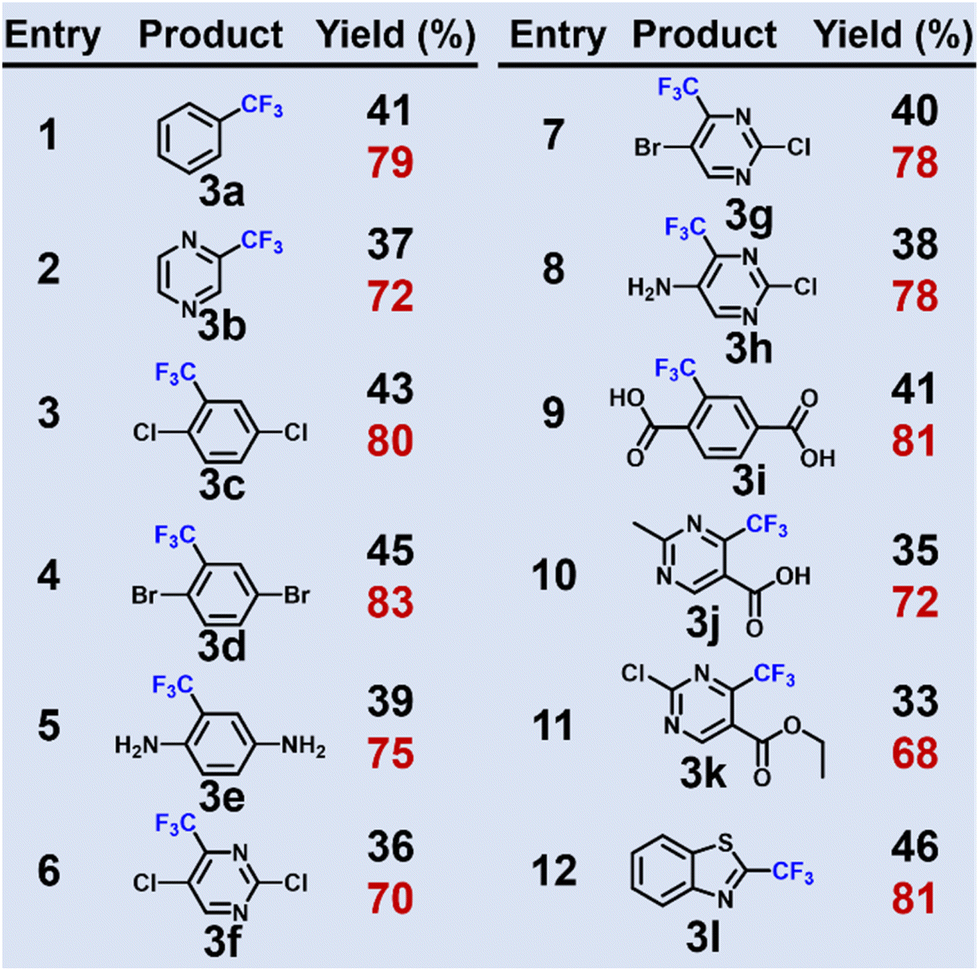
Under the optimised reaction conditions, the universality of the photocatalytic method was evaluated on different substrates (different six-membered arenes and benzene-containing drugs). The results were consistent with a photo-driven reaction. The reaction proceeded smoothly on six-membered arenes, regardless of whether they contained an electron-withdrawing or electron-donating group (Table 2), affording the corresponding trifluoromethylation products in moderate-to-good yields. Among the drug molecules, heterocyclic compounds containing N, O, F or Cl elements could also be activated to give the desired final products. Moreover, both photocatalysts yielded several bioactive drug candidates with different functional groups, such as benzimidazole, benzofuran, pyrazine and xanthine. These results indicate the high tolerance of this photocatalytic system to different arene or alkane substrates. In recent years, a variety of photocatalysts have been used in trifluoromethylation reactions, such as Bi-complex,42 4CzIPN,43 C3N4,15 and CdS.14,15. Although some of them afforded higher yield than this work, many photocatalysts showed a severe decrease in activity after several reaction cycles, which further verified the stability of the MOF photocatalysts in this work.
| a Reaction conditions: 5 µmol XAIU-5 (yield of black number)/XAIU-5-NS (yield of red number), 0.2 mmol benzene derivatives, pyrimidine derivatives or benzothiazole, 0.3 mmol CF3SO2Na, 2 mL CH3CN, air, 30 W white LED lamp, 30 °C, 6 h reaction time. The yield was determined by GC-MS. |
|---|
|
Having established the important photocatalytic role of XAIU-5-NS in the trifluoromethylation of arene or alkane substrates and the associated mechanism of superoxide radicals, we further validated the photocatalytic effect of XAIU-5-NS in another radical reaction. XAIU-5-NS also photocatalysed the visible-light-driven synthesis of benzimidazole derivatives from aromatic diamines and aromatic aldehydes. In benzyl alcohol dehydrogenation, the conversion rate of XAIU-5 was 95% within 6 hours, demonstrating highly efficient conversion under white light. The conversion rate of XAIU-5-NS was 97% within 3 hours, twice that of XAIU-5. Next, we investigated the synthesis of higher value-added compound drugs using benzaldehyde as the substrate. We also investigated sequential oxidation–cyclisation reactions involving the superoxide radicals of benzyl alcohol (4a) with 1,2-diaminobenzene (5a) as a model. The reactions were photocatalysed with XAIU-5 and XAIU-5-NS.44 Adding Cd(NO3)2·4H2O or the H4ADPA ligand to the cyclic reaction system did not drive the reaction (Table 3, entries 1 and 2). Similarly, multiple equivalents of the ligand can facilitate this reaction (Table 3, entry 3). The addition of a Cd(NO3)2·4H2O and H4ADPA ligand mixture to the reaction afforded 2-phenylbenzimidazole (6a) with a yield of 12% (Table 3, entry 4), which confirmed that electron transfer induced by metal–ligand coordination promotes this reaction. The cyclic reaction with XAIU-5 at 80 °C or under dark conditions yielded no 2-phenylbenzimidazole (6a) (Table 3, entries 5 and 6). Under white LED light, XAIU-5 promoted the reaction with a 45% yield of 6a after 12 hours (Table 3, entry 7). XAIU-5-NS raised the catalytic efficiency of 6a production to 86% after 12 hours (Table 3, entry 8). Again, the photocatalytic ability of XAIU-5-NS was almost twice that of XAIU-5. To boost the efficiency of 6a production, we comprehensively optimised the choice of solvent, quantity of catalyst and reaction duration (Fig. S5). Notably, incorporating solvents such as acetone, CH3CH2OH, DMSO, CH2Cl2 and DMF into the reaction mixture markedly decreased or completely quenched the reactivity with 6a (Fig. S5a). The reaction conditions were optimised at a photocatalyst dosage of 0.02 mmol and a reaction period of 12 hours (Fig. S5b and c).
|
|
|||
|---|---|---|---|
| Entry | Photocat. | Condition | Yield (%) |
| a Reaction conditions: 0.02 mmol photocatalyst, 0.2 mmol 4a, 0.2 mmol 5a, 2 mL anhydrous ethanol, air, 30 W white LED lamp, 30 °C. b 0.08 mmol H4ADPA, 0.2 mmol 4a, 0.2 mmol 5a, 2 mL anhydrous ethanol, air, 30 W white LED lamp, 30 °C. The yield was determined by GC-MS. | |||
| 1 | Cd(NO3)2·4H2O | White LED | 0 |
| 2 | H4ADPA | White LED | 0 |
| 3b | H4ADPA | White LED | 18 |
| 4 | Cd(NO3)2·4H2O/H4ADPA | White LED | 12 |
| 5 | XAIU-5 | Dark | 0 |
| 6 | XAIU-5 | 80 °C | 0 |
| 7 | XAIU-5 | White LED | 45 |
| 8 | XAIU-5-NS | White LED | 86 |

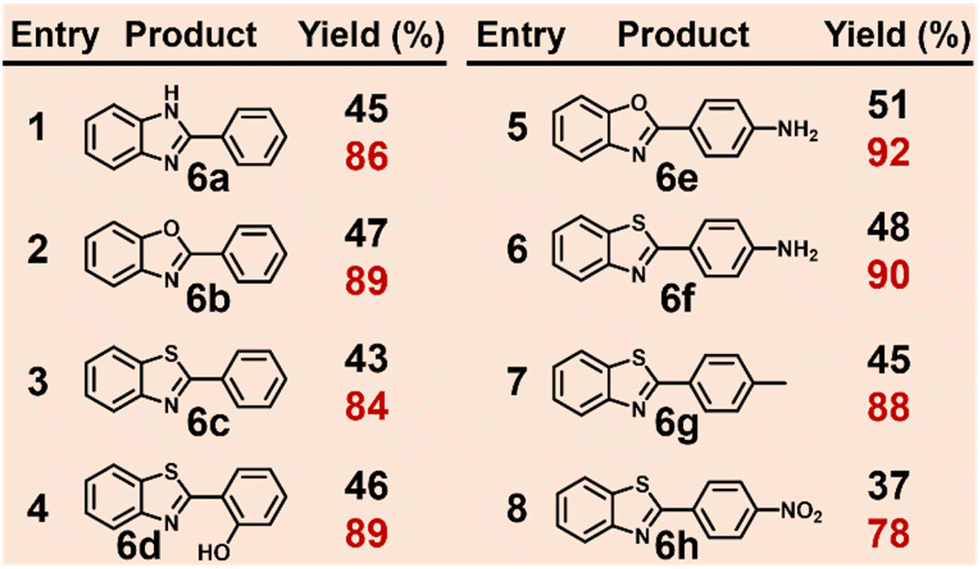
Again, XAIU-5-NS exhibited high cycling stability after eight consecutive cycles in the cycling experiments (Fig. S4d), further confirming the above conjecture. After eight cycles of reaction, we subjected XAIU-5-NS to centrifugation and washing. Subsequently, it was dispersed in an EtOH solution and characterized using HRTEM. The results indicated that the material retained its nanosheet morphology, although varying degrees of stacking were observed between the nanosheets (Fig. S6a). Further energy-dispersive X-ray analysis confirmed that the chemical composition of XAIU-5-NS remained unchanged (Fig. S6b). Prompted by the impressive photocatalytic activity of XAIU-5 and XAIU-5-NS, we explored the versatility of the photocatalysts on a broader range of substrates, including various benzyl alcohol derivatives and 2-aminophenol or 2-aminothiophenol. The aim was to evaluate the general photocatalytic applicability of XAIU-5 and XAIU-5-NS. The reaction yield was improved in the presence of electron-withdrawing groups, particularly those combined with an amino group (Table 4). Specifically, on substrates containing an amino group attached via an oxygen linker, the yield was maximised at 92% (entry 5), highlighting that these structural features enhance the reaction efficiency. Although the reaction proceeded well across different substrates, electron-donating groups notably enhanced the yields, suggesting that these elements are key players in the performance optimisation of sequential oxidation–cyclisation reactions.
| a Reaction conditions: 0.02 mmol XAIU-5 (yield of black number)/XAIU-5-NS (yield of red number), 0.2 mmol benzyl alcohol derivatives, 0.2 mmol 2-aminophenol or 2-aminothiophenol, 2 mL anhydrous ethanol, air, 30 W white LED lamp, 30 °C. The yield was determined by GC-MS. |
|---|
|
Interestingly, under white light-driven semicontinuous-flow reaction conditions, 3a and 6a were produced at a rate of 239 and 137 µmol h−1 (Fig. 4). All of the results revealed that XAIU-5-NS possesses stable photocatalytic activity, which resulted in trifluoromethylation and sequential oxidation–cyclisation reactions with high efficiency. The increased photocatalytic activity of XAIU-5-NS is mainly attributed to the small nanosheets formed through ultrasonic exfoliation, which exposed a large number of Cd-ADPA active sites to the target molecules. Abundant and rapid contact between the targets and active sites reduced the reaction time for benzaldehyde formation. The MOF structure formed by Cd(II) and H4ADPA not only stabilises the Cd(II) ions but also provides an electron transfer pathway during the reaction, thus avoiding or delaying the reduction of active sites during the reaction.45–48
To address the concerns regarding the role of Cd(II) and the feasibility of visible-light-driven charge transfer, density functional theory (DFT) calculations were performed on a representative model of XAIU-5. The calculated interaction energy between Cd(II) and the ADPA4− fragment is −10.86 eV, indicating strong chemical bonding that stabilizes the framework, while the binding energy of coordinated H2O is only −0.79 eV (Fig. 5a), which is much smaller and facilitates its departure during the catalytic reaction, thereby exposing unsaturated coordination sites. Furthermore, spin density analysis reveals that the introduction of Cd(II) redistributes unpaired electrons from dispersed sites on the ligand to a localized region around the Cd(II) centre, which suppresses photogenerated carrier recombination and enhances charge separation (Fig. 5b). Both the HOMO and LUMO are predominantly localized on the ADPA4− ligand with negligible contribution from the Cd(II) ion (Fig. 5c and d), confirming that visible-light excitation originates from ligand-centred π → π* transitions rather than metal-to-ligand charge-transfer (MLCT) or ligand-to-metal charge-transfer (LMCT). Moreover, the Cd(II)-containing system exhibits an outward migration tendency for excited electrons, whereas the ligand-only model favours inward localization that promotes recombination based on HOMO and LUMO analysis, indicating that Cd(II) enhances the electron-donating capability. Collectively, these results demonstrate that although the Cd(II)ion does not directly participate in electron transfer due to its 4d10 configuration, it acts as an electronic modulator that optimizes spin distribution, suppresses carrier recombination, and facilitates charge migration, thereby playing an essential role in the catalytic process.
 | ||
| Fig. 5 (a) The calculated interaction energy between Cd(II) and the ADPA4− fragment and the binding energy of coordinated H2O; (b) the spin density analysis before and after the introduction of Cd(II) ions; the HOMO and LUMO of the H4ADPA ligand (c) and XAIU-5 (d). | ||
To elucidate the structure–activity correlation of the MOFs in the photocatalytic trifluoromethylation and oxidative coupling cyclisation reactions, we comprehensively characterised their photoelectrical behaviours, optical properties and band structures. Because the photocatalytic efficiency is governed primarily by the efficacy of photo-generated charge separation and migration, we investigated the catalysts with electrochemical impedance spectroscopy (EIS), steady-state photoluminescence (PL), time-resolved photoluminescence (TRPL) decay measurements and transient photocurrent responses (Fig. 6). Among the series, XAIU-5-NS presented the smallest nanoscopic domain size and its Nyquist plot shows the lowest charge-transfer resistance, indicating a markedly diminished interfacial charge-transfer barrier that enhances the spatial separation of electron–hole pairs. This conclusion is corroborated by the TRPL spectra, in which XAIU-5-NS exhibits the longest fluorescence lifetime (τ = 0.96 ns), indicating an elongated non-radiative decay channel that reflects rapid interfacial charge injection and suppressed bulk recombination. Collectively, these data establish that XAIU-5-NS accelerates the interfacial charge-transfer dynamics, underpinning its exceptional photocatalytic performance in trifluoromethylation and the synthesis of thiazole, oxazole and imidazole.
 | ||
| Fig. 6 (a) Transient photocurrents, (b) EIS plots, (c) time-resolved PL decay spectra, and (d) steady-state PL emission spectra of XAIU-5 and XAIU-5-NS. | ||
The active species during the reaction were elucidated through radical- or electron-trapping experiments using 2,2,6,6-tetramethyl-1-piperidinyloxy (TEMPO), benzoquinone (BQ) and propan-2-ol (IPA) as suppliers of radicals, electron (e−) and hole (h+) scavengers, respectively. The trifluoromethylation reaction and the sequential oxidation–cyclisation reaction were almost fully suppressed, indicating that the photo-generated radicals, e− and h+ are the active species (Fig. 7a). The electron paramagnetic resonance (EPR) spectra, obtained with 2-methyl-2-nitrosopropane (MNP) as the trapping agent, exhibited signals of ˙CF3 radicals (Fig. 7b). Meanwhile, the EPR spectra obtained with 5,5-dimethyl-1-pyrroline N-oxide (DMPO) as the trapping agent presented signals of O2˙− in the presence of XAIU-5 and XAIU-5-NS, confirming the involvement of O2˙− in the reaction (Fig. 7c).28,31
 | ||
| Fig. 7 (a) Results of active species detection and EPR spectra peaks of ˙CF3 and O2˙− radicals trapped by PBN (b) and DMPO (c) over XAIU-5 and XAIU-5-NS; (d) the proposed mechanism over XAIU-5-NS as a photocatalyst under white LED light. | ||
Fig. 7d presents a possible photocatalytic trifluoromethylation reaction and plausible cyclic reaction mechanisms derived from the above results and relevant reports.28,31,49,50 Under light irradiation, the photo-generated electron in the conduction band of XAIU-5-NS is transferred to O2, forming O2˙− radicals. This electron transfer is the first step in all reactions. During the trifluoromethylation reaction, the photo-generated hole in the valence band of XAIU-5-NS oxidises CF3SO2Na, forming electron-deficient ˙CF3 radicals that selectively attack arenes, producing the key intermediate of the trifluoromethyl-cyclohexadienyl radical (I). Finally, deprotonation of the cationic intermediate forms benzotrifluoride (Fig. 7d). The protons released during this process react with O2 present in the system, generating H2O. According to existing reports on photocatalytic systems, the generated O2˙− radicals can oxidise CF3SO2Na, resulting in the formation of F− ions, SO2 and CO2.28,31 When dissolved in the generated H2O, SO2 may be oxidised to SO42− anions, potentially through the action of O2˙− radicals. During the sequential oxidation–cyclisation reaction,44,51 the O2˙− radicals oxidise benzyl alcohol to benzaldehyde. The benzaldehyde and II compounds (1,2-diaminobenzene, 2-aminophenol and 2-aminothiophenol) are condensed into imine intermediate III, which undergoes intramolecular cyclisation to IV. Compound IV is further oxidised by holes generated by the irradiated XAIU-5-NS, forming a positive radical (intermediate V). Finally, V is deprotonated by the superoxide anion, producing H2O and finally the target product VI (2-phenylbenzimidazole, 2-phenylbenzoxazole or 2-phenylbenzothiazole) (Fig. 6b).
4 Conclusions
We synthesised a 2D Cd-MOF under hydrothermal conditions. Each Cd(II) ion coordinates one NMP and one water molecule in the 2D MOF structure. By exposing numerous active sites and facilitating contact with the substrate molecules, this architecture promotes the conversion of photocatalytic target molecules. DFT calculation confirmed that Cd(II) ion acts as an electronic regulator for interligand connections to optimize spin distribution, suppress carrier recombination, and promote charge migration, thus playing a crucial role in the catalytic process. The weak van der Waals forces between the 2D MOFs are easily disrupted, promoting in situ exfoliation of the Cd-MOF into nanosheets with many active sites. This resulted in improved separation and transmission of photo-generated carriers, which effectively improve the photocatalytic activity. We further developed a simple and controllable strategy for regulating photocatalytic trifluoromethylation and the sequential oxidation–cyclisation reaction, thereby improving the efficiency of the photocatalysts.Author contributions
Xiong-Feng Ma: methodology, data curation, writing – original draft. Jianfei Tong: investigation, data curation. Zhuang Miao: investigation, data curation. Xiaodun Deng: investigation, data curation. Qiang Zhang: investigation, data curation. Chunyang Zhao: writing – review and editing. Yangyang Liu: data curation. Chengyu Xi: data curation. Hongliang Du: writing – review and editing, supervision. Chaoqian Ai: data curation. Wenke Li: data curation. Hui Chen: writing – review and editing, supervision. All authors have given approval to the final version of the manuscript.Conflicts of interest
There are no conflicts to declare.Data availability
CCDC 2446145 contains the supplementary crystallographic data for this paper.52The data supporting this article have been included as part of the supplementary information (SI). Crystallographic data, additional figures and tables and photocatalytic properties data. Supplementary information is available. See DOI: https://doi.org/10.1039/d5ta08285d.
Acknowledgements
This work was supported by the Initiation Funds for High-level Talents Program of Xi'an International University (Grant No. XAIU202420), the National Natural Science Foundation of China (No. 22401226), Sichuan Science and Technology Program (2025ZNSFSC0907), the Xi'an Association for Science and Technology of Young Elite Scientists Sponsorship Program (Grant No. 0959202513172), and the Natural Science Basic Research Plan in Shaanxi Province of China (Program No. 2025JC-YBQN-497).Notes and references
- J. Wang, S. Shen, X. Li, J. Li and F. Dong, Photoexcited Active Radicals for Environmental and Energy Applications: Generation, Regulation, and Dynamic Tracking, Chem. Rev., 2025, 125(16), 7811–7917 CrossRef CAS PubMed.
- D.-S. Zhang, L. Wang, X. Zhang, X.-B. Li, H. Xu, C.-H. Tung and L.-Z. Wu, Emerging inorganic–organic hybrid photocatalysts for solar-driven overall water splitting: progress and perspectives, Chem. Soc. Rev., 2025, 54, 9978–10005 RSC.
- A. A. Festa, O. A. Storozhenko, L. G. Voskressensky and E. V. Van der Eycken, Visible light-mediated halogenation of organic compounds, Chem. Soc. Rev., 2023, 52, 8678–8698 RSC.
- Z. G. Schichtl, O. Q. Carvalho, J. Tan, S. S. Saund, D. Ghoshal, L. M. Wilder, M. K. Gish, A. C. Nielander, M. B. Stevens and A. L. Greenaway, Chemistry of Materials Underpinning Photoelectrochemical Solar Fuel Production, Chem. Rev., 2025, 125(10), 4768–4839 CrossRef CAS PubMed.
- X. Li, T. Zhang, J. Li, R. Liu, Y. Shi, C. He and C. Duan, Dye Stacking Goes Beyond Single-Molecule Photocatalysis: Modifying Twisted Segregated Stacking of Dyes in Coordination Polymers for Multiphoton-Driven Potent Reduction and Oxidation, ACS Catal., 2024, 14(18), 13567–13578 CrossRef CAS.
- J. Zhang and M. Rueping, Metallaphotoredox catalysis for sp3 C–H functionalizations through single-electron transfer, Nat. Catal., 2024, 7, 963–976 CrossRef CAS.
- M.-M. Zhang, Y.-N. Wang, L.-Q. Lu and W.-J. Xiao, Light Up the Transition Metal-Catalyzed Single-Electron Allylation, Trends Chem., 2020, 2(8), 764–775 CrossRef CAS.
- G.-Q. Xu, W. D. Wang and P.-F. Xu, Photocatalyzed Enantioselective Functionalization of C(sp3)–H Bonds, J. Am. Chem. Soc., 2024, 146(2), 1209–1223 CrossRef CAS PubMed.
- J. B. Diccianni, B. Hao, W. Liu and I. I. Strambeanu, High-throughput optimization of the C–H arylation of oxetanes via Ni/aldehyde photocatalysis, Org. Biomol. Chem., 2024, 22, 7860–7865 RSC.
- P. Bellotti, H.-M. Huang, T. Faber and F. Glorius, Photocatalytic Late-Stage C–H Functionalization, Chem. Rev., 2023, 123(8), 4237–4352 CrossRef CAS PubMed.
- H.-R. He, Y.-J. Shi, Q.-C. Lin, X.-X. Zhou, W.-M. Liao and J. He, Flexibly bonded lead–halogen dual sites of coordination polymers for photocatalytic C–N coupling, J. Mater. Chem. A, 2025, 13, 24816–24823 RSC.
- J. Madasu, S. Shinde, R. Das, S. Patela and A. Shard, Potassium tert-butoxide mediated C–C, C–N, C–O and C–S bond forming reactions, Org. Biomol. Chem., 2020, 18, 8346–8365 RSC.
- Q. Bai, Y. Huang, Z. Chen, Y. Pan, X. Zhang, Q. Long, Q. Yang, T. Wu, T.-Z. Xie, M. Wang, H. Luo, C. Hu, P. Wang and Z. Zhang, Terpyridine-based metallo-cuboctahedron nanomaterials for efficient photocatalytic degradation of persistent organic pollutants, Nano Res., 2024, 17, 6833–6840 CrossRef CAS.
- K. Muralirajan, R. Kancherla, J. A. Bau, M. R. Taksande, M. Qureshi, K. Takanabe and M. Rueping, Exploring the structure and performance of Cd−chalcogenide photocatalysts in selective trifluoromethylation, ACS Catal., 2021, 11(24), 14772–14780 CrossRef CAS.
- L. Wang, M. Liu, W. Zha, Y. Wei, X. Ma, C. Xu, C. Lu, N. Qin, L. Gao, W. Qiu, R. Sa, X. Fu and R. Yuan, Mechanistic study of visible light-driven CdS or g-C3N4-catalyzed C-H direct trifluoromethylation of (hetero)arenes using CF3SO2Na as the trifluoromethyl source, J. Catal., 2020, 389, 533–543 CrossRef CAS.
- J. Yang, Z. Zhang, Y. Jiang, Y. Zhong, Z. Yang and Z. Chen, Net-Coded Organic Building Blocks for the Reticular Assembly of High-Connectivity Metal–Organic Frameworks, J. Am. Chem. Soc., 2025, 147(24), 20218–20224 CrossRef CAS PubMed.
- B. Song, Y. Liang, Y. Zhou, L. Zhang, H. Li, N.-X. Zhu, B. Tang, D. Zhao and B. Liu, CO2-Based Stable Porous Metal–Organic Frameworks for CO2 Utilization, J. Am. Chem. Soc., 2024, 146(21), 14835–14843 CrossRef CAS PubMed.
- W. Yu, Z. Lu, H. Jiang, A. Li and L. Chen, Metal-organic framework composites for green catalysis: Coordination chemistry approaches to sustainable energy and environmental solutions, Coord. Chem. Rev., 2025, 542, 216864 CrossRef CAS.
- Z. Chen, K. O. Kirlikovali, P. Li and O. K. Farha, Reticular Chemistry for Highly Porous Metal–Organic Frameworks: The Chemistry and Applications, Acc. Chem. Res., 2022, 55(4), 579–591 CrossRef CAS PubMed.
- X.-Y. Zhang, C.-M. Han, C. Bai, H.-L. Guo, Y.-F. Zhang, L.-J. Sun and H.-M. Hu, Heterobimetallic cobalt-nickel 2D MOF nanosheet with a super large conjugated organic ligand for high-capacitance supercapacitors, J. Alloys Compd., 2025, 1016, 178918 CrossRef CAS.
- C. Liu, H. Liu, J. C. Yu, L. Wu and Z. Li, Strategies to engineer metal-organic frameworks for efficient photocatalysis, Chin. J. Catal., 2023, 55, 1–19 CrossRef CAS.
- M. Huang, Z. Liang, J. Huang, Y. Wen, Q.-L. Zhu and X. Wu, Introduction of Multicomponent Dyes into 2D MOFs: A Strategy to Fabricate White Light-Emitting MOF Composite Nanosheets, ACS Appl. Mater. Interfaces, 2023, 15(8), 11131–11140 CrossRef CAS PubMed.
- M. Zhao, Y. Huang, Y. Peng, Z. Huang, Q. Ma and H. Zhang, Two-dimensional metal–organic framework nanosheets: synthesis and applications, Chem. Soc. Rev., 2018, 47, 6267–6295 RSC.
- W.-S. Liu, X. Hu, K. Zeng, C.-H. Ji, H. Feng, Y.-G. Zhou and Q.-Y. Cai, Exfoliated two-dimensional bimetallic Ni0.6Co0.4-metal organic framework nanosheets with mixed ligands for enhanced acid electrocatalytic water oxidation, J. Mater. Chem. A, 2025, 13, 3174–3184 RSC.
- G. Che, Y. Zhao, W. Yang, Q. Zhou, X. Li, Q. Pan and Z. Su, Preparation of a Nanosheeted Uranyl–Organic Framework for Enhanced Photocatalytic Oxidation of Toluene, Inorg. Chem., 2024, 63(23), 10767–10774 CrossRef CAS PubMed.
- H. Liu, Y. Ding, Y. Xu, Y. Kuai, J. Chen, H. Zhang, Y. Lan and Z. Wei, Interfacial π-Electron Cloud Extension and Charge Transfer Between Preferable Single-Crystalline Conjugated MOFs and Graphene for Ultrafast Pulse Generation, Adv. Mater., 2025, 37(13), 2420043 CrossRef CAS PubMed.
- Z. Xiao, P. Li, B. Sun, X. Bao, L. Gan and H. Yang, Water-mediated synthesis of hydrogen-bonded metal–organic frameworks, Chem. Sci., 2025, 16, 14919–14923 RSC.
- X.-F. Ma, Z. Miao, H. Hou, A. Zhang, Y.-C. Wei, R. Zhang, Y.-D. Zhang, C. Ai, Z. Zhou and H. Du, Acid-Induced Structural Diversity of Stable Mn(II) Metal–Organic Framework Photocatalysts for Effective Visible Light-Driven C–H Direct Trifluoromethylation, Inorg. Chem., 2025, 64(25), 12838–12845 CrossRef CAS PubMed.
- H. Chen, J. He, Z. Zhou, B. Wang, X.-F. Ma, M. Deng, Y. Zhou and P. V. D. Voort, Visible-light-driven aerobic oxidation via a dual ROS-generating manganese(II)-organic framework photocatalyst, J. Catal., 2025, 451, 116403 CrossRef CAS.
- H.-L. Zheng, S.-L. Huang, M.-B. Luo, Q. Wei, E.-X. Chen, L. He and Q. Lin, Photochemical In Situ Exfoliation of Metal–Organic Frameworks for Enhanced Visible-Light-Driven CO2 Reduction, Angew. Chem., Int. Ed., 2020, 59, 23588–23592 CrossRef CAS PubMed.
- X.-F. Ma, B. Wen, S. Zhang, D. Wang, L. Wang, H. Lin, Z. Li and R. Yuan, Stable Mn(II) metal–organic framework for efficient visible light initiated trifluoromethylation reaction, J. Catal., 2024, 436, 115589 CrossRef CAS.
- H. Li, S. Liu, G. Ji, C. He, Y. Wang, H. Gao, L. Zhao and C. Duan, In situ exfoliation of a copper-based metal–organic framework for boosting the synergistic photoactivation of inert C(sp3)–H bonds and oxygen, J. Mater. Chem. A, 2024, 12, 19069–19080 RSC.
- Y. Chen, P.-M. Wang, Z.-T. Chen and B. Li, Modulating Charge Transfer Pathways to Enhance Photocatalytic Performance of the Metal−Organic Layer Nanosheet, ACS Appl. Mater. Interfaces, 2023, 15, 46982–46994 CrossRef CAS PubMed.
- Z. Wang, R. Ding, J. Zhang, L. Chen, Y. Wang, J. Liu and Z. Zou, Biomimetic control of charge transfer in MOFs by solvent coordination for boosting photocatalysis, Chem. Commun., 2022, 58, 9830–9833 RSC.
- H. Zhou, G. Zhu, S. Dong, P. Liu, Y. Lu, Z. Zhou, S. Cao, Y. Zhang and H. Pang, Ethanol-Induced Ni2+-Intercalated Cobalt Organic Frameworks on Vanadium Pentoxide for Synergistically Enhancing the Performance of 3D-Printed Micro-Supercapacitors, Adv. Mater., 2023, 35(19), 2211523 CrossRef CAS PubMed.
- N. Yuan, J. Cao, Y. Ren, X. Hou and S. Chen, Dual enabling photomediated Knoevenagel condensation and alkene perfluoroalkylation reactions by a photoresponsive cadmium–organic framework, Green Chem., 2025, 27, 8603–8612 RSC.
- J.-F. Li, J.-W. Xu, H.-J. Feng, Q.-Y. Liu and J.-W. Wang, Thiazolothiazole-based metal–organic frameworks for photocatalytic coupling of benzylamine and degradation of organic dyes, New J. Chem., 2025, 49, 6838–6845 RSC.
- A. Dhakshinamoorthy, Z. Li, S. Yang and H. Garcia, Metal–organic framework heterojunctions for photocatalysis, Chem. Soc. Rev., 2024, 53, 3002–3035 RSC.
- H.-L. Zheng, J.-Q. Zhao, Y.-Y. Sun, A.-A. Zhang, Y.-J. Cheng, L. He, X. Bu, J. Zhang and Q. Lin, Multilevel-Regulated Metal–Organic Framework Platform Integrating Pore Space Partition and Open-Metal Sites for Enhanced CO2 Photoreduction to CO with Nearly 100% Selectivity, J. Am. Chem. Soc., 2023, 145(50), 27728–27739 CrossRef CAS PubMed.
- H. Xiao, Z. Zhang, Y. Fang, L. Zhu and C. Li, Radical trifluoromethylation, Chem. Soc. Rev., 2021, 50, 6308–6319 RSC.
- C. Wang, Y. Li, K. Sun, X. Huang, X. Chen, L. Qu and B. Yu, Innovations in photocatalytic trifluoromethylation: Role of heterogeneous Bi4NbO8Cl in radical generation, J. Catal., 2024, 439, 115775 CrossRef CAS.
- T. Tsuruta, D. Spinnato, H. W. Moon, M. Leutzsch and J. Cornella, Bi-catalyzed trifluoromethylation of C(sp2)−H bonds under light, J. Am. Chem. Soc., 2023, 145, 25538–25544 CrossRef CAS PubMed.
- M. Lu, Z. Liu, J. Zhang, Y. Tian, H. Qin, M. Huang, S. Hua and S. Cai, Synthesis of oxindoles through trifluoromethylation of N-aryl acrylamides by photoredox catalysis, Org. Biomol. Chem., 2018, 16, 6564–6568 RSC.
- Y. Qin, M. Hao, C. Xu and Z. Li, Visible light initiated oxidative coupling of alcohols and o-phenylenediamines to synthesize benzimidazoles over MIL-101(Fe) promoted by plasmonic Au, Green Chem., 2021, 23, 4161–4169 RSC.
- Y.-J. Cheng, Z.-T. Chen, H.-R. Ji, Y. Chen and B. Li, A D–A–D-type di-lophine derivative-based photoactive metal–organic framework: fluorescence sensing of UO22+ and photochromic behavior, Inorg. Chem. Front., 2024, 11, 5127–5136 RSC.
- C. Zhu, J. Hou, X. Wang, S. Wang, H. Xu, J. Hu, L. Jing and S. Wang, Optimizing ligand-to-metal charge transfer in metal–organic frameworks to enhance photocatalytic performance, Chem. Eng. J., 2024, 499, 156527 CrossRef CAS.
- M. Marimuthu, S. S. Arumugam, D. Sabarinathan, H. Li and Q. Chen, Metal organic framework based fluorescence sensor for detection of antibiotics, Trends Food Sci. Technol., 2021, 116, 1002–1028 CrossRef CAS.
- Z. Zhang, Y. Zhang, H. Jayan, S. Gao, R. Zhou, N. Yosri, X. Zou and Z. Guo, Recent and emerging trends of metal-organic frameworks (MOFs)-based sensors for detecting food contaminants: A critical and comprehensive review, Food Chem., 2024, 448, 139051 CrossRef CAS PubMed.
- T. Zhang, X. Guo, Y. Shi, C. He and C. Duan, Dye-incorporated coordination polymers for direct photocatalytic trifluoromethylation of aromatics at metabolically susceptible positions, Nat. Commun., 2018, 9, 4024 CrossRef PubMed.
- K. Ohkubo, S. Matsumoto, H. Asahara and S. Fukuzumi, 9-(4-Halo-2,6-xylyl)-10-methylacridinium Ion as an Effective Photoredox Catalyst for Oxygenation and Trifluoromethylation of Toluene Derivatives, ACS Catal., 2024, 14(4), 2671–2684 CrossRef CAS.
- H. Jiang, C. Zang, H. Cheng, B. Sun and X. Gao, Photocatalytic green synthesis of benzazoles from alcohol oxidation/toluene sp3 C–H activation over metal-free BCN: effect of crystallinity and N–B pair exposure, Catal. Sci. Technol., 2021, 11, 7955–7962 RSC.
- CCDC 2494196: Experimental Crystal Structure Determination, 2026, DOI:10.5517/ccdc.csd.cc2pqdys..
| This journal is © The Royal Society of Chemistry 2026 |