


Spectroscopic analytical approaches for kidney disease biomarker detection: advancements and challenges

Abstract
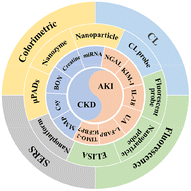
Kidney diseases, including acute kidney injury (AKI) and chronic kidney disease (CKD), are major global health challenges, underscoring the urgent need for the development of early and accurate diagnostic strategies. Recent advances in biomarker research have led to the identification of several novel indicators, significantly enhancing early-stage diagnosis and prognostic prediction of kidney diseases. Although these emerging biomarkers offer high sensitivity and specificity in detecting renal damage, traditional analytical methods such as chromatography and mass spectrometry are hindered by the complexity of the procedure, the requirement of expensive, specialized instrumentation, and the inability to provide real-time information. Spectroscopic techniques have emerged as promising alternatives due to their operational simplicity, high sensitivity, and suitability for point-of-care testing (POCT). In this review, we discussed recent advancements in spectroscopic technologies, including colorimetric, fluorescence, surface-enhanced Raman scattering (SERS), and chemiluminescence (CL), and their application in the detection of biomarkers for AKI and CKD. We discuss the applications, advantages, limitations, and future challenges of these methods in the analysis of kidney disease biomarkers, highlighting their potential to improve early diagnosis, facilitate personalized treatment strategies, and improve patient outcomes.
- This article is part of the themed collection: Analytical Methods Review Articles 2025
 Please wait while we load your content...


