


CRISPR-Cas-based biosensors for the detection of cancer biomarkers
 *a
*a
Abstract
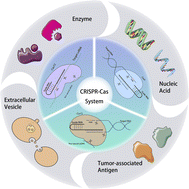
Along with discovering cancer biomarkers, non-invasive detection methods have played a critical role in early cancer diagnosis and prognostic improvement. Some traditional detection methods have been used for detecting cancer biomarkers, but they are time-consuming and involve materials and human costs. With great flexibility, sensitivity and specificity, the clustered regularly interspaced short palindromic repeats (CRISPR)-associated system provides a wide range of application prospects in this field. Herein, we introduce the background of the CRISPR-Cas (CRISPR-associated) system and comprehensively summarize the diagnosis strategies of cancer mediated by the CRISPR-Cas system, including four kinds of biochemical-based markers: nucleic acid, enzyme, tumor-specific protein and exosome. Furthermore, we discuss the challenges in implementing the CRISPR-Cas system in clinical applications.
- This article is part of the themed collection: Analytical Methods HOT Articles 2024
 Please wait while we load your content...


