


Multifunctional ruthenium-based complexes for chronic wound therapy: from ligand engineering to intelligent microenvironment remodeling
 *bc
and
Lifeng
Tan
*a
*bc
and
Lifeng
Tan
*a
Abstract
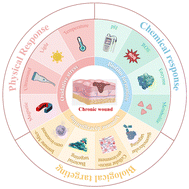
Chronic wounds form a self-perpetuating vicious cycle driven by oxidative stress, immune dysregulation, and biofilm infections. Traditional monotherapies yield limited efficacy, posing significant clinical challenges. Ruthenium-based complexes (RuBCs), as an emerging therapeutic platform, offer breakthrough opportunities in this field due to their inherent multi-enzyme mimetic activity, superior photophysical properties, and high tunability achieved through ligand engineering. This review systematically elucidates how intelligent ligand design transforms ruthenium-based biomaterials from passive drugs into smart diagnostic–therapeutic integrated systems capable of sensing and responding to pathological wound microenvironments (such as abnormal pH, elevated reactive oxygen species, and specific enzymes). Initially, we analyze the chronic wound microenvironment to establish precise therapeutic targets. We subsequently detail the fundamental properties of ruthenium-based nanomaterials and complexes, along with ligand design principles, to construct a multifunctional toolkit. The core section systematically integrates multiple advanced design strategies, including environmentally responsive drug release, targeted cellular or bacterial delivery, and the synergistic integration of catalytic, phototherapeutic, and immunomodulatory functions. Furthermore, we explore how to combine real-time phosphorescence diagnostics with therapy to establish closed-loop feedback systems. Despite promising prospects, RuBCs still face significant challenges such as long-term biosafety, large-scale preparation, and in vivo efficacy validation. The conclusion outlines future directions: developing multi-stimulus-responsive systems, synergizing with advanced biomaterials, and leveraging AI-assisted design. These efforts aim to provide systematic, forward-looking theoretical and technical guidance for developing smart RuBCs for chronic wound treatment.
- This article is part of the themed collection: Recent Review Articles
 Please wait while we load your content...


