


Research progress and future challenges of CO oxidation catalysts: preparation, catalytic performance, reaction mechanism and anti-poisoning strategies

Abstract
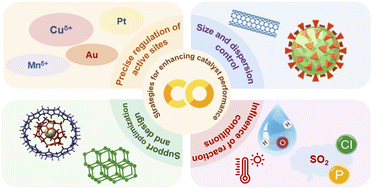
Carbon monoxide (CO) is one of the primary pollutants in the atmosphere, with high concentrations posing serious risks to human health and environmental safety. CO is primarily generated through the incomplete combustion of fossil fuels such as coal and petroleum. Among the existing CO removal technologies, catalytic oxidation is considered one of the most effective strategies. This paper reviews the research advances and future challenges in the catalytic oxidation of CO over the past decade. First, this review introduces the recent advances in several active metal catalysts for CO catalytic oxidation, including Pt, Au, Pd, Ag, Cu, Mn, and Fe. Subsequently, it summarizes several reaction mechanisms and characteristics of CO catalytic oxidation, discusses the effects of impurities such as H2O, SO2, phosphorus, and chlorine present in the reaction environment on catalyst activity, and then proposes the corresponding mitigation strategy. Finally, the prospects are outlined for the rational design of highly efficient catalysts for CO catalytic oxidation, the research progress, and future developments in this field.
- This article is part of the themed collections: Journal of Materials Chemistry A Recent Review Articles, Journal of Materials Chemistry A HOT Papers and Advances in Sustainable Catalysis: from Materials to Energy and Environmental Applications
 Please wait while we load your content...


