


Nanotechnology empowered photodynamic therapy: a paradigm shift from local ablation to systemic immunity
 *c
Biao
Dong
*ac
*c
Biao
Dong
*ac
Abstract
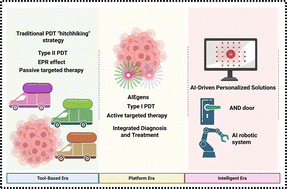
Photodynamic therapy (PDT) has emerged as a minimally invasive therapeutic modality for cancer treatment. However, its clinical efficacy is constrained by two fundamental limitations: tumor hypoxia, resulting from insufficient oxygen availability, and restricted treatment depth due to limited tissue light penetration. Historically, nanomaterials served primarily as passive delivery vehicles for photosensitizer (PS) transport to tumor sites. Nevertheless, a paradigm shift has occurred in this domain, with nanomaterials evolving into active therapeutic platforms. This transformation can be conceptualized through a three-stage evolutionary model: (1) circumvention of limitations via strategies such as designing upconversion nanoparticles (UC NPs), (2) reversal of constraints through localized oxygen generation or Type I photoreactions, and (3) exploitation of limitations by inducing immunogenic cell death (ICD) to activate antitumor immunity. Recent advancements have introduced innovative approaches, including the development of novel Type I PSs, construction of smart nanosystems with molecular logic gates, and implementation of advanced techniques such as proteolysis-targeting chimera (PROTAC) delivery and pyroptosis induction. These strategies enable tumor microenvironment modulation, redefining nanoscale PDT as an immune priming engine capable of triggering systemic antitumor immune responses. When integrated with immunotherapy, enhanced abscopal effects are observed, leading to regression of untreated distal tumors. This review concludes by addressing clinical translation challenges and proposing future directions, including the development of closed-loop theranostic systems and personalized medicine frameworks.
- This article is part of the themed collection: Photodynamic Therapy (PDT)
 Please wait while we load your content...


