


High-Q chiral metasurface with quasi-BIC for tunable circular dichroism and refractive index sensing
 *a
*a
Abstract
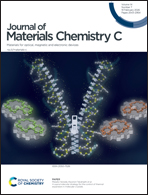
Chiral metasurfaces with strong chirality and high quality-factor (Q-factor) are vital for enhancing light-matter interactions and have attracted increasing attention for applications in areas such as chiral lasers and biosensing. In this work, we propose a chiral metasurface that exhibits a pronounced intrinsic chiral response through in-plane symmetry breaking. The metasurface supports quasi-bound states in the continuum (quasi-BIC) mediated by a toroidal dipole, yielding an ultrahigh Q-factor of ∼1.39 × 10⁵. The operation mechanism arises from symmetry-breaking induced coupling between the toroidal mode and free-space radiation, which enables strong chiral response while maintaining suppressed radiation loss. Moreover, the metasurface demonstrates exceptional sensing performance, with a maximum sensitivity of 235 nm RIU−1 and a figure of merit (FOM) of 2.09 × 10⁴ RIU−1. In addition, we demonstrate active tunability by integrating a graphene layer into the metasurface, where the chiral response can be dynamically controlled by tuning the graphene Fermi level, allowing arbitrary modulation of circular dichroism. This work provides a viable strategy for engineering tunable planar optical chirality and opens up promising avenues for applications in biodetection, high-sensitivity chiral optical sensing, and electrically tunable switching.

- This article is part of the themed collection: Journal of Materials Chemistry C HOT Papers
 Please wait while we load your content...


