


 PLATFORM UPDATE:


S. aromaticum aqueous extract-derived carbon dots: a biosafe antibacterial nanocatalyst for water remediation

Abstract
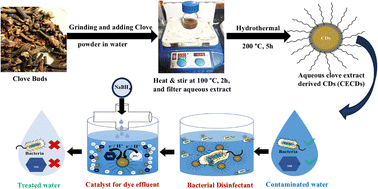
The development of non-toxic antibacterial nanocatalysts for water purification and wastewater treatment on the same platform opens a greener approach for energy remediation applications. Carbon dots (CDs) derived from natural precursors have gained popularity recently because of their low toxicity and appealing physicochemical features that vary depending on carbon supply pathways. A facile, cost-effective, and environmentally friendly method was used to synthesize CDs utilizing an aqueous extract of S. aromaticum (clove buds (CE)). The physicochemical characterization of produced clove extract-derived CDs (CECDs) was performed using various spectroscopy and microscopy techniques. The effect of CECD concentration on cell toxicity and hemocompatibility was investigated. Moreover ex vivo CAM assays and in vivo toxicity assessments were performed to recognize their usefulness in biological environments. The antibacterial study reveals a log kill value of 3.5 and 4.2 and a zone of inhibition value of 5.09 mm and 6.84 mm for E. coli and S. aureus bacterial strains at 1 mg mL−1 concentration, respectively. Meanwhile, at the same concentration, a study on the breakdown of methylene blue (MB) dye shows 99.9% dye decolorization in 12 min. The obtained bio-safe CECDs have shown better potential to serve as antibacterial agents for disinfectant formulations and these nanocatalysts, can be integrated into the current wastewater treatment and purification system.
- This article is part of the themed collection: Antimicrobial materials
 Please wait while we load your content...


